REVIEW · PHNOM PENH
Phnom Penh Birding Experience and Brunch
Book on Viator →Operated by Vana Adventure Travel · Bookable on Viator
Phnom Penh gets serious about birds before most people wake. This half-day trip—run by Vana Adventure Travel with guide Thong—starts early, crosses the river by ferry, and takes you out into Mekong wetland habitat where you can realistically set your eyes on Cambodia’s endemic species. I love that it’s not just a checklist walk; it’s guided viewing in the right places, from rice-field edges to floodplain shrubs. I also like the “you’re set” feel: binoculars, coffee/tea, and breakfast are included, so you’re not piecing together logistics at 6am.
The main trade-off is the timing. You’ll be out very early, and you’ll spend real time outdoors and walking through paddy/lotus areas, so it’s not the sort of morning you do after a late night.
In This Review
- Key things I found most compelling
- Getting Up Before Phnom Penh Wakes: The Morning Rhythm
- Areyksat Dock and the Ferry Crossing: City-to-Wetland in One Move
- Skyland Area Walk: Rice Fields and Lotus Farms at Dawn
- Breakfast With a Lake View: Fueling the Birding Without Losing Time
- The Cambodian Tailorbird Segment: Floodplain Shrub Birding
- Birds You Can Expect to See (and What the Species List Really Means)
- Transport and Comfort: Air-Conditioned Ride or Tuk Tuk
- Price and Value: Is $85 Fair for a Half-Day?
- Who Should Book This Tour (and Who Might Skip It)
- Practical Tips to Make the Most of It
- Should You Book This Phnom Penh Birding and Brunch Experience?
- FAQ
- How long is the birding experience?
- Where do we start in Phnom Penh?
- What’s included with the tour price?
- What type of birds does the tour focus on?
- Is the tour group small?
- What’s the cancellation policy?
Key things I found most compelling
- An early ferry start from Areyksat Dock near Koh Pich Island gets you out of the city fast
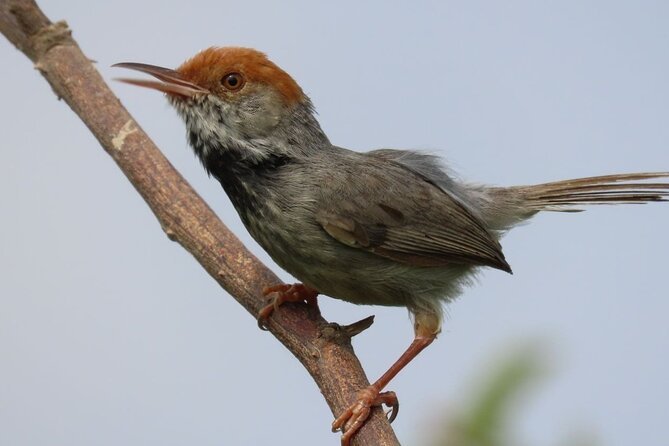
- Spotlight on Cambodia’s endemic Cambodian Tailorbird in its floodplain shrub habitat
- Rice fields and lotus farms at dawn for wetland and farmland birds in the same morning
- Open-air breakfast by a small lake that fits the birding rhythm
- Small group size (max 10) with a bird-focused guide like Thong
- Binoculars and an included morning meal make the $85 feel more fair
Getting Up Before Phnom Penh Wakes: The Morning Rhythm
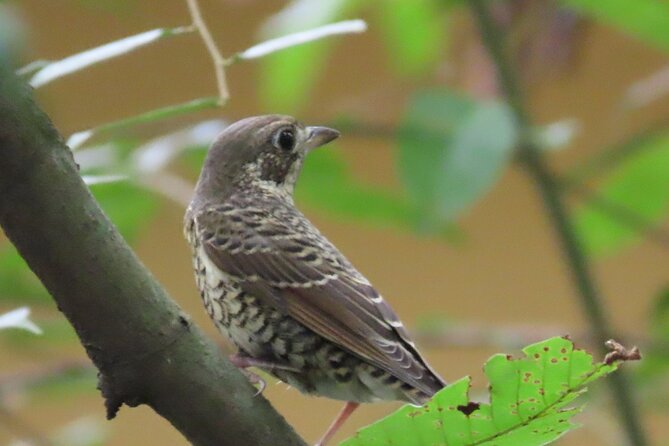
This tour’s biggest strength is how it uses the day. You don’t start with traffic and city noise—you start with dawn light, cooler air, and birds that are still active after a night of foraging and calling.
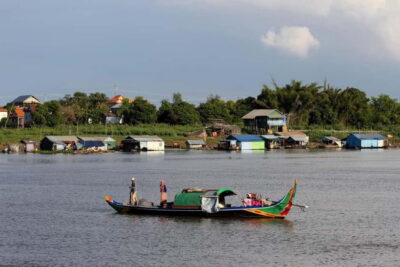
You’ll meet at the Areyksat Ferry Dock (near Koh Pich Island) and head out early. The ferry crossing is part of the experience, and it also helps explain why this trip can reach wetland areas without feeling like you’re losing half your day to transit.
Once you’re across and moving, the vibe shifts fast: you go from built-up Phnom Penh to open habitat where wetland species start showing up. That change alone is a reason birders enjoy it.
You can also read our reviews of more tours and experiences in Phnom Penh.



Areyksat Dock and the Ferry Crossing: City-to-Wetland in One Move
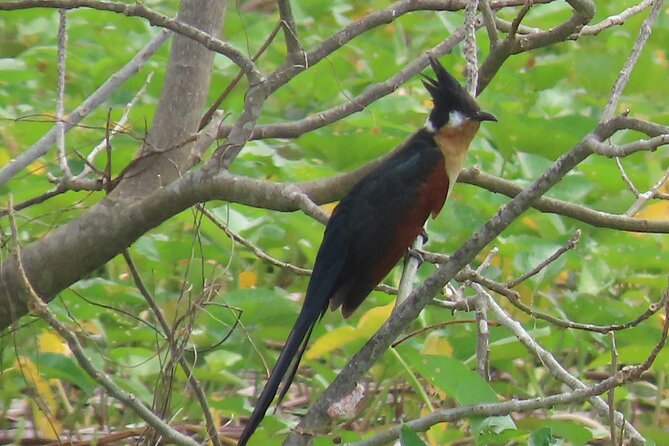
At the start, you’ll be directed to arrive ahead of time at the Areyksat Ferry Dock, since the early departure matters. There’s even a short window built into the schedule for the crossing, so you don’t feel rushed once you’re there.
This matters more than it sounds. Birding is time-dependent. When you reach wetlands earlier, you can catch the birds while they’re feeding and moving. If you start later, the best activity often shifts.
You’ll also get to see the river setting as you travel. For a half-day tour, that’s a practical way to add variety without extending the length.
Skyland Area Walk: Rice Fields and Lotus Farms at Dawn
When you arrive around the Skyland 7NG area, you’ll step into a short walk through paddy rice fields and spend time viewing lotus farms. This is the part of the morning that feels most like “birding in living habitat,” not birding in a park.
Why I like this section: lotus and flooded rice edges can hold different species types in a small area—waders and water birds near water, and perching birds in the margins. Even if you don’t spot the headline species immediately, this stop keeps the birding rolling with multiple targets in the same general zone.
It’s also where you get a sense of how the habitat works. The guide can point out what makes a bird hang around—shallow edges, cover, and feeding spots—and that helps you start reading the landscape quickly instead of just scanning randomly.
Breakfast With a Lake View: Fueling the Birding Without Losing Time
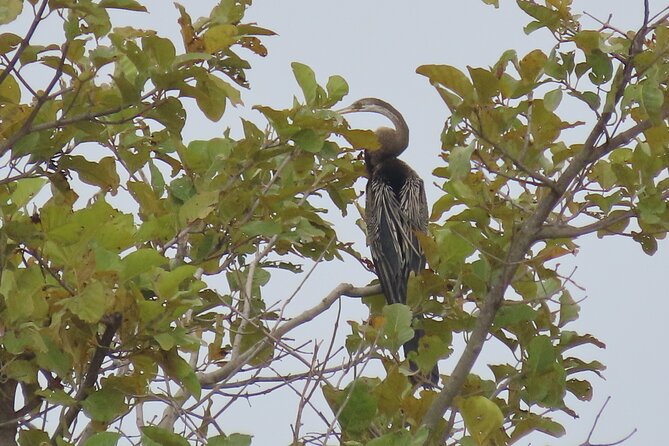
Around 7:30am, you shift into breakfast. It’s served at a local restaurant nearby, and the key detail is the setting: an open-air meal with a small lake view.
This is a smart break for a bird tour. You’re out early, active on your feet, and you need something steady in your stomach before more concentrated searching. And because coffee/tea and breakfast are included, you’re not spending time negotiating for food or menu surprises on the way.
The other practical benefit: breakfast is built into the flow, so it doesn’t feel like a random detour. It’s part of the day’s pacing, which keeps your energy up for the most important habitat segment later.
The Cambodian Tailorbird Segment: Floodplain Shrub Birding
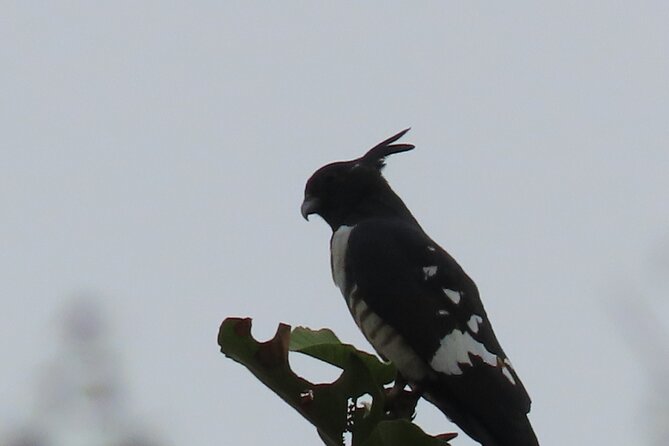
This is the headline focus after breakfast. You’ll continue in the Skyland area with a targeted emphasis on the Cambodian Tailorbird, a species endemic to Cambodia. The habitat detail that matters is that it’s associated with dense shrub areas in the floodplain—so finding it isn’t just about “where,” but also about what kind of cover you can access and scan.
The time you spend here (about three hours) tells you how seriously the tour takes this. The point isn’t to sprint through spots; it’s to slow down and let the habitat do its job while the guide works the viewing points.
I also like that the description doesn’t promise a guaranteed sighting—it frames the tailorbird as something tied to a specific floodplain shrub environment. That honesty is useful for your expectations. Birding is real fieldwork, not a theme-park show.
Birds You Can Expect to See (and What the Species List Really Means)

The tour’s bird targets cover a mix of wetland birds, water birds, and perching birds you might encounter around edges. Here are some of the species mentioned for this type of habitat and viewing:
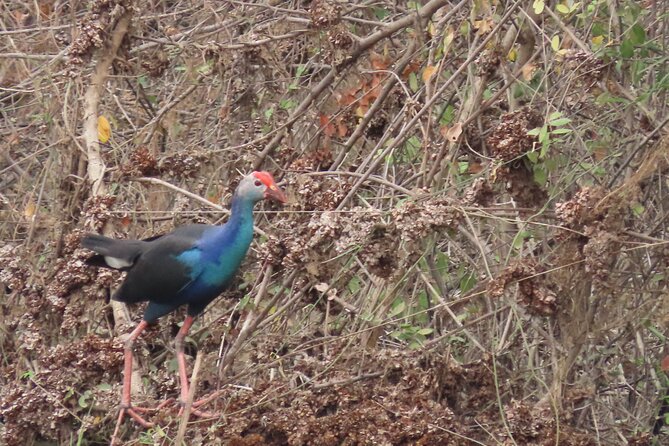
- Wetland and water birds: Purple Swamphen, Pheasant-Tailed Jacana, Bronze-winged Jacana, Chinese Pond Heron, Javan Pond-Heron
- Shoreline and wader types: Common Greenshank, Common Snipe
- Perching and open-country birds: Black Drongo, Indian Roller, Zebra Dove
- Bee-eater action: Green Bee-Eater, Blue-tailed Bee-eater
- Other listed hopes: Oriental Pratincole, Striated Grassbird, plus White-breasted Waterhen
If you’re new to birding, use this list as a map of habitat zones: deeper wet areas and edges for waders/herons, floodplain cover for shrub-focused species, open margins for rollers and doves, and perches over watery stretches for bee-eaters.
Also, the guide’s job isn’t only spotting—it’s helping you notice behavior. Bee-eaters often show themselves by movement and quick hunting flights. Jacanas and swamphens can be more detectable once you know what cover line they’re using. That’s the difference between “I saw birds” and “I understood what I was looking at.”
From the reviews, Thong is repeatedly praised for knowing where to look and how to explain what’s happening in the field. That matters because it speeds up your learning curve, even if you’re picking up binoculars for the first time.
Transport and Comfort: Air-Conditioned Ride or Tuk Tuk
You’ll travel in an air-conditioned vehicle or tuk tuk, depending on the route and day’s setup. The practical value here is simple: you’re doing a long morning early in hot weather, and you don’t want to start the birding exhausted from a sweaty transfer.
The tour also supports a group format—small enough that you can hear the guide, but organized enough that you don’t have to think about directions or timing. That’s a big deal in Cambodia, where “easy logistics” can quickly become “why are we here again?”
Binoculars are included, which removes another common barrier for first-time birders. You’re not searching for rentals or borrowing gear at the dock.
Price and Value: Is $85 Fair for a Half-Day?
At $85 per person, you’re paying for more than a driver and a meeting point. For this price, you get:
- Breakfast plus coffee/tea
- Binoculars
- A birding guide
- Transportation (air-conditioned vehicle or tuk tuk)
- A route that combines ferry travel, rice/lotus viewing, and wetland searching
For a half-day, the price feels more reasonable when you consider the included morning meal and the guiding time spent in specific habitat. If you were to do this independently, you’d still pay for a guide (or you’d spend a lot of time guessing), transport, and food.
One more value signal: this is a small-group activity with a maximum of 10 travelers. That usually means less waiting, better attention, and more chance to keep up with spotting instructions.
Who Should Book This Tour (and Who Might Skip It)
This experience is perfect for anyone who wants a focused birding morning without committing to an all-day outing. If you’re a keen birder, you’ll appreciate the emphasis on wetland species and the attempt for birds tied to specific habitat—especially the Cambodian Tailorbird.
If you’re a first-timer, this also works because you’re not walking blind. The guide helps you interpret what you’re seeing, and you get structured time in multiple habitat types.
I’d only suggest skipping if you hate early starts or you want a laid-back brunch-only morning. This tour is for people who enjoy being outside and watching patiently.
Practical Tips to Make the Most of It
You can improve your odds of good sightings just by preparing your expectations.
- Be on time at Areyksat Dock. The whole schedule depends on an early departure window.
- Wear shoes for a short walk through paddy/lotus areas—this isn’t a flat stroll on smooth pavement.
- Eat breakfast seriously since you’ll be birding again afterward. Snacks aren’t included, so if you tend to snack, plan for that.
- Bring a calm mindset. Some birds, especially habitat-specific ones like the tailorbird, reward patience rather than frantic scanning.
Also, use your time efficiently once you’re spotting. Let the guide show you where to look, then train your eyes on cover lines, edge habitats, and movement patterns.
Should You Book This Phnom Penh Birding and Brunch Experience?
If you want a half-day that actually takes you into real bird habitat, I think this is a strong choice. The ferry start, the rice/lotus viewing, and the dedicated tailorbird-focused segment create a morning with clear momentum. Add in the included breakfast, binoculars, and a guide like Thong, and the $85 price starts to feel like you’re paying for field time that would be hard to replicate on your own.
Book it if you’ll enjoy early light, outdoor walking, and learning as you go. Skip it only if you want a late start or you prefer city sightseeing to wetlands.
If you do book, treat it like birding first and brunch second—and you’ll probably have the best morning you can fit into Phnom Penh.
FAQ
How long is the birding experience?
It runs about 5 to 6 hours.
Where do we start in Phnom Penh?
Pickup centers on the Areyksat Ferry Dock near Koh Pich Island, with an early departure around 6:00am.
What’s included with the tour price?
Breakfast, coffee and/or tea, binoculars, an air-conditioned vehicle or tuk tuk, and a birding guide are included.
What type of birds does the tour focus on?
The tour targets wetland and water birds, with emphasis on species such as Cambodian Tailorbird, Oriental Pratincole, Striated grassbird, Purple Swamphen, Black Drongo, Chinese Pond Heron, Common Greenshank, and bee-eaters.
Is the tour group small?
Yes. The maximum group size is 10 travelers.
What’s the cancellation policy?
You can cancel for a full refund up to 24 hours before the experience’s start time. If you cancel within 24 hours, the amount paid is not refunded.