REVIEW · PHNOM PENH
Phnom Penh to Silk Island By Tuk-Tuk with local Expert
Book on GetYourGuide →Operated by Siem Reaper Travel · Bookable on GetYourGuide
A short ride, then a very different Cambodia. I love the tuk-tuk to ferry route and the hands-on stops at a family-run dried tofu skin and silk workshop. The one thing to plan for is that this tour runs rain or shine, so you should expect wet roads and hot sun to both be part of the morning.
The biggest quality boost is the human touch. Guides such as Kim, Lee, and Sok tend to explain what you’re seeing in clear English, and they often add extra local context (including a bit of Khmer along the way). The possible drawback is simple: in 4–4.5 hours you’ll move fast between stops, so it’s not the kind of outing where you stretch out and linger all day.
In This Review
- Key highlights at a glance
- Why this Phnom Penh to Silk Island tour is a smart half-day
- Tuk-tuk pickup and the ferry crossing to Silk Island
- The Phnom Penh temple visit: seeing faith in real life
- Koh Oknha Tei Market: where you learn daily life fast
- The secondary school photo stop: why it’s worth your attention
- Silk Island and the craft of Cambodian silk
- Dried tofu skin (soy sheets): why this stop hits harder than you expect
- Akreiy Ksatr Village: the rural reality beyond the workshop
- The $29 price: what you’re really paying for
- Tips to make your morning easier (and better)
- So, should you book it?
- FAQ
- FAQ
- How long is the Phnom Penh to Silk Island tour?
- What does the tour cost?
- Where do you get picked up and dropped off?
- What’s included in the price?
- Do I need to pay entrance fees separately?
- Is the ferry ride included?
- Does the tour run in bad weather?
- Is there a guide, and is English available?
- Are there any restrictions on who can join?
- What should I do if I’m doing hotel pickup?
- Can I get a refund if my plans change?
Key highlights at a glance
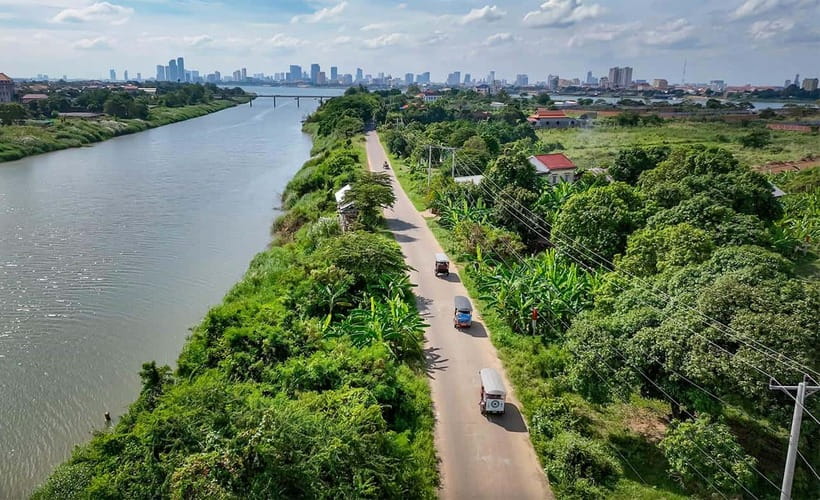
- Ferry crossing from Phnom Penh area to Silk Island, with countryside views along the way
- Silk weaving visit where you learn how the tradition is passed down through families
- Dried tofu skin craft with a look at how soy becomes thin sheets
- Koh Oknha Tei Market to understand daily life beyond the city
- Buddhist temple stop with practical lessons on Cambodian Buddhism
- Village-scale glimpses like school grounds and rural work scenes
Why this Phnom Penh to Silk Island tour is a smart half-day

Phnom Penh can feel concentrated: sights, traffic, and museums stacked close together. This tour breaks that pattern. In a short morning you get rural Cambodia near the city, using a tuk-tuk pace that feels local rather than touristy.
Value is the main selling point. For around $29, you’re not just paying for a driver. You get a full route with a ferry, multiple guided stops, entrance fees, and basic comfort items like water and a snack. That matters because it turns “what should I do?” into a plan that actually covers the best bits without you needing to coordinate anything.
It also makes sense if you’re the type who likes seeing how things are made. Silk and tofu skin are both skills rooted in routine work, not just a photo-op product. You’ll come away with a clearer idea of what people do day-to-day, and why those crafts survive and matter.
You can also read our reviews of more tours and experiences in Phnom Penh.


Tuk-tuk pickup and the ferry crossing to Silk Island
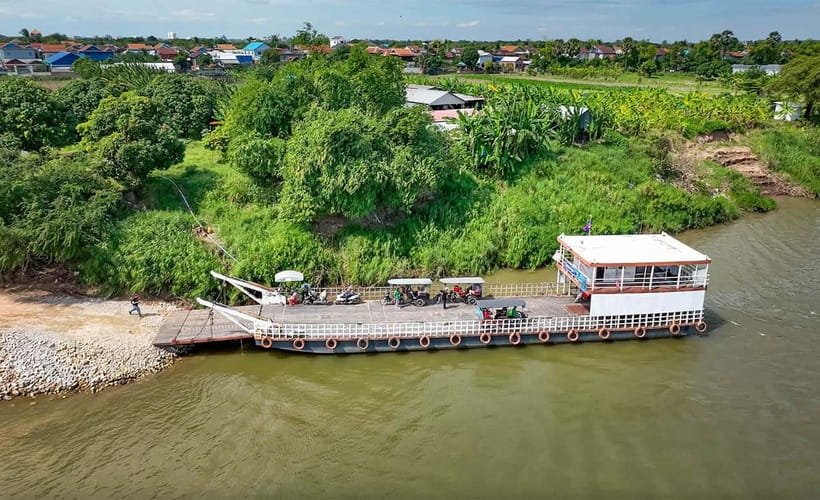
Most mornings start with pickup from your Phnom Penh hotel, with the expectation you’re ready about 10 minutes before your scheduled time. Then you’re off by tuk-tuk, heading out of the city toward river crossings and rural areas.
This is one of the underrated parts of the experience. The ride does more than transport you. You get a moving lesson: how roads change, what homes look like outside central Phnom Penh, and how daily work shows up in small scenes. Many guides also use the ride to teach a few Khmer words, which is a nice way to turn travel time into something useful.
Then comes the ferry. The ferry jump is the mental switch from city mode to island-and-river mode. It’s also just fun—especially if you haven’t spent much time around Cambodian waterways. Expect that crossing to feel like a genuine transition, not a detour.
The Phnom Penh temple visit: seeing faith in real life
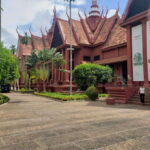
One of the early stops includes a guided temple visit in Phnom Penh with time for photos and sightseeing. This is not about memorizing facts. It’s more about understanding how people practice.
A good guide will point out customs you might otherwise miss: how people move inside, what different parts of the temple are for, and how Buddhism shows up in everyday behavior. If you get a guide like Tintin or Tina, the explanations often come with a calm, friendly rhythm that makes the visit feel approachable rather than formal.
Practical tip: wear something respectful for a temple visit. Even if the rest of the day is casual, you’ll likely be asked to mind your clothing during the temple stop.
Koh Oknha Tei Market: where you learn daily life fast
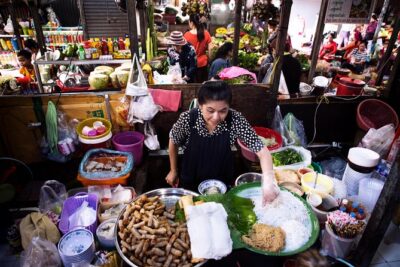
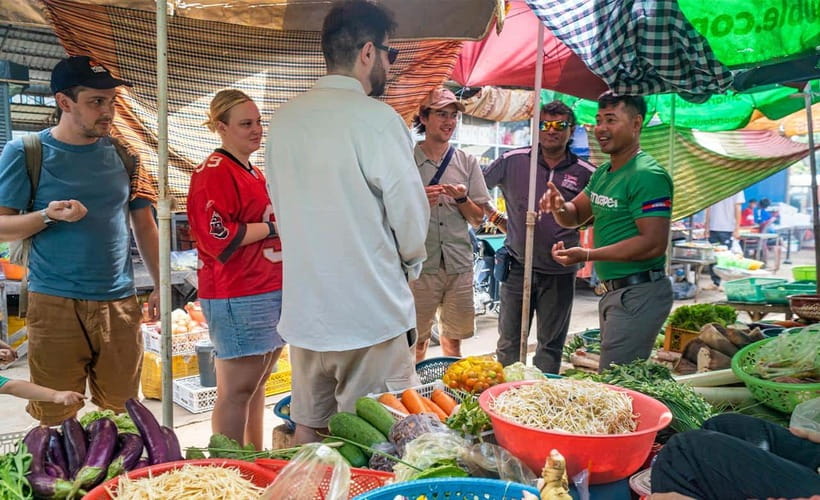
Next up is Koh Oknha Tei Market, with guided sightseeing and about 30 minutes to look around. Markets can either feel chaotic or fascinating, depending on how you approach them. With a guide, it becomes the second kind.
This stop helps you understand the supply chain behind village life. You’ll see how people buy ingredients, what gets sold locally, and how the market serves as a meeting point—not just a place to exchange goods. It’s also a great chance to ask questions. Guides like Lee and Sok are often the ones turning a simple market walk into lessons about Cambodian food culture and daily routines.
One thing to keep in mind: markets can shift by day and time. If something is quieter than expected, don’t assume you picked a wrong tour. The value here is in the process of seeing how things work, not only in the noise level.
The secondary school photo stop: why it’s worth your attention
You’ll also stop at Koh Oknha Tei Secondary School for about 1 hour, with photo time, a guided look, and a walk around. This part isn’t there for spectacle. It’s there because it puts human scale on the rural picture.
Even if the school areas you can access are limited, you’ll notice how education fits into local life. Some guides also make time for small conversations and general Q&A. It’s the kind of stop that can land differently for different travelers: some people love it for the human connection, others for the context it adds to everything you see later on Silk Island.
If you’re taking photos, be polite. Keep it quick and follow your guide’s cues.

Silk Island and the craft of Cambodian silk
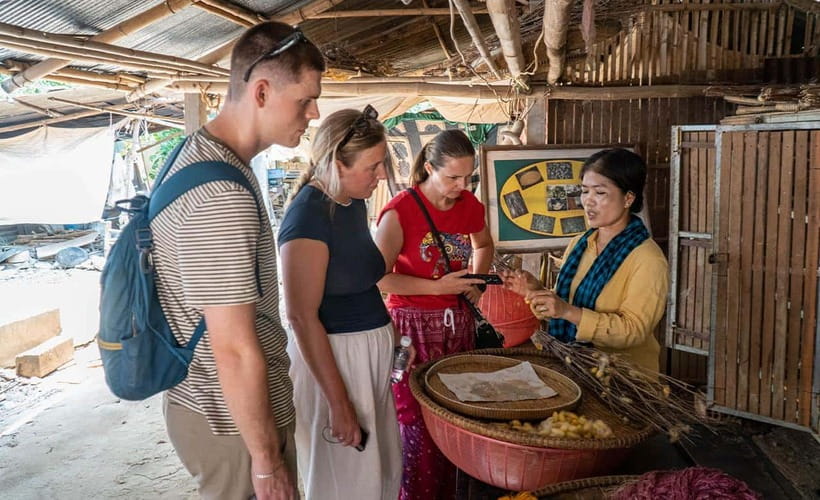
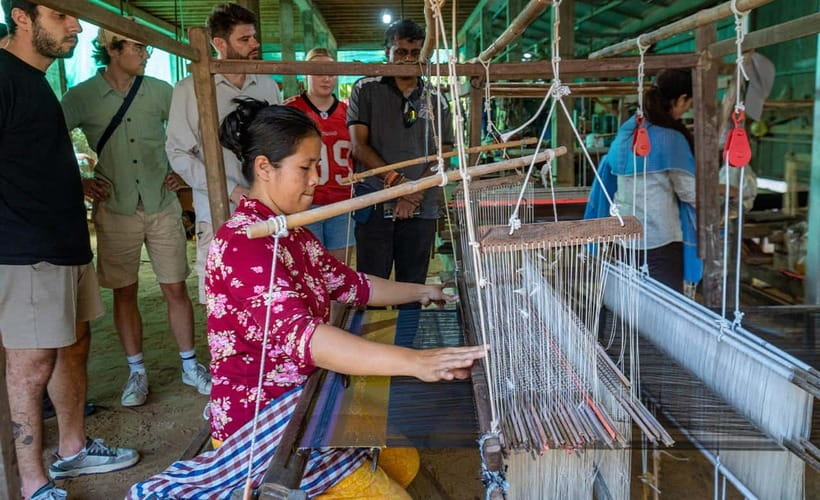
Silk weaving is the heart of the day, and it’s where this tour earns its name. You’ll get about an hour on Silk Island for a break and a guided visit focused on the silk weaving tradition.
This is where you learn that silk isn’t just one product. It’s a process with stages, time, and skill. You’ll hear how the tradition is passed down from parent to child, which helps you understand why the craft exists as more than a business model. It’s family knowledge.
Many guides also explain the idea of silk “grades” or different qualities of silk you’ll see in the workshop. That’s useful because it changes how you look at finished textiles. Suddenly you’re not just judging beauty; you’re thinking about labor, time, and material quality.
If you’re lucky, you may also see parts of the silk production chain that go beyond weaving—some tours include moments where people show how the silk comes from living processes before it becomes thread. Even when you don’t see every stage, the core takeaway stays the same: silk work is patient work.
Dried tofu skin (soy sheets): why this stop hits harder than you expect
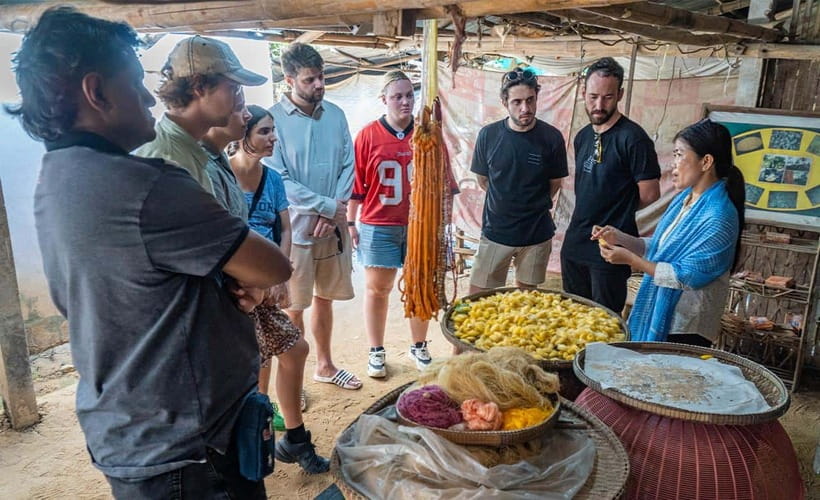
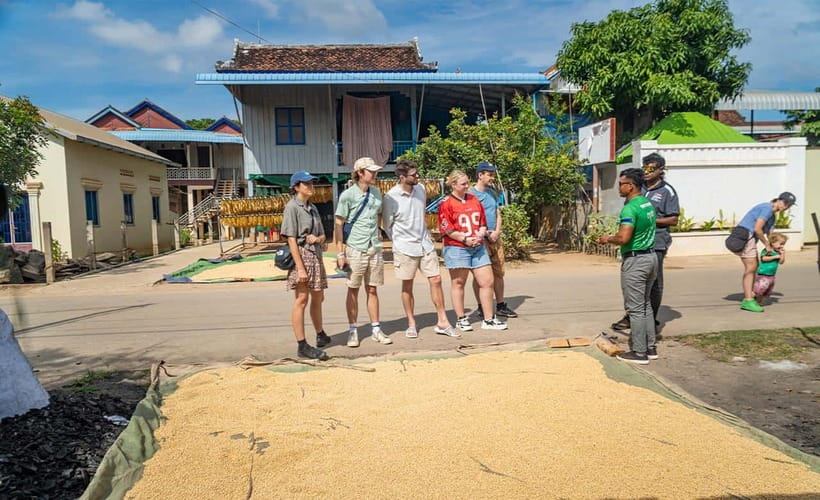
You also visit a family-run business specializing in producing dried tofu skin. In many Cambodian kitchens, tofu skin is a common ingredient, but few people ever see how it gets made.
Here’s what makes this stop valuable: you learn the work behind a food product. The process is more than “making tofu.” It’s turning soy into thin sheets through time, care, and repeated steps. It’s practical food production, and it shows you what “local craft” really means.
This is also a spot where guides often do an excellent job connecting the craft to local life. You might be taught what’s happening at each stage and why certain methods matter. Some guides also encourage questions in a respectful way, so you end up understanding the logic behind the steps—not just watching hands move.
And yes, this is a great moment to be curious. If you’re the kind of person who reads menus and wants to know where ingredients come from, you’ll enjoy this stop a lot.
Akreiy Ksatr Village: the rural reality beyond the workshop
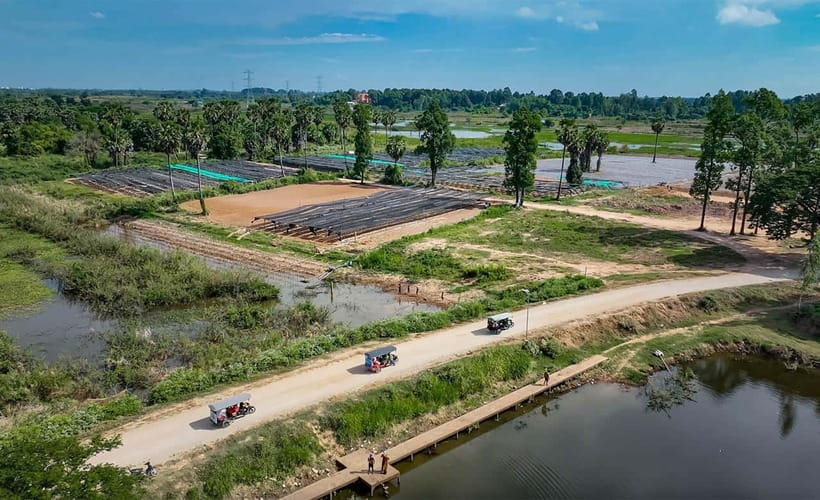
Toward the later part of the tour, you’ll pass through Akreiy Ksatr Village with guided viewing and time to take in the scene. This is the “what life looks like when no one’s selling you a souvenir” component.
Even if your time here is not long, it adds important context. You see everyday rural spaces that sit beside farms and small businesses, and you get a clearer sense of how the silk and tofu skin crafts fit into the bigger rhythm of the day.
Some guides also point out farm activity and rural work details. In past tours, that has included animal moments (even very young animals) and practical glimpses of hands-on work like palm sugar collection. You shouldn’t expect every detail every time, but the village stop generally delivers that feel of living routine, not staged performance.
The $29 price: what you’re really paying for
Let’s talk money without pretending it’s complicated.
At about $29 per person for a 4–4.5 hour tour, you’re paying for:
- Hotel pickup and drop-off
- A tuk-tuk ride plus ferry transport
- Entrance fees
- A guided route with multiple stops
- Basic comfort items like water and a snack
If you tried to DIY this, you’d quickly spend time figuring out transport, ferry timing, and guided interpretation. Your guide matters here because they turn three separate crafts and two local life stops into one connected story about Khmer daily life and labor.
This is also where the tour feels fair: you’re paying less for a “collection of sites” and more for context. That context is what makes silk and tofu skin visits feel worth it instead of industrial-looking.
If your goal is just to tick boxes in Phnom Penh, you might find a different type of tour more efficient. But if you want a morning that explains how people live and work, this is a strong deal.
Tips to make your morning easier (and better)
A few practical ideas make a big difference on this kind of countryside tour:
- Bring a hat and sunscreen. The day can include open outdoor walking.
- Wear shoes that handle uneven or damp paths. Since it runs rain or shine, you’ll want grip.
- Bring small cash if you want to buy crafts or local items. The tour includes entrance and transport, but personal spending is not included.
- Expect a tight schedule. You’ll see a lot, so keep your questions ready for your guide and let them guide your pacing.
- If you’re sensitive to motion, plan for bumpy roads. Tuk-tuk rides can be lively.
One more note: this tour is not suitable for pregnant women, likely because of the rural travel and transport style.
So, should you book it?
I think you should book this tour if you want one morning in Phnom Penh that feels genuinely outside the city routine. The strongest reason is the mix: market life + a temple visit + silk weaving + dried tofu skin. It’s not random. Each stop reinforces the others.
You might skip it if you hate scheduled mornings or you’re hoping for a slow, restful day. This is an active half-day, and it keeps moving even when the weather isn’t perfect.
FAQ
FAQ
How long is the Phnom Penh to Silk Island tour?
The tour runs for about 4 to 4.5 hours.
What does the tour cost?
The price is $29 per person.
Where do you get picked up and dropped off?
Pickup and drop-off are in Phnom Penh, with hotel pickup included. The tour returns you back to Phnom Penh around 12:30 pm.
What’s included in the price?
Hotel pickup and drop-off, an English-speaking guide if you select that option, tuk-tuk transportation, entrance fees, the ferry trip to the island, plus water and a snack.
Do I need to pay entrance fees separately?
No. Entrance fees are included.
Is the ferry ride included?
Yes. The tour includes a ferry trip to the island.
Does the tour run in bad weather?
Yes. It operates rain or shine.
Is there a guide, and is English available?
An English-speaking guide is available if you select the option with a guide.
Are there any restrictions on who can join?
The tour is not suitable for pregnant women.
What should I do if I’m doing hotel pickup?
Wait in your hotel lobby about 10 minutes before your scheduled pickup time.
Can I get a refund if my plans change?
You can cancel up to 24 hours in advance for a full refund.