REVIEW · PHNOM PENH
Remnants of a Khmer Rouge Era
Book on Viator →Operated by Asian Trails LTD · Bookable on Viator
Cambodia’s darkest chapter is close up here. In about 4 hours, you visit the Tuol Sleng Genocide Museum (S-21) and then walk the memorials at Cheung Ek Killing Fields, with a guide to make sense of what you’re seeing. It’s heavy, but it’s also one of the most direct ways to understand the Khmer Rouge era while you’re in Phnom Penh.
What I like most is the way the tour gives you context, so the history doesn’t feel like random horror. I also like the practical package: hotel pickup (within Phnom Penh), round-trip transport, and admission fees are built in, so you’re not juggling tickets and timing while you’re in a sensitive mood. The main drawback is simple: it’s emotionally intense—Tuol Sleng has a strict dress code, and the tour isn’t recommended for children under 12.
If you’re traveling with a fragile stomach, or you prefer your history lighter, you might want a different half-day plan. But if you want clarity—how this system worked, who it targeted, and what Cambodia has remembered since—this route is hard to beat.
In This Review
- Key things to know before you go
- A 4-hour route through S-21 and Cheung Ek
- Tuol Sleng Genocide Museum (S-21): what you’ll actually see
- Choeung Ek Killing Fields: the memorial stupa and the excavations
- Your guide changes the whole experience
- Dress code and etiquette at S-21 (don’t wing it)
- Transportation from Phnom Penh without the stress
- Price and value: what you’re really paying for
- Timing: how to mentally prepare for two heavy stops
- Who should book this tour (and who shouldn’t)
- Should you book this Tuol Sleng and Cheung Ek tour?
- FAQ
- What does the tour include for the $80.77 price?
- How long is the Tuol Sleng and Cheung Ek tour?
- Are hotel pickup and drop-off included?
- What areas in Phnom Penh are excluded from included transfers?
- What is the dress code at Tuol Sleng (S-21)?
- Is the tour private or shared?
- Is the tour suitable for families with kids?
- Do I need to bring my own entrance tickets?
- Does the tour use an electronic ticket?
- What should I know about cameras or phones during the visit?
Key things to know before you go
- S-21 at Tuol Sleng: a former school turned detention center, including cramped cells and interrogation-related displays
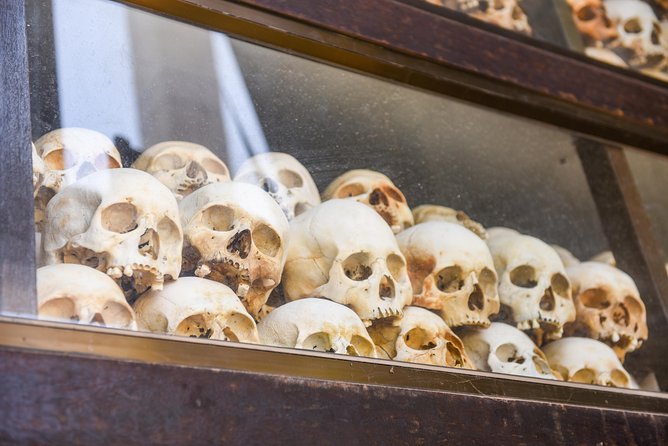
- Cheung Ek’s memorial stupa: built around excavated remains, with thousands of skulls, bones, and clothing on display
- A private, English-speaking guide: your questions get answered in real time, including how the Khmer Rouge regime operated
- Dress code at Tuol Sleng: shoulders must be covered and clothing must fall below the knees to avoid being refused entry
- Pickup limits in Phnom Penh: transfers are included only for stays in and inside Phnom Penh; outside areas can cost extra
- Modern comfort basics are on you: bring/plan for weather and protect electronics, since natural elements can affect devices
A 4-hour route through S-21 and Cheung Ek
This is a half-day that’s built around two linked places. Tuol Sleng (S-21) shows you the machinery of detention—interrogation, forced confessions, and record-keeping. Cheung Ek then lands the story in the place where prisoners were sent after that process. Seeing them in sequence matters. It turns “events in a book” into a timeline your body understands.
The tour is offered as a private experience, meaning it’s only your group with your guide and driver. That helps when the topic is difficult, because you can move at a pace that feels right for you. It also keeps logistics simpler in Phnom Penh: you’re not trying to coordinate meeting points or squeeze into a big public group while you’re already processing a lot.
The trip runs about 4 hours, with roughly 2 hours at each stop. You’ll have time to look closely at exhibits and memorials rather than doing the fastest “checklist” version.
You can also read our reviews of more tours and experiences in Phnom Penh.

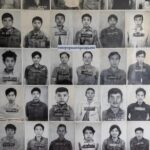
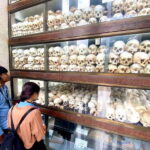
Tuol Sleng Genocide Museum (S-21): what you’ll actually see
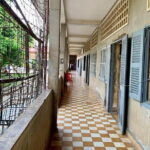
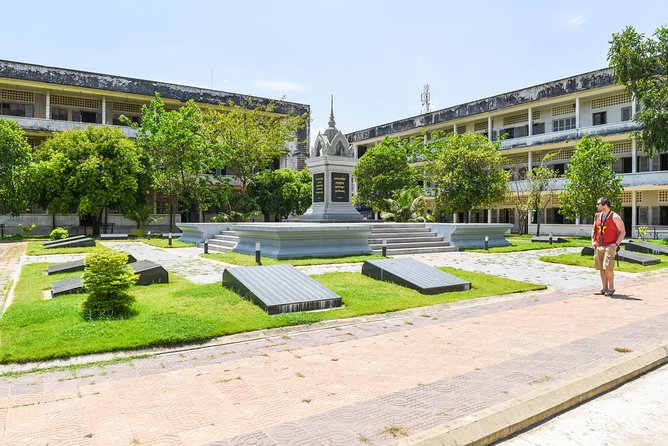
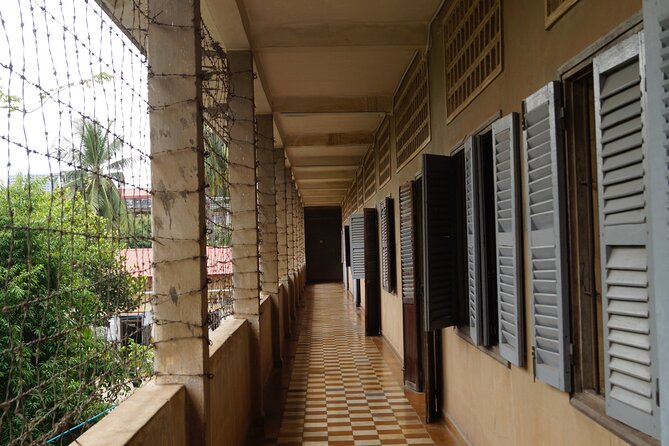
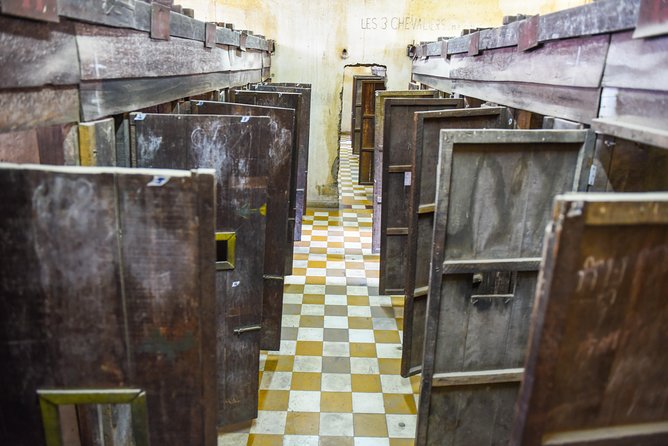
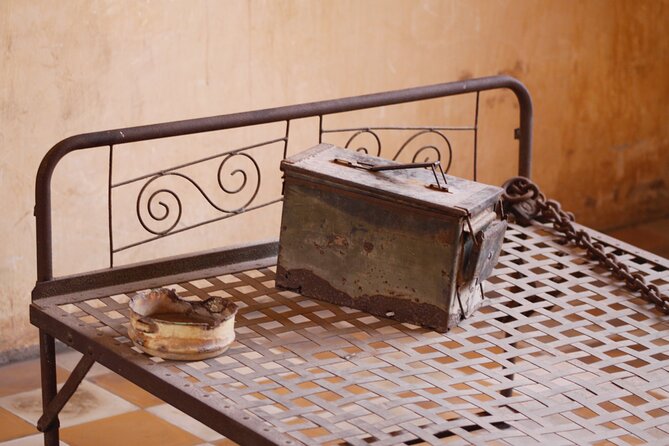
Tuol Sleng Genocide Museum in Phnom Penh is known as S-21, and it began as a school—Tuol Svay Pre School—before it was converted into a detention center. That detail is one of the most jarring parts. You’re walking through spaces that used to be for learning, then transformed into places where people were imprisoned, interrogated, and tortured.
Inside, you’ll notice several kinds of displays:
- Crude cells built in classrooms, which gives the site a claustrophobic, do-not-look-away feeling
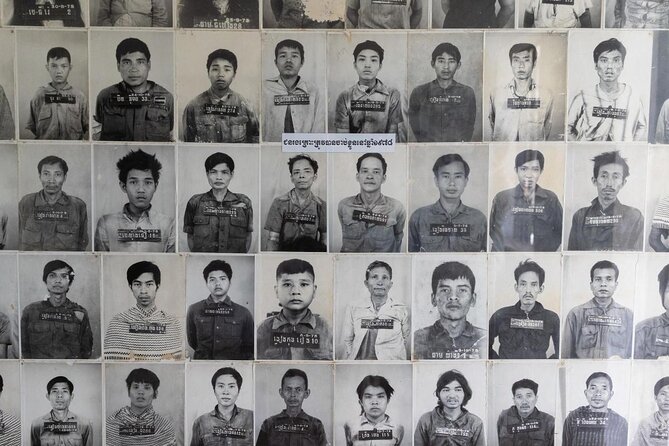
- Exhibit paintings and photographs of victims, which help put names and faces to the system
- Torture devices used to extract confessions, reflecting the regime’s brutal methods in the late 1970s
This is not a museum that treats the past like a distant artifact. It shows how the regime worked day to day. The tour’s guide makes this easier by connecting what you’re seeing to the larger Khmer Rouge story—especially the role of Pol Pot and how the regime turned suspicion into policy.
One practical note: Tuol Sleng requires a strict dress code. If your clothing doesn’t cover shoulders or doesn’t fall below your knees, entry can be refused. I’d treat this as non-negotiable. Wear something that’s comfortable but clearly modest—your future self will thank you when you’re not stuck outside adjusting your outfit.
Choeung Ek Killing Fields: the memorial stupa and the excavations
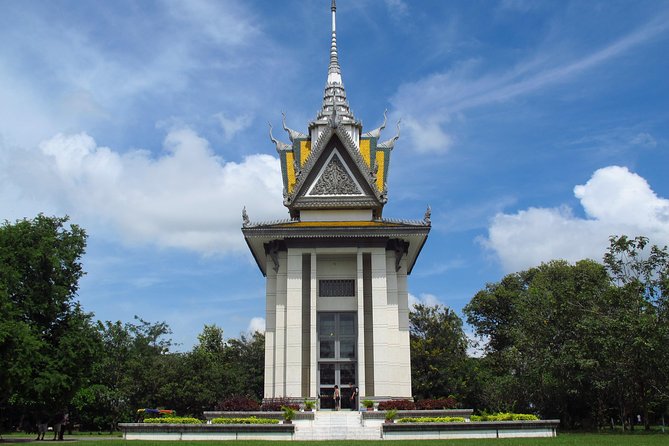
After Tuol Sleng, the tour moves you outside the city center to Cheung Ek, one of the Khmer Rouge’s best-known killing fields. Before it became a killing site, it was a Chinese cemetery. Knowing that background changes the atmosphere: this wasn’t only a place of violence—it was also a place where communities marked deaths, which makes the later use feel even more violating.
At Cheung Ek, you’ll see:
- Mass graves that have been excavated, including the remains of almost 9,000 bodies
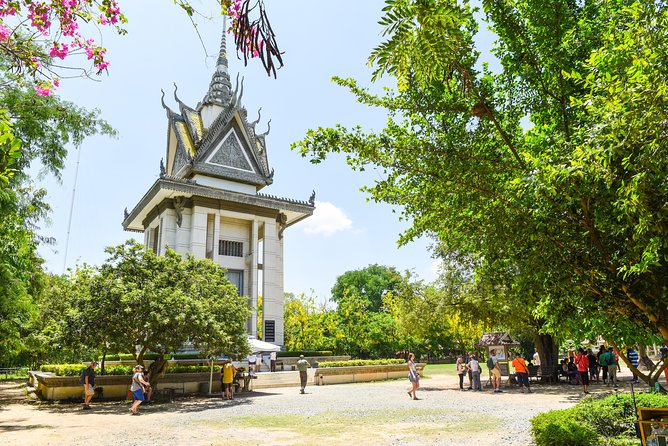
- A memorial stupa displaying over 5,000 skulls, bones, and clothes of victims
There’s no soft landing here. The memorial space is designed for reflection and remembrance, and the guided context helps you understand what the site represents beyond the sheer number. You’re also shown how detention wasn’t isolated—thousands of Cambodians were tortured and imprisoned in centers around the country, and Cheung Ek was part of that wider system.
Expect a quieter rhythm than at Tuol Sleng. You’ll likely stand still more. You’ll take in details longer. And you’ll probably feel how the tour is doing its real job: connecting the process you saw at S-21 to what happened afterward.
Your guide changes the whole experience
For a topic this intense, a guide isn’t a luxury. It’s the difference between “seeing objects” and “understanding a mechanism.”
In the feedback I’ve tracked most carefully, guides get praised for being thoughtful and for sharing real context. One specific name that comes up is Sony, described as excellent—knowledgeable, friendly, and considerate—sharing a lot of information without steamrolling the emotional weight of the day.
That matters because the Khmer Rouge period isn’t just one event. It’s policy, fear, bureaucracy, and violence layered together. A good guide helps you keep track of the timeline and the roles different parts of the system played. They also help you interpret why certain exhibits exist—why there are photographs, why there are details about cells, and why the memorial structures look the way they do.
If you want to ask questions as you go, a private guide is a major advantage. You don’t have to wait for a group to catch up or pretend you understand something you don’t.
Dress code and etiquette at S-21 (don’t wing it)
This tour takes you into sites that are not just historical—they’re places of grief and remembrance. Tuol Sleng’s dress rules are strict for a reason: respect for the premises and the victims.
Here’s what the museum requires:
- Cover shoulders
- Wear clothes that fall below the knees
- Avoid shirts with obscene and disrespectful prints and pictures
- Bright, disrespectful clothing can cause problems
I’d plan outfits specifically for this morning/afternoon. If you’re packing light, choose a long skirt, long trousers, or a breathable layer that keeps your shoulders covered. The worst-case scenario is that you show up underdressed and lose time. The best-case scenario is you walk in calm and ready to focus.
Also, since your visit involves sensitive spaces, keep your behavior low-key. The tour works best when you’re fully present, not rushing for photos.

Transportation from Phnom Penh without the stress
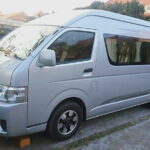
One of the easiest reasons to book this exact style of tour is that it’s built for Phnom Penh timing. You get pickup offered and round-trip transport, handled by a car/mini-van/coach with a professional driver. Hotel pickup is included for stays in and inside Phnom Penh—but there are clear boundaries.
If you’re staying outside the included area (examples listed include Koh Dach, Tonle Bati, and Oudong), or near river/cruise ferry terminals, or at Phnom Penh International Airport, return transfers aren’t included and supplements apply. In some cases, pickup/drop-off at non-registered accommodation types may not be confirmed, and you may need to meet at a nearby hotel.
So here’s the practical move: double-check your pickup address and confirm it correctly. If your accommodation is a private residence or something outside the normal tourism listings, expect that you might be asked to meet nearby instead of curbside.
The good news: because the transport is handled, you can spend your mental energy on the sites themselves, not on navigating a city while you’re already unsettled.
Price and value: what you’re really paying for
At $80.77 per person, this isn’t a budget “see-it-fast” option—but it also isn’t priced like a luxury experience. For that money, you’re getting a private English-speaking guide, entrance and donation fees, and round-trip transport from within Phnom Penh.
That matters in Cambodia. If you try to DIY this route, the cost adds up quickly: guide time, admission fees, and the cost of moving between locations. The biggest value is the guided interpretation at both sites. With a topic like the Khmer Rouge, a guide helps you not just look, but understand.
Also worth noting: the tour has a strong track record, with an average rating of 4.6 and 93% recommending it. That kind of consistency is often a sign the experience is working as promised—especially the guide quality and the way the route flows.
If you’re the type of traveler who prefers audio at museums and keeps moving, you might be tempted to go cheaper. But with Tuol Sleng and Cheung Ek, the written labels alone can feel insufficient. A guide can help you connect the dots between what’s on the walls and what was happening in the wider country.
Timing: how to mentally prepare for two heavy stops
Because this is roughly two hours at each location, you’re not getting a “quick look” and then escaping to something cheerful. You’re likely to feel the emotional load over an extended stretch.
I recommend planning your day around it:
- Wear comfortable shoes. The memorial grounds are an “on your feet” kind of place.
- Don’t schedule anything intense right afterward, like a late-night party or a long drive out of town.
- Give yourself a chance to decompress afterward with a simple meal and quieter streets.
If you’re sensitive to difficult topics, it’s still possible to do this tour—but you’ll want to go in with eyes open. This route is meant to be sobering, and that’s not a flaw.
Who should book this tour (and who shouldn’t)
This is best for you if:
- You want a clear, guided understanding of the Khmer Rouge era
- You prefer private, question-friendly pacing
- You like structured time blocks rather than assembling your own day on the fly
It’s not a great fit if:
- You’re traveling with children under 12 (the tour is not recommended for that age group)
- You know you struggle with emotionally intense, memorial-type visits
- You don’t want to follow strict site rules like the Tuol Sleng dress code
A final thought: the tour’s purpose isn’t entertainment. If you can treat it as education and remembrance, the experience becomes more meaningful—and less chaotic.
Should you book this Tuol Sleng and Cheung Ek tour?
Yes, if your priority is understanding Cambodia’s recent past through the two key sites that connect detention to killing. The combination of private guiding, entrance fees included, and round-trip transport makes it a practical choice, not just a “must-see” checkbox. The route is also well paced for a half-day, giving you time to actually look.
I’d only skip it if you’re unsure you can handle the emotional intensity, or if your clothing might put you at risk of being turned away at Tuol Sleng. If you go, dress appropriately, keep your pace steady, and let the guide do what you’re paying for: turning painful images into a coherent, understandable story.
FAQ
What does the tour include for the $80.77 price?
The tour includes a professional English-speaking guide, transportation by car/mini-van/coach with a professional driver, and all entrance and donation fees for the sites mentioned. Applicable taxes and service charges are included too.
How long is the Tuol Sleng and Cheung Ek tour?
The duration is approximately 4 hours, with about 2 hours at Tuol Sleng and about 2 hours at Cheung Ek.
Are hotel pickup and drop-off included?
Pickup is offered, and return transfers are inclusive for customers staying in and inside Phnom Penh. Pickup/drop-off may not be confirmed for private residences, apartment complexes, or other non-registered tourism accommodations.
What areas in Phnom Penh are excluded from included transfers?
Transfers outside Phnom Penh are excluded, including accommodations in areas such as Koh Dach, Tonle Bati, and Oudong, as well as river and cruise ferry terminals and Phnom Penh International Airport. Supplements apply for joining from outside the included regions.
What is the dress code at Tuol Sleng (S-21)?
You must dress modestly and appropriately: cover shoulders and wear clothing that falls below the knees. Shirts with obscene and disrespectful prints and pictures, plus brightly-colored disrespectful clothing, may lead to refusal of entry.
Is the tour private or shared?
This is a private tour/activity. Only your group will participate.
Is the tour suitable for families with kids?
It is not recommended for families with children under the age of 12 years old.
Do I need to bring my own entrance tickets?
No—entrance and donation fees for the visits described are included in the tour price.
Does the tour use an electronic ticket?
A mobile ticket is listed as a feature, and confirmation is received at the time of booking.
What should I know about cameras or phones during the visit?
The information provided advises that natural elements can damage electronic equipment. Wrap and protect cameras and phones properly, and note that the provider cannot be held responsible for damage related to negligence or not following suggested protection.