REVIEW · PHNOM PENH
13 Days Private Tour to Cambodia, Angkor Wat and Vietnam
Book on Viator →Operated by Global Travel & Tours Asia · Bookable on Viator
Meeting you at the gate is a big deal. This private 13-day route strings together Angkor Wat and Vietnam’s top sights with door-to-door pickups, a licensed English guide, and tight flight-and-vehicle planning. In past experiences coordinated by Mr. Ann, the team has helped people get from the plane to the first day’s plans with less stress than you’d expect.
I really like the way the trip balances big icons with honest, hard history. You hit Phnom Penh’s Royal Palace and National Museum, then you also face the reality of the Tuol Sleng Genocide Museum and the Killing Fields at Choeung Ek—both are handled as guided, respectful visits. Then the day-to-day rhythm cools off with water time: the Ha Long Bay overnight cruise, Hué’s Perfume River moments, and the Mekong Delta boat ride.
The trade-off is pace. With several domestic flights and a lot of UNESCO stops in 13 days, you’ll spend plenty of time moving, plus days can feel packed—especially around Angkor and again in central Vietnam.
In This Review
- Key highlights you’ll feel on the ground
- Price and what you’re really paying for ($4,360 per person)
- Phnom Penh: Royal Palace classics, Khmer art, then S-21 and the Killing Fields
- Siem Reap and Angkor Thom: faces, terraces, and Ta Prohm before Angkor Wat
- Banteay Srei and Kampong Phluk: pink sandstone + life on water
- Hanoi by day: colonial streets, Vietnam’s learning institutions, and Hoa Lo’s hard truth
- Ha Long Bay overnight on Dragon Legend Cruise: more time on the water
- Hoi An heritage by cyclo and riverboat, ending with Memories Show
- Hué’s Imperial City and Tombs: Perfume River calm and cyclo-powered exploring
- Ho Chi Minh City and the Cu Chi Tunnels: war context plus French-era architecture
- Mekong Delta from My Tho to Cai Be: a relaxed cruise day with lunch at Le Longanier
- Day 13 in Saigon: the airport transfer you’ll thank yourself for
- Should you book this Cambodia and Vietnam private tour?
- FAQ
- What cities does the tour cover?
- How long is the trip?
- Is this a private tour?
- Are pickup and airport transfers included?
- Are flights included?
- Is there an overnight cruise?
- What meals are included?
- Are entrance fees included?
- How late can I cancel for a refund?
- Where does the tour start?
Key highlights you’ll feel on the ground
- Private end-to-end logistics: airport meet-and-greet, modern air-conditioned vehicles, and licensed English-speaking guidance.
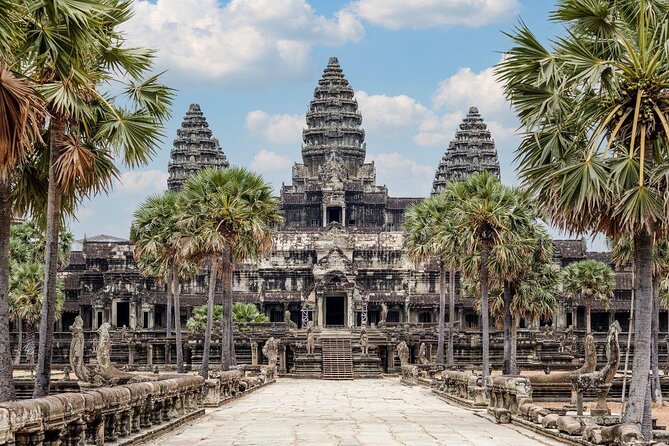
- Angkor Wat without chaos: a temple plan built around classic Angkor Thom highlights plus Ta Prohm and Angkor Wat.
- Ha Long Bay overnight on Dragon Legend Cruise: you get more than a quick day trip, with morning time too.
- Cyclo and river views in two UNESCO cities: Hue by pedal-powered cyclo and Hoi An by riverboat along the Thu Bon.
- Saigon with context: Cu Chi Tunnels plus the War Remnants Museum, not just landmark photos.
- Mekong Delta day with a calm cruise: My Tho and Cai Be, plus lunch at Le Longanier.
Price and what you’re really paying for ($4,360 per person)
$4,360 sounds like a lot until you map out what’s actually included. This is not just a sightseeing checklist. You’re buying private transportation, a professional licensed English-speaking guide, major entrance fees, multiple domestic flights, one international flight, hotel nights, plus at least one overnight cruise.
On paper, you’re also covered for daily breakfast, several lunches, and one included dinner. Add in 3 bottles of mineral water per person each day, and the day-to-day “nickel and dime” part gets smaller.
What you should consider: the itinerary is structured and time-efficient, so there’s less room for detours or slow mornings. If you love flexibility over schedules, you may find the pace a little intense.
You can also read our reviews of more private tours in Phnom Penh

Phnom Penh: Royal Palace classics, Khmer art, then S-21 and the Killing Fields
Phnom Penh starts with the basics you want on arrival. You’ll handle immigration and customs, plus you get into the city with your guide and driver rather than trying to figure out the first day yourself.
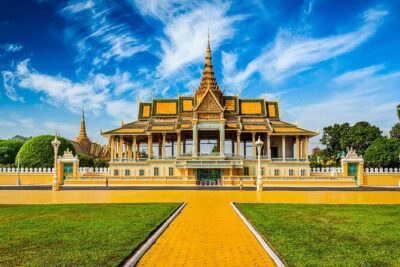
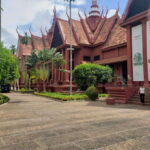
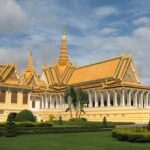
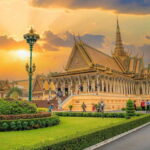
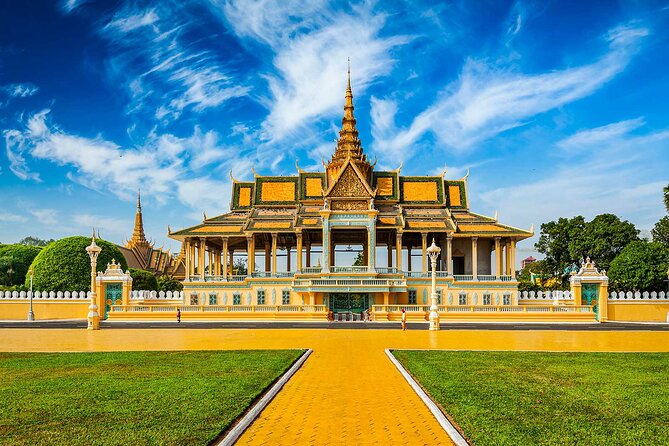
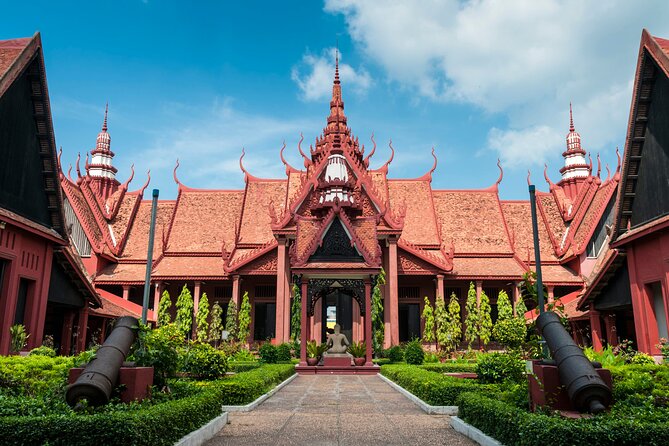
The Royal Palace stop is the first real “Cambodia feels like Cambodia” moment: pagoda-style compound architecture built in 1866, plus a chance to stroll through the gardens at a calmer pace than you’ll get at bigger sites. Next, the National Museum (built in 1917) is a practical add-on. It gives you context for the Khmer art and sculpture you’ll see later at Angkor.
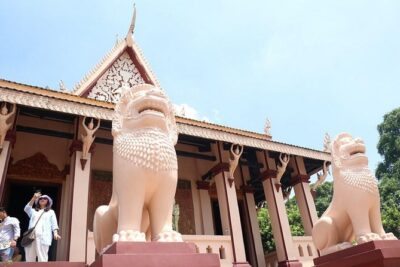
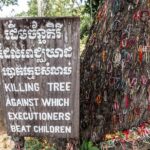
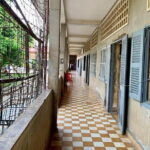
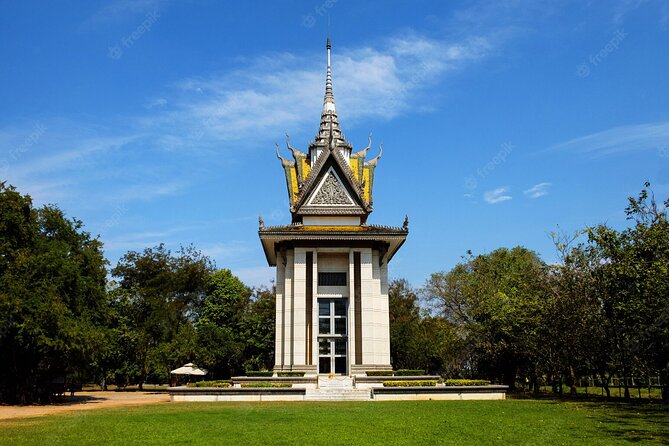
Then the trip shifts tone. Wat Phnom is short and scenic—founded in 1373 and tied to Buddhist relics washed ashore by the river. After lunch, you go to Tuol Sleng Genocide Museum (S-21), followed by Choeung Ek Genocidal Center, about 16 km south.
These two memorial stops are important because they anchor everything else you’ll learn in Cambodia. You don’t just see temples; you understand why so much of the region’s story carries weight.
Practical tip: keep your expectations realistic here. This isn’t a “quick photos and move on” day. Give yourself time to sit with what you’re seeing.
Siem Reap and Angkor Thom: faces, terraces, and Ta Prohm before Angkor Wat
The big Angkor moment begins after you fly from Phnom Penh to Siem Reap. Once you’re there, the day is built around Angkor Thom, the walled capital. You start at the South Gate, then work through a sequence of major temple stops that helps you see the Angkor style from multiple angles.
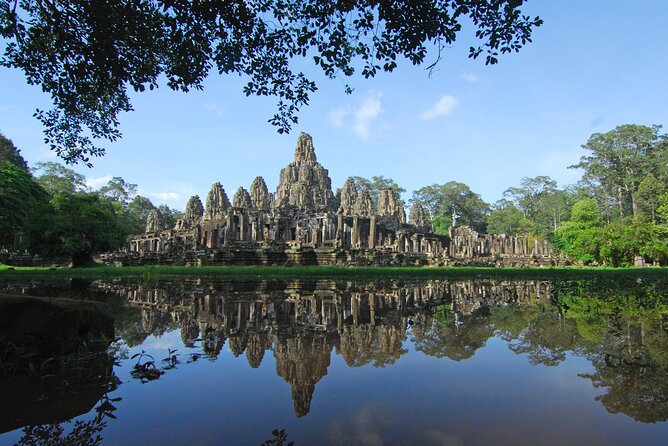
Bayon Temple is the signature experience: those famous faces on all sides make you feel like you’re walking through a puzzle. From there you visit Baphuon and the Terrace of the Elephants, then the Terrace of the Leper King. The mix matters because it shows Jayavarman VII’s Angkor vision as both political theater and religious design.
You also stop at Phimeanakas, a Hindu temple with Khleang style roots, and then the plan turns cinematic with Ta Prohm. Ta Prohm is the one people often remember because it feels atmospheric—trees and stone almost look like they’re competing for who’s older.
Lunch and a full afternoon at Angkor Wat come next. This is where the details matter: bas-reliefs and devatas (guardian spirits) across the temple surfaces. Angkor Wat is also the place you’ll appreciate a guide’s pacing. The temple complex is so large that “going on your own” can accidentally mean missing the best views simply because you’re moving in the wrong direction at the wrong time.
Banteay Srei and Kampong Phluk: pink sandstone + life on water
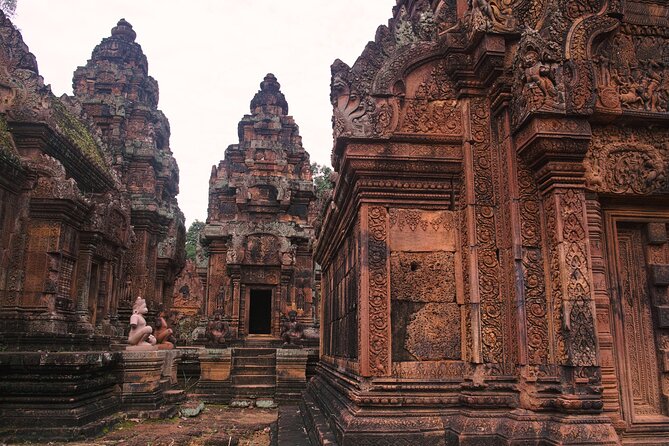
After Angkor Thom, you head north to Banteay Srei, one of the most sculpted highlights in the whole region. It’s known for its pink sandstone and the careful carving. This is a good contrast day: instead of huge city-scale ruins, you focus on delicate work and a smaller, more detailed temple feel.
Preah Khan follows. It’s built in the same general style as Ta Prohm, but with much better preservation, so it’s easier to read the structure as a functioning sacred space rather than just a dramatic ruin.
Then you shift into the everyday Cambodia rhythm with Kampong Phluk, a floating village area. You go on an ox-cart ride through villages and rice fields, stop for a fresh coconut drink with the family, and then connect that land-and-water life back to the broader Tonle Sap setting.
This is one of those stops that makes the whole trip feel more grounded. Angkor can swallow your attention. Kampong Phluk gives your eyes a new kind of story to track.
Hanoi by day: colonial streets, Vietnam’s learning institutions, and Hoa Lo’s hard truth
After Siem Reap, you fly to Hanoi, where the itinerary leans cultural and historical. The first morning includes the Ho Chi Minh Complex and Ba Dinh Square area, which matters as a national pilgrimage point.
Then you move into learning and context. The Temple of Literature (built in 1070) and the Imperial Academy connection help you understand the deep role Confucian education played in Vietnam. After that comes the Vietnam Museum of Ethnology, a strong choice because it’s not only about one city or one dynasty—its collection and objects are meant to reflect Vietnam’s longer story.
The day keeps rolling through colonial Hanoi, with a pass by the Hanoi Opera House. You then visit Hoa Lo Prison—commonly referred to as Hanoi Hilton—so you’re not just seeing architecture; you’re seeing how conflicts shaped everyday life and memory.
The evening has a lighter, memorable cultural twist: a Thang Long Water Puppet performance. It’s described as a uniquely North Vietnamese art form celebrating rural life and folklore for over 1,000 years. It’s the kind of evening where you get to switch gears without ignoring culture.
Practical tip: Hoa Lo and the prison material can hit harder than you expect. If you’re sensitive to heavy history, pace your thoughts during transitions.

Ha Long Bay overnight on Dragon Legend Cruise: more time on the water
Ha Long Bay gets its own full experience because you’re doing an overnight cruise on a traditional ship (Dragon Legend Cruise, Deluce cabin). This is where value shows up. A lot of tours treat Ha Long like a one-day photo errand. Here, you get time beyond the “arrive, snap, leave” pattern.
The itinerary includes a morning view of the Bay with a cup of tea or coffee, plus breakfast in the fresh air. Then you visit Vung Vieng fishing village by rustic rowboat. Meeting local people and moving through the water-based rhythm is a practical contrast to the temple-heavy Cambodia days.
The biggest practical advantage of overnight cruising is timing. Even if you don’t control the exact weather, being out there for more than one block of hours usually means you catch different light and a calmer pace.
What you should consider: you’re trading a chunk of “hotel time” for sea time. If you’re the type who hates transfers, this day requires patience. But the payoff is that Ha Long feels like a place, not a stop.
Hoi An heritage by cyclo and riverboat, ending with Memories Show
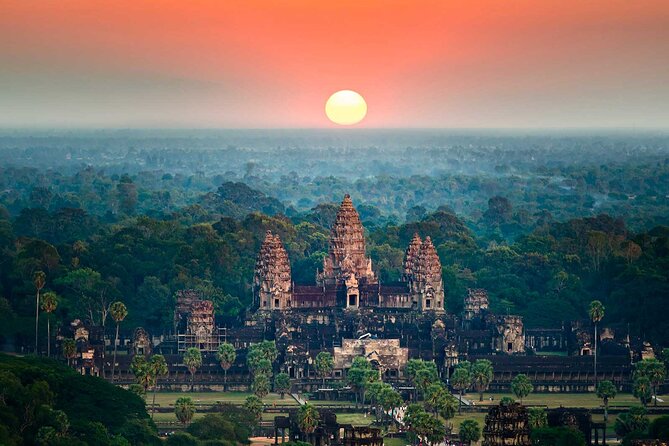
After Ha Long, you fly Hanoi to Da Nang and then connect to Hoi An. Hoi An is planned as UNESCO-style heritage time with a little variety: streets, historic houses, temples, and water views.
The Japanese Covered Bridge is a quick anchor point, followed by cyclo rides to the Old House of Phung Hung and several heritage sites like the Fukian Assembly Hall (Phuc Kien) and the Old House of Tan Ky. These stops help you read the city’s layered Chinese and Vietnamese influences through architecture and household layout.
Then you shift to water. You take a riverboat ride along the Thu Bon River and visit a quaint boat-building village. The viewpoint change matters. Hoi An’s charm isn’t only on land—it’s in the way the river organizes the city.
After lunch, you get free time to explore on your own, which is a good safety valve in an otherwise schedule-tight trip.
The evening plan is the Hoi An Memories Show. You’re picked up and guided to the performance, which is described as conveying cultural and historical values through show format.
Practical tip: after several days of long cultural walks, this is a good night to let your feet rest. The show format is easier than another round of stairs.
Hué’s Imperial City and Tombs: Perfume River calm and cyclo-powered exploring
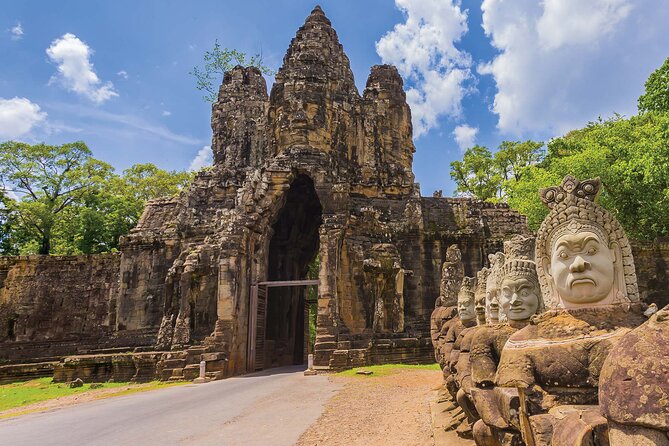
Next up is Hué, where the itinerary leans into UNESCO World Heritage sites and the Nguyen era. The day starts with Tomb of Tu Duc, then Tomb of Khai Dinh. These tombs are not the same kind of visit as Angkor’s stone faces; they’re designed as imperial statements tied to landscape and ritual.
After lunch, you explore Hue’s Citadel and Imperial City functions and the Forbidden Purple City area. The plan includes a private, pedal-powered cyclo. That detail is more useful than it sounds. You cover ground without losing your energy, and it helps you see the citadel as a whole rather than a series of disconnected stops.
On the next day, you get Thien Mu Pagoda, a seven-story octagonal tower built in 1844, and then a cruise along the Perfume River. You also visit the Mausoleum of Emperor Minh Mang, set amid pine hills by the river.
Hue is the part of the trip where the pace tends to feel more “measured.” That’s a nice break after the high-intensity days in Angkor and after you’ve handled museums with heavier content earlier in Cambodia and Hanoi.
What you should consider: Hué days can still involve walking and standing for long periods. If you’re heat-sensitive, you’ll appreciate shade stops and slower pacing during transitions.
Ho Chi Minh City and the Cu Chi Tunnels: war context plus French-era architecture
Flying from Hué to Ho Chi Minh City sets the tone for a very different kind of history. Day 11 begins with Cu Chi Tunnels at Ben Duoc. You explore an underground world of tunnels and chambers, described as three stories deep.
This stop is intense. It’s important that it’s guided—so you understand what you’re seeing and why it mattered. It’s also one of the easiest places to overdo it, simply because it’s so fascinating. Give yourself time to absorb, then pace your next museum or landmark visit.
After lunch, you move through Saigon’s landmark architecture. The Notre Dame Cathedral shows French colonial influence. The Saigon Central Post Office adds Gothic, Renaissance, and French touches. Then you visit the Independence Palace (Reunification Palace), the site marking the end of the Vietnam War in April 1975.
War Remnants Museum follows. It’s intended as a call for peace and includes a comprehensive set of machinery and weapons. That’s the kind of stop that can reshape how you interpret everything you saw earlier at Tuol Sleng and Hoa Lo.
Finally, you finish with shopping and city landmarks: Ben Thanh Market and Ho Chi Minh Square with the surrounding City Hall area and nearby restaurants.
Practical tip: this is a long day emotionally and physically. It’s worth taking the shopping time as a “walk and breathe” window rather than a sprint for souvenirs.
Mekong Delta from My Tho to Cai Be: a relaxed cruise day with lunch at Le Longanier
The Mekong Delta day starts with My Tho, then you transfer to the Cai Be jetty. You’re greeted with cold towels and a refreshing drink before you set off on a leisurely cruise aboard the Cai Be Princess Sampan.
This part of the itinerary is intentionally lower energy than earlier UNESCO days. You get time on the water and you can watch how river life operates at a human scale. The cruise ends with lunch served at Le Longanier Restaurant, described as a colonial-style villa surrounded by tropical garden fruit trees.
It’s a good ending day because it gives you variety right before you fly home the next day. If you want one day that feels like a break from temples and museums, this is it.
Day 13 in Saigon: the airport transfer you’ll thank yourself for
Your tour ends in Ho Chi Minh City. A transfer from the Mai House Saigon Hotel to Ho Chi Minh City International Airport is included, and you’re asked to allow 3 hours for airport check-in formalities.
This is a small detail, but it matters. Private tours live or die on airport timing, and having a planned transfer reduces last-minute stress.
Should you book this Cambodia and Vietnam private tour?
I’d tell you to book it if you want a high-structure, high-comfort route that covers Phnom Penh, Angkor, Hanoi, Ha Long Bay, Hoi An, Hué, Saigon, and the Mekong Delta in 13 days without you doing the logistics math.
It’s especially strong if you care about:
- guided temple time at Angkor Wat and Angkor Thom
- an overnight Ha Long Bay cruise instead of a rushed day trip
- cultural depth in Hanoi and Hué, not only landmark snapshots
- war history stops that are guided, not skipped
Skip it (or adjust expectations) if you strongly prefer slow travel. This itinerary is scheduled with multiple flights and a heavy concentration of major stops, so there isn’t much room for wandering far off-plan.
FAQ
What cities does the tour cover?
It covers Phnom Penh and Siem Reap in Cambodia, then Hanoi, Ha Long Bay, Danang and Hoi An, Hué, and Ho Chi Minh City (Saigon) in Vietnam. It also includes a Mekong Delta cruise from the My Tho area with Cai Be.
How long is the trip?
The duration is 13 days (approx.).
Is this a private tour?
Yes. It’s described as a private tour/activity, with only your group participating.
Are pickup and airport transfers included?
Pickup is offered. The tour’s end includes a transfer from Mai House Saigon Hotel to Ho Chi Minh City International Airport.
Are flights included?
Yes. Flights included are Phnom Penh to Siem Reap, Siem Reap to Hanoi, Hanoi to Danang, and Hue to Ho Chi Minh City.
Is there an overnight cruise?
Yes. You have a one-night overnight cruise on Ha Long Bay aboard the Dragon Legend Cruise (Deluce Cabin).
What meals are included?
Daily breakfast is included, plus lunch (6) and one dinner. Other meals and drinks are not included.
Are entrance fees included?
Yes. All entrance fees at places listed are included.
How late can I cancel for a refund?
You can cancel up to 6 days in advance for a full refund. Canceling 2–6 days in advance gives a 50% refund, and changes made less than 2 full days before the experience start time are not accepted with no refund.
Where does the tour start?
It starts at Phnom Penh’s Pochentong Airport (Cambodia).