Cambodia hits hard and soft in 10 days. This Cambodia Intro trip strings together Phnom Penh culture, Kampot riverside calm, Koh Rong Sanloem beach time, and a sunrise Angkor Wat temple visit, all under one easy plan.
I love how much you actually get to do without feeling like you’re sprinting. The trip mixes active days (kayaking, snorkeling) with hands-on local moments like a Khmer cooking class and learning how Kampot pepper is grown, and you’re supported by a group leader known in recent trips as Sel, Paula, Bela, Izabela, Andri, Logan, and Jeremy.
One possible drawback: some days are early, and some stops are emotionally heavy. If you’re not comfortable with S21 Prison and the Killing Fields, plan for a quieter evening after, and keep in mind it’s geared to a moderate fitness level.
In This Review
- Key things that make this trip click
- Cambodia in one trip: Phnom Penh, the coast, and Angkor
- Phnom Penh arrival: a real welcome, then tuk-tuks and street food vibes
- S21 Prison and the Killing Fields: heavy history with the right framing
- Kampot riverside days: pepper farm learning, kayak time, and real Cambodian meals
- Koh Rong Sanloem: snorkeling, long-tail boat cruising, and beach time you actually feel
- The overnight bus to Siem Reap: comfortable travel that protects your morning
- Siem Reap’s countryside and floating villages: calm scenery and a different pace
- Angkor Wat sunrise: the world’s largest temple, explained by a local guide
- What you really get for $59: value, meals, and pace
- Who this tour suits (and who might want to adjust plans)
- Should you book Cambodia Intro?
- FAQ
- Where does the Cambodia Intro tour start and end?
- What time is the tour start?
- What meals are included?
- Are flights and visas included?
- Is airport pickup included?
- What activities are included beyond sightseeing?
- What’s the group size and fitness level?
- What is the cancellation policy?
Key things that make this trip click
- Max 20 travelers: small-group pace with time to ask questions and actually meet people.
- Airport meet-up and onward support: you’re met on arrival in Phnom Penh and helped to organize your next steps at the end in Siem Reap.
- S21 Prison and the Killing Fields with a local guide: you get context, not just a quick pass.
- Kampot pepper + cooking class: you learn two things you can take home with you.
- Koh Rong Sanloem snorkeling and a village-run feel: beach time plus sea time, not just pool-and-pray.
- Angkor Wat sunrise with a local guide: the famous moment, explained properly.
Cambodia in one trip: Phnom Penh, the coast, and Angkor
This route works because it covers three very different Cambodia moods. You start in Phnom Penh, where you face the country’s complicated modern history. Then you head to Kampot for slower river days and the spice that made the region famous. Finally, you end in Siem Reap for the jaw-dropping scale of Angkor Wat.
What I like most is the balance of “see it” and “experience it.” You won’t just tick boxes. You’ll kayak, snorkel, eat local food, and wake up early for Angkor Wat, all with transport handled for you.
If you’ve got limited time and you want variety without constant planning, this kind of trip is a smart move.
You can also read our reviews of more tours and experiences in Phnom Penh.

Phnom Penh arrival: a real welcome, then tuk-tuks and street food vibes
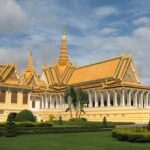
Your day one starts the easy way: you’re met at Phnom Penh International Airport and taken to the hotel so you can reset after flying. It’s not just logistical. That meet-up helps you get your bearings fast, especially if it’s your first time in Cambodia.
Then you head out for dinner and drinks. The next day includes a tuk tuk tour through Phnom Penh’s busy streets, which is one of the quickest ways to get a feel for the city layout, neighborhoods, and everyday life.
Practical tip: keep one evening unplanned mentally. Between jet lag and city sounds, you’ll be glad you’re not rushing straight into museums.
S21 Prison and the Killing Fields: heavy history with the right framing
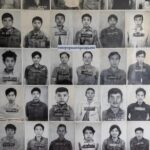
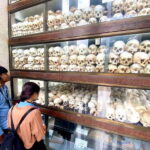
Day two is the hardest part of the trip. You visit S21 Prison and the original Killing Fields, and both stops come with a local guide.
These aren’t “fun” activities. They’re difficult. But they’re also essential if you want to understand Cambodia as more than souvenirs and temples. The value here is the context: you’re not wandering through history alone, and the guide helps you connect what you’re seeing to the bigger story.
If you’re sensitive, plan your emotional recovery. I’d suggest keeping your evening after these stops light and quiet, and avoiding anything that requires big energy.
Kampot riverside days: pepper farm learning, kayak time, and real Cambodian meals
Kampot is where the trip starts breathing. You travel off the main route into the countryside and spend two nights in a riverside setting with time to swim and relax. That matters because it gives your body a break from long days on the road.
Two standout experiences follow. First, you visit a pepper plantation, learning how Kampot’s famed pepper is grown. Second, you take part in a Khmer cooking class where you make Cambodia’s food in a hands-on way. You’re not just eating it—you’re learning the process.
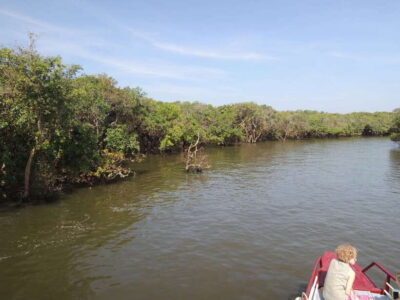
Then you add movement with river kayaking. It’s a nice contrast to the history day. One moment you’re on the water, the next you’re watching how local ingredients shape the taste of the meals you’ll eat later.
Practical tip: bring reef-safe sunscreen and a dry bag if you have one. Kayaks and river water can be splashy, especially if you’re feeling brave.
Koh Rong Sanloem: snorkeling, long-tail boat cruising, and beach time you actually feel
Koh Rong Sanloem is the trip’s tropical reset. You take a train and a fast ferry from the mainland, then check into island accommodation owned by the Chief of the village. That small detail changes the vibe. It feels more community-rooted than a generic resort bubble.
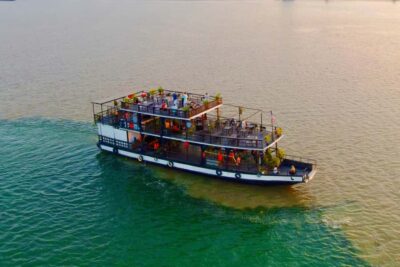
Your next day is built around the water. You travel by private long tail boat to some of the best snorkel spots, including secluded beaches. This is the part many people remember later because the ocean looks like it belongs on a screen—clear water, easy access to fish, and places that don’t feel crowded.
In the evening, you get a sunset moment to reflect on the day. It’s not forced. It just happens naturally when you’re on a boat and the light turns soft.
Then day seven includes a final beach morning. After that, you head back to the mainland for dinner and board an overnight bus to Siem Reap with fully reclining air-conditioned beds—transport comfort matters when you’re also doing an early Angkor day.
Packing tip: bring a light rash guard if you snorkel. Sun + salt can sneak up on you.
The overnight bus to Siem Reap: comfortable travel that protects your morning
The overnight bus is one of those “you don’t notice it until it’s gone right” choices. With fully reclining beds and air con, you’re arriving in Siem Reap early enough to start exploring without feeling wrecked.
This is also why the schedule works. If you had to travel in the daytime, you’d lose half the day. Here, you spend the night resting, then wake up ready to see rural areas rather than just surviving transit.
One note: buses still mean motion. If you’re prone to motion sickness, take that seriously and bring what helps you.
Siem Reap’s countryside and floating villages: calm scenery and a different pace
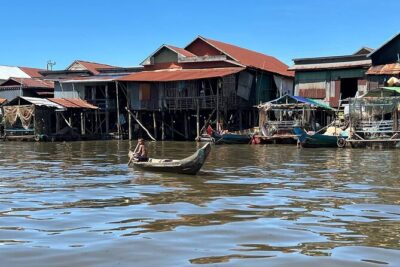
Day eight shifts you away from the biggest tourist magnets and into surrounding rural areas. You travel to traditional floating villages set among rice fields, lotus flowers, and flooded forests.
This is one of the best antidotes to the intensity of Angkor. You get a slower rhythm, wide views, and a sense of how people live with the water rather than always fighting it.
You’re likely to spend time looking, asking questions, and just watching how the landscape changes around the settlements. If you like photography, this is where you’ll get scenes that feel more lived-in than staged.
Angkor Wat sunrise: the world’s largest temple, explained by a local guide
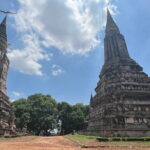
Angkor Wat is the main event, and the tour gets it right by scheduling sunrise. You travel by tuk tuk to the site early in the morning, when the light is best and the crowds feel less aggressive.
A local guide joins you for the history and surrounding temples, including Ta Prohm, known for its atmospheric ruins and tree roots. The guide’s job here isn’t just to point. It’s to explain what you’re seeing and why each temple matters.
What you’ll feel at sunrise is awe, sure. But what you’ll appreciate later is understanding. You’ll leave with a clearer map of the complex instead of random impressions.
Practical tip: bring a hat you can keep on in the breeze and something warm enough for early light. Sunrise mornings can be cool before the sun does its thing.
What you really get for $59: value, meals, and pace
The price is low for a 10-day Cambodia plan that includes a lot of the hard parts: 9 nights accommodation, all transport, and major guided experiences. You’re also covered for most meals, including lunch and dinner, plus breakfast on 9 days.
You’re not paying to figure out routes, ticket logistics, or who to hire for S21, the Killing Fields, and Angkor sunrise. That’s where the value usually hides.
Still, the “not included” list matters. Flights, visas, some meals, and travel insurance are on you. Also, extra nights are roughly £30 / $35 USD per night for a twin/double room if you want to extend.
Pace-wise, the trip is active but not nonstop. You’ve got quiet time in Kampot and on Koh Rong Sanloem, with bus and ferry days that move you along efficiently.
If you want a trip that feels like friends organizing your route, not like a self-guided checklist, this one fits.
Who this tour suits (and who might want to adjust plans)
This works especially well if you’re a first-time Cambodia visitor or a solo traveler who wants structure without losing freedom. The group size (max 20) helps you make friends without the chaos of huge tours, and the group leader support gets praised again and again in real feedback.
It’s also a good pick if you want a mix of “big sights” and “small moments.” Pepper farms, cooking class, kayaking, snorkel boat trips, floating villages, and sunrise temple guiding create a well-rounded arc.
Where you should think twice is the emotional weight of S21 and the Killing Fields. You should go prepared for that, not surprised. If you prefer lighter history or shorter days, you could find the day structure intense.
Should you book Cambodia Intro?
Book it if you want an organized, budget-friendly way to see Phnom Penh, Kampot, Koh Rong Sanloem, and Siem Reap without juggling transport, guides, and timing yourself. It’s also a strong choice if you value a group leader you can ask about food and side ideas, because the leadership quality shows up clearly in recent experiences.
Consider another option if you hate early mornings, you dislike emotionally heavy historical sites, or you want more independent free time with zero group scheduling.
If you like a plan that mixes culture, coastline, and temple magic with a steady rhythm, this 10-day Cambodia loop is a very solid bet.
FAQ
Where does the Cambodia Intro tour start and end?
It starts at Phnom Penh International Airport in Phnom Penh and ends at Lub d Siem Reap Village in Siem Reap.
What time is the tour start?
The start time is 10:00 am.
What meals are included?
Lunch and dinner are included, and breakfast is included on 9 days.
Are flights and visas included?
No. Flights and visas are not included.
Is airport pickup included?
You are met at the airport and taken to the hotel after you land in Phnom Penh.
What activities are included beyond sightseeing?
You’ll do a tuk tuk tour of Phnom Penh, S21 Prison and the Killing Fields with a local guide, river kayaking, a pepper plantation visit, a Khmer cooking class, a river cruise, Koh Rong Sanloem boat trip with snorkelling, and floating village exploration plus an Angkor Wat sunrise temple tour.
What’s the group size and fitness level?
The maximum group size is 20 travelers, and the tour is described as suitable for travelers with a moderate physical fitness level.
What is the cancellation policy?
You can cancel up to 6 days in advance for a full refund. Cancelling 2–6 days before gives a 50% refund, and cancelling within 2 days has no refund.