A morning in Phnom Penh can pack a lot. This City Highlights and the Killing Fields day tour strings together postcard sights like the Royal Palace and Wat Phnom with the heavier, must-know history of Tuol Sleng (S21) and the Killing Fields. I especially love the tight pacing with a private English-speaking guide, Sam Ang (Sam), and I like that you get context as you move between very different places in one day.
The only real drawback is the subject matter. The Genocide Museum (S21) and Killing Fields aren’t suitable for most children, and the topics can feel intense and emotional even if you’re ready.
In This Review
- Key things I’d watch for
- Phnom Penh in one long, meaningful morning
- Start with the Royal Palace: what you’re really looking at
- Independence Monument and Central Market: quick stops that teach you how Phnom Penh works
- Tuol Sleng (S21): the one site you should not rush
- Choeung Ek Killing Fields: a clear follow-up to what you saw at S21
- Wat Phnom: the calmer finish that still feels deeply Phnom Penh
- How the day is paced: why 8:00 am is a smart move
- Price and value: $100 for a guided, private historical day
- What to wear and pack for this exact itinerary
- Who this tour is best for (and who should choose a different day)
- Should you book this tour?
- FAQ
- FAQ
- What time does the tour start in Phnom Penh?
- How long is the tour?
- Is pickup and drop-off included?
- Is admission included for the major attractions?
- What’s included in the price besides the guide?
- Is this tour suitable for children?
Key things I’d watch for
- A licensed, named guide (Sam Ang) means you’re not just seeing sites, you’re hearing Cambodia through one local perspective.
- Early start at 8:00 am helps you beat the worst heat and crowd levels at key sights.
- Admissions are not included for the big-ticket historical stops, so budget extra for entry fees.
- Dress expectations at temples and the Royal Palace: cover shoulders, backs, and legs above the knee.
- Lunch is on your own during the day, with food available at stops.
- Private transportation and hotel pickup/drop-off make the day easier in a city where moving around can take time.
Phnom Penh in one long, meaningful morning
This is a full-day, around 7 hours itinerary that works best if you like structure. You start at 8:00 am at the Independence Monument (Norodom Blvd, 41, Phnom Penh). The tour returns you to the same meeting point, which is a simple way to keep the day from feeling like a logistics puzzle.
What makes this tour feel practical is that the day has two modes. The first half helps you read Phnom Penh’s identity—royal power, Buddhist life, and everyday commerce. The second half turns toward Cambodia’s modern trauma, starting with Tuol Sleng (S21) and continuing to Choeung Ek, the Killing Fields. When a day is this mixed, having a guide who can shift tone and still keep facts clear is a big deal.
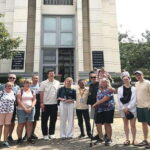
And yes, you can expect a real person leading you. This is a private tour for your group only, and your guide is Sam Ang (Sam), a Khmer local and licensed English-speaking guide. You also get bottled water and a small souvenir, which are small perks but welcome on a warm day.
You can also read our reviews of more city tours in Phnom Penh
Start with the Royal Palace: what you’re really looking at
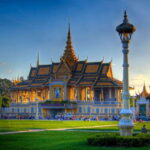
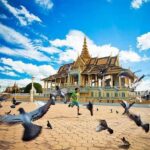
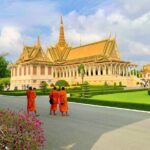
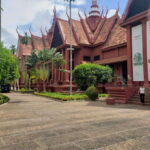
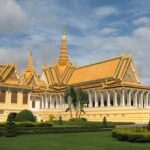
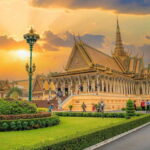
The day begins at the Royal Palace, the official residence of the King and his family. Expect ornate, colorful buildings, golden roofs, and towering spires along the riverside setting. Even if you’ve seen palace architecture elsewhere, Phnom Penh’s version has its own “read-this-like-a-story” feel: each structure points to rank, tradition, and the visual language of Cambodia’s monarchy.
Two practical notes matter here. First, admission is not included, so plan for that cost. Second, dress rules apply. At the Royal Palace and other religious sites, you need shoulders and backs covered, and legs above the knee covered. If you show up in shorts and a tank top, you may have a frustrating wait at the door or limited flexibility.
Why this stop is worth it in a day like this: it gives you a baseline. After the genocide sites, you’ll want some mental contrast, and the palace is a clean way to reset your bearings—without pretending history is only beautiful.
Independence Monument and Central Market: quick stops that teach you how Phnom Penh works
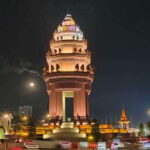
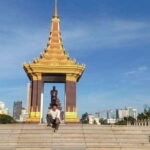
Next is the Independence Monument. It’s built in an Angkorian style and marks Cambodia’s independence from France in 1953, commemorated in 1958. This stop is short—about 15 minutes—and it’s more than a photo stop. It’s a fast history lesson wrapped in a recognizable national symbol.
Then you land at Central Market (Phsar Thmei). This is an art deco building with a cross-shaped plan and a spectacular central dome. The four wings are packed with stalls selling things like gold and silver jewelry and antique coins, among other goods. Even if you don’t plan to shop much, it helps you see Phnom Penh as a living city rather than a museum collection.
Central Market is also a good “breather” before the final temple visit. You’ll typically only need around 45 minutes, and it’s easy to keep moving at a comfortable pace.
Tuol Sleng (S21): the one site you should not rush
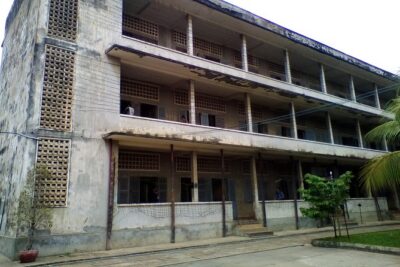
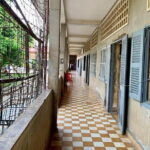
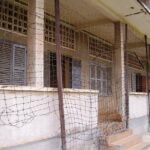
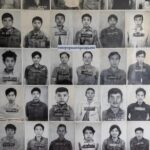
Then comes the emotional core: the Tuol Sleng Genocide Museum (S21). This was a former secondary school that became Security Prison 2 during the Khmer Rouge years from 1975 to 1979. You’ll spend about 1 hour 30 minutes here, and the time matters. This is not a stop you want to zip through just for photos.
You should know the tone before you go. The museum documents genocide, imprisonment, and the human reality of that period. The tour is structured with your guide there to explain what you’re seeing and why it exists as a memorial space. One of the strongest things in the reviews is how Sam keeps the facts clear without turning away from the horror. He also uses humor in a careful way during the day, which can make the conversation feel less helpless while still respecting the seriousness.
Still, you should treat this as a “slow your breathing” moment. If you’re sensitive to grim material, plan for it. And if you’re bringing kids, the tour provider flags clearly that S21 and the Killing Fields are not suitable for most children. That guidance isn’t just legal language—it’s about emotional impact.
Choeung Ek Killing Fields: a clear follow-up to what you saw at S21
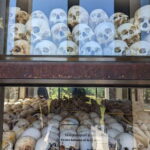
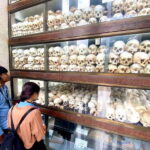
After S21, the itinerary continues to Choeung Ek Genocidal Center, commonly called the Killing Fields. This is where victims were killed and then buried, with an overall estimate of about 1.3 million people killed under the Khmer Rouge leadership. That number is hard to hold, and the site is designed to make history physical.
Expect another 1 hour 30 minutes. This stop works best if you mentally connect it back to what you saw at S21. The museum shows the machinery of detention; the Killing Fields show the end result. Together, they make a darker story more complete.
Admissions for this stop are also not included, so budget for entry fees. Bottled water is provided, but you’ll want to pace yourself. If you think you’ll need a moment—sit, breathe, step aside—do it. This isn’t a place where speed helps.
Wat Phnom: the calmer finish that still feels deeply Phnom Penh
After the genocide sites, you get a soft landing at Wat Phnom. It’s a Buddhist temple built on a tree-covered, man-made hill on the north side of the city. Plan for about 1 hour here.
Wat Phnom is one of those places where the surroundings matter. You’re looking for quiet, ritual space, and a sense of everyday faith rather than spectacle. It also helps that you’ve been walking and thinking hard all morning; the temple gives your brain a chance to reorganize.
Dress rules still apply at temples. If you followed the Royal Palace coverage requirements, you’ll already be ready.
How the day is paced: why 8:00 am is a smart move
This tour starts at 8:00 am, which sounds early until you’re living in Phnom Penh heat. Starting early helps you avoid the worst sun and keeps lines and crowds more manageable at high-interest stops. It also means you can finish before late afternoon, so you’re not stuck turning the day into an all-day grind.
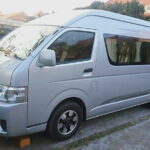
Another pacing bonus: the tour uses private transportation plus hotel pickup and drop-off. That reduces dead time. Phnom Penh traffic and distances can be unpredictable, and a driver plan keeps you focused on the sites instead of where you’ll park.
Your group stays together the whole time. Since it’s private, you’re not squeezed into a crowded schedule where you have to match everyone else’s pace.
Price and value: $100 for a guided, private historical day
At $100 per person, this tour is priced like a private, guided day with transportation included. Here’s what that money buys you based on the included details:
Included:
- Hotel pickup and drop-off
- Private English-speaking guide (Sam Ang)
- Private transportation
- Bottled water
- Small souvenir
Not included:
- Admission tickets for key sites (the Royal Palace, Tuol Sleng/S21, Choeung Ek, and Wat Phnom have admissions not included)
- Gratuities
- Lunch, snacks, and drinks (available to buy at stops)
So is it a good deal? For a day that combines both light-and-living city stops and two of Cambodia’s most important historical memorial sites, the value is the guide time plus transport convenience. You’re not just buying entry and a ride; you’re buying someone to connect the dots and explain what you’re seeing in English.
If you were to do these on your own, you’d still face admission fees, separate transport, and the hard part: understanding context fast enough to make the day meaningful. For most people, that’s where the $100 actually pays off.
What to wear and pack for this exact itinerary
This day has two kinds of stops: royal/religious sites and memorial/historical sites. That affects how you prepare.
Bring or plan:
- Clothing that meets the rule: shoulders and backs covered, legs above the knee covered at the Royal Palace and Wat Phnom (and similarly at religious sites).
- Comfortable shoes for walking through markets and grounds.
- A calm mindset for the genocide sites. There’s no easy way around that.
- A little flexibility for lunch, since lunch isn’t included and you’ll buy food during the day at stops.
Also, this tour uses a mobile ticket, so have your phone ready at start time.
Who this tour is best for (and who should choose a different day)
This works well if you:
- Want one structured day that covers both Phnom Penh highlights and major 20th-century history.
- Prefer a private guide rather than joining a big group.
- Like starting early and moving through sights at a steady pace.
You should consider a different option if you:
- Need something kid-friendly. This tour itself flags that S21 and the Killing Fields are unsuitable for most children.
- Want a purely relaxed sightseeing day. The second half of the day is heavy, and there’s no way to sugarcoat it.
For solo travelers, this is still a good match because private touring keeps it personal. For couples and small groups, it’s easy to feel like you’re learning rather than being shepherded.
Should you book this tour?
If you’re coming to Phnom Penh and you want more than a few landmarks, I think this is a strong choice. The mix of Royal Palace, Independence Monument, Central Market, and Wat Phnom gives you context for Cambodian life, while S21 and the Killing Fields are the part you shouldn’t skip if you want to understand Cambodia’s recent history.
Book it if you’re willing to handle serious material and you value a guide who can explain clearly. Don’t book it if you’re searching for a light day, or if you’re bringing children who are unlikely to cope with the memorial content.
FAQ
FAQ
What time does the tour start in Phnom Penh?
The tour starts at 8:00 am. You meet at the Independence Monument (Norodom Blvd, 41, Phnom Penh, Cambodia).
How long is the tour?
It runs for about 7 hours.
Is pickup and drop-off included?
Yes. Hotel pickup and drop-off are included, and the tour uses private transportation.
Is admission included for the major attractions?
No. The itinerary includes stops like the Royal Palace, Tuol Sleng (S21), Choeung Ek, and Wat Phnom, and admission tickets for these are marked not included. Independence Monument and Central Market are listed as free admission.
What’s included in the price besides the guide?
The tour includes bottled water, a private English-speaking guide (Sam Ang), private transportation, hotel pickup and drop-off, and a small souvenir.
Is this tour suitable for children?
The tour notes that the Genocide Museum (S21) and Killing Fields are not suitable for most children.