REVIEW · PHNOM PENH
Phnom Chisor & Tonle Bati Private Tours from Phnom Penh
Book on Viator →Operated by About Cambodia Travel & Tours · Bookable on Viator
A temple-and-lake day that feels far away. You’ll get Phnom Chisor mountain views, Ta Prohm jungle ruins, and a calmer break at Tonle Bati, with entrance tickets taken care of. One possible drawback: if you’re strict about temple time only, mention that you want to minimize convenience stops like a quick coffee pause.
I love that this is a true private tour for your group, handled start to finish with a licensed English-speaking guide and a dedicated vehicle. The full day runs about 7 to 9 hours, so it’s a proper outing, not a quick hit between stops.
In This Review
- Key Points Worth Knowing Before You Go
- Getting Out of Phnom Penh: Pickup, Pace, and Private Comfort
- Price and What It Covers: Is $135 Good Value?
- Phnom Chisor: Mountain Temple Views and the 11th-Century Detail
- Sen Phouvang or Sen Rovieng: A Temple Stop With Room to Breathe
- Prasat Neang Khmau and Tonle Bati Pagoda: Smaller Stops, Strong Character
- Ta Prohm: Jungle-Side Scale and Why It Needs a Guide
- Tonle Bati: Picnic-Time Calm and the Nearby Ta Phrom Temple
- Your Guide Makes (or Breaks) the Temple Day
- What Lunch Looks Like (and How to Plan Around It)
- Who This Private Tour Is Best For
- Should You Book This Tour?
- FAQ
- Is pickup and drop-off included?
- Is this a private tour?
- How long is the tour?
- What is the price?
- Are entrance fees included?
- Do I need to pay for lunch?
- Does the tour include a tour guide?
- Are tips included in the price?
- What about tickets and check-in?
- What if the weather is bad?
- What stops are included?
Key Points Worth Knowing Before You Go
- Hotel pickup and drop-off make the day easy, especially if you’re based in Phnom Penh
- All entrance fees included for the listed sites, so you can budget without surprise tickets
- Private vehicle with an English-speaking guide means you can ask questions and set your pace
- A mix of big and smaller temple stops keeps the day varied, not just one long ruin visit
- Tonle Bati adds breathing room with a lake area that works well for a relaxed break
- Lunch is on your own (with local restaurant options), so plan for flexible meal timing
Getting Out of Phnom Penh: Pickup, Pace, and Private Comfort
This tour is built for people who want to see more than you can manage with casual rides around the city. You start with pickup from your hotel (you’ll share the hotel name), then you’re in a private comfortable vehicle for the day. That matters because temple days feel long when you’re negotiating transport, waiting on others, or swapping plans on the fly.
The schedule is listed as about 7 to 9 hours, which is a good length for a full-day outing without turning into an all-day grind. You’ll be going through multiple sites, so the day is structured around moving efficiently from stop to stop, with time allocated for each visit. Since it’s private, you’re not stuck with a rigid pace like you might find on crowded group tours.
One small thing to keep in mind: since you’re traveling and visiting, your energy depends on the day’s conditions. The experience notes that it requires good weather, and if conditions are poor, you’re offered a different date or a full refund. In practice, I’d treat this as a “plan your weather day” option rather than something to schedule without flexibility.
You can also read our reviews of more private tours in Phnom Penh


Price and What It Covers: Is $135 Good Value?
At $135 per person, this isn’t a bargain-basement deal. The value comes from how much is included. You get pickup and drop-off, a professional English-speaking licensed guide, private transfers, and the big one: all entrance fees for the sites on the route.
That entrance-fee coverage is more than a convenience. Temple tickets add up fast when you’re paying at multiple stops, and it removes the annoyance of hunting for the right line or figuring out what you still have to pay. Add in the fact that the tour includes current government VAT and service charges, and the total feels closer to a “one price, one plan” day.
Lunch is not included. You’ll eat at local restaurants where menu prices are listed as about $3–$10 per dish, and you can usually choose vegetarian or non-vegetarian options. Drinks at meals are also personal expenses, and tips for the guide and driver are not included.
So, should you book at this price? If you want a smooth day with temple tickets handled and a guide who can explain what you’re looking at, the cost starts to make sense. If you’re on a super tight budget and you prefer solo transport plus your own entry-ticket math, you might find cheaper options. For most visitors coming from Phnom Penh, though, this lands in the “worth it” zone because it removes friction.
Phnom Chisor: Mountain Temple Views and the 11th-Century Detail
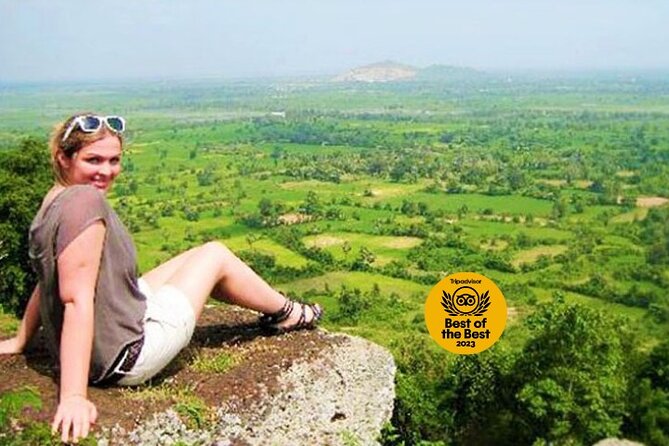
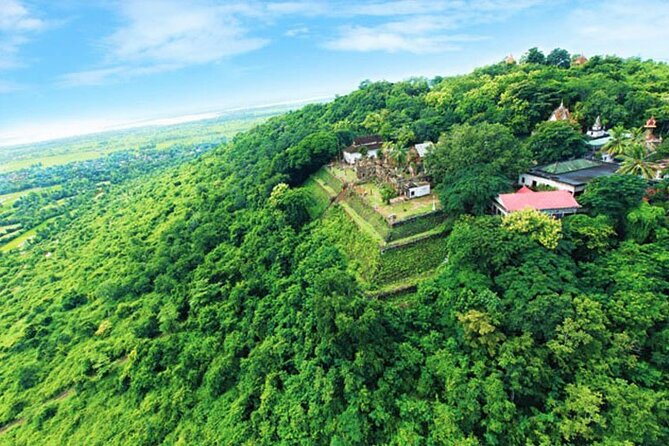
Phnom Chisor is the kind of starting stop that sets the tone. You’re visiting Prasat Phnom Chisor, an Angkor-era temple built in the 11th century using laterite and bricks. It’s associated with the Khmer Empire king Suryavarman I, and the temple is described as having carved sandstone lintels, which is exactly the kind of detail you’d miss if you just walked through without context.
What you’re really here for is the combination of architecture and viewpoint energy. The tour highlights the spectacular views from the mountain temple, and that’s the reason this stop works well early or mid-morning on a full day. Even if you’re not a “history person,” the guide’s explanations can help you notice what your eyes naturally skip: the carved elements, the way stonework is laid out, and why the temple is where it is.
A practical note: mountain temples usually involve some walking and steps. Wear shoes you’re comfortable in. Also, temples can mean bright sun, so bring something for heat and hydration, even though the tour includes entries.
If you’re looking for temples that feel awe-inspiring more than Instagram-perfect, Phnom Chisor is a strong first anchor for the day.
Sen Phouvang or Sen Rovieng: A Temple Stop With Room to Breathe
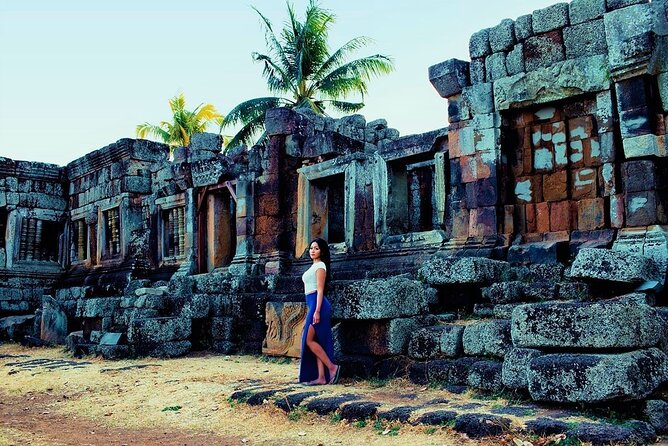
After Phnom Chisor, the tour moves to Sen Phouvang Temple or Sen Rovieng Temple. The route gives you two possible options here, which means your exact stop can vary. Either way, this is positioned as an older temple area that’s still beautiful and worth your time.
The tour description emphasizes that the temples are hundreds of years old and not inferior to other temple sites, plus they still attract visitors. That combination is useful. You’re not being sent to something tiny and obscure, but you’re also not limited to only the biggest, most famous ruins.
This stop is likely where your guide’s English helps most, because the difference between “I saw a temple” and “I understand what I’m seeing” usually comes from how someone frames the carvings, layout, and era.
Downside? If your personal priority is the most famous sights only, this stop might feel less dramatic than Ta Prohm later. For me, that’s actually the point. It breaks up the day so the bigger temples hit harder later.
Prasat Neang Khmau and Tonle Bati Pagoda: Smaller Stops, Strong Character
The tour includes Prasat Neang Khmau, described as one of the most popular tourist attractions in Takeo. The key value here is variety. You’re shifting away from one style of temple experience into another, and the day stops feeling like a straight line of similar ruins.
Then comes Tonle Bati Pagoda, described as a monastery with some of the richest decoration in the area. This is one of those stops where you’ll probably appreciate it more if you slow down for details. A “decorated monastery” tends to reward patient looking: patterns, surfaces, and the way the site uses ornamentation.
These are also stops where timing matters. You’ll want to stay mindful of energy because you’re still building toward Ta Prohm and Tonle Bati itself. If you rush, you’ll miss the difference between decorated areas and plain structures.
The other benefit of having these stops in the middle of the day is practical: it keeps you from only visiting sites that demand a lot of walking or only visiting sites where you’re waiting around for photos. You get a more balanced temple rhythm.



Ta Prohm: Jungle-Side Scale and Why It Needs a Guide
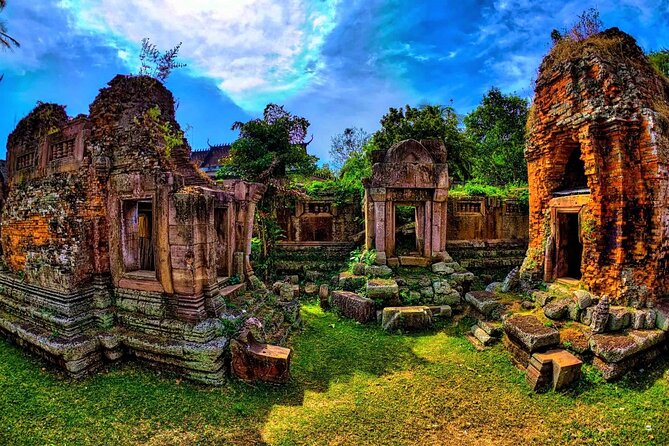
Ta Prohm is the headline ruin for many people, and this tour gives it proper time: about 1 hour at Ta Prohm Temple.
The description points to a complex layout with a square sandstone temple, two library buildings, an outer enclosure with vaulted galleries and pavilions, additional permanent basins, and entrance gopura. That matters because Ta Prohm can feel chaotic if you’re not oriented. A good guide helps you understand where to look first and what features match what you’ve heard about.
One reason I like putting Ta Prohm after a few earlier stops is attention. If you hit Ta Prohm first, your brain sometimes assumes everything else will look like it. When you reach Ta Prohm later, you’re better able to compare and notice how the temple complex feels different in scale and structure.
This is also a site where you’ll want to plan for heat and uneven ground. Comfortable footwear is a must. And since the tour is private, you can ask your guide to highlight specific parts of the complex rather than feeling like you have to cover every corner.
Tonle Bati: Picnic-Time Calm and the Nearby Ta Phrom Temple
After Ta Prohm, the day shifts to Tonle Bati. The tour gives time for the Tonle Bati area, plus a stop at Tonle Bati itself. You’ll also learn that Tonle Bati is famous as an easy picnic area, with a good atmosphere and natural scenery.
This portion is valuable because it changes the pace. Temple days can run together, especially if you’re visiting several major structures. Tonle Bati is where you get a softer break. It’s also a chance to reset your camera settings and your feet.
The route also mentions an ancient temple nearby named Ta Phrom Temple. That’s the kind of bonus stop that makes the day feel less like a checklist. Even if you don’t spend a long time on the smaller temple elements, it adds another layer to the Tonle Bati theme.
A heads-up: since lunch isn’t included, you may find meal timing is flexible. Tonle Bati’s picnic vibe can help if your schedule lands near late lunch hours, but it’s still smart to confirm what your guide plans for around midday so you’re not scrambling for food.
Your Guide Makes (or Breaks) the Temple Day
Across the feedback tied to this experience, what stands out is the guide style. People describe a guide who is friendly, with clear English explanations, and strong communication in more than one language. One name that comes up is Li. If you’re lucky enough to be paired with a guide like Li, you’ll likely get a smooth flow of stories and pointing-out details that make the sites easier to understand.
Even if you’re not into deep lecture-style history, good guiding helps you avoid the common temple-tour problem: walking through places you can’t place. With licensed professional guidance, you’re not left guessing. You can ask questions, and you’ll understand why certain elements are where they are.
The same goes for the driver. A professional chauffeur matters on long temple days because you want consistent timing and smoother transitions between sites. It can be the difference between a day that feels organized and a day that feels like traffic stress.
One consideration though: if your vision of the perfect day is strict temple time in the order you prefer, make your preference clear early. There can be a temptation for convenience pauses, and you don’t want those to eat your limited hours.
What Lunch Looks Like (and How to Plan Around It)
Lunch is not included, but local restaurants are available during the tour. You can usually find both vegetarian and non-vegetarian options, and the listed dish price range is $3–$10.
That range is typical for Cambodia and usually feels reasonable after you pay for entrances. But it also means you’ll want to manage expectations: you’re paying for food yourself, and you might have fewer choices than you’d get in a city restaurant.
How to handle it smoothly:
- Bring a small snack or water option if you’re the kind of person who gets hungry mid-morning.
- Decide how you want to handle drinks, since beverages are personal expenses.
- If you have dietary needs, tell your guide so they can steer you to the right place when the time comes.
This is also where your temple priorities matter. If you don’t like losing time to non-temple stops, you can ask for a direct path between meals and the next site.
Who This Private Tour Is Best For
This is a strong fit if you’re starting in Phnom Penh and want a day that feels intentional. I’d especially recommend it if you:
- Want private comfort with pickup and drop-off
- Like seeing a mix of famous and lesser-seen temple areas
- Value entrance fees included so budgeting stays simple
- Appreciate a guide who can explain the sites in English
It also works well for couples and small groups because you can keep the pace more flexible. And if you’re curious about pre-Angkor temple areas beyond the biggest headlines, the mix of Phnom Chisor, Ta Prohm, and the Tonle Bati portion gives you a broader day than you’d get from a single-ruin tour.
If your group hates travel days or can’t handle long sitting time in a car, then this might feel like a lot. But for most visitors, the 7–9 hour structure hits a good balance.
Should You Book This Tour?
I think this one is a good choice if you want a structured temple-and-lake day with entrance fees covered and a guide to translate what you’re seeing into something you can actually appreciate.
Book it if:
- You want Phnom Chisor’s mountain-temple views and Ta Prohm’s big complex in one day
- You prefer a private vehicle and hotel pickup
- You’re okay handling lunch on your own
Consider another option if:
- You want ultra-temple-focused time and don’t want any convenience pauses
- Your group has strict budget limits and wants to manage entrances and transport yourself
If you can be flexible with weather, this tour fits nicely into a Phnom Penh itinerary. Just communicate your preferences early so the day matches what you came for: temples first, with Tonle Bati as the calm payoff.
FAQ
Is pickup and drop-off included?
Yes. The tour includes pickup and drop-off at your hotel in Phnom Penh. You’ll need to provide your hotel name for pickup.
Is this a private tour?
Yes. It’s a private tour/activity, and only your group participates.
How long is the tour?
The duration is listed as about 7 to 9 hours.
What is the price?
The price is $135.00 per person.
Are entrance fees included?
Yes. All entrance fees for the tour sites listed in the itinerary are included.
Do I need to pay for lunch?
Lunch is not included. Lunch is available at local restaurants during the tour, and meals are at your own expense (menu prices are listed as $3–$10 per dish).
Does the tour include a tour guide?
Yes. You’ll have a professional English-speaking licensed tour guide.
Are tips included in the price?
No. Tips for the tour guide and driver are not included.
What about tickets and check-in?
The tour includes a mobile ticket.
What if the weather is bad?
The experience requires good weather. If it’s canceled due to poor weather, you’ll be offered a different date or a full refund.
What stops are included?
The route includes Phnom Chisor, Sen Phouvang or Sen Rovieng Temple, Prasat Neang Khmau, Tonle Bati Pagoda, Ta Prohm Temple, and Tonle Bati.