REVIEW · PHNOM PENH
Phnom Penh & Kirirom National Park Birds Tour
Book on Viator →Operated by Vana Adventure Travel · Bookable on Viator
Bird calls start before the sun. This 2-day Cambodia bird tour is built around early starts and real habitat time, from Mekong lake edges to forest trails. I like the way the experience focuses on hearing and tracking birds, not just ticking boxes, and the guide work is a major reason you can actually find species that most people miss.
Two things I really appreciate: a birding guide named Thong who’s described as highly professional and fluent in English, and a planned mix of lotus fields, rice paddies, cultivation, and forest where you’re more likely to see birds in the right micro-habitats. One thing to consider up front: birding is rated moderate, and some birds are genuinely tricky (often quiet, fast, or call-dependent), so you’ll want patience when the forest goes still.
In This Review
- Key highlights you’ll notice right away
- Why this bird trip starts so early in Phnom Penh
- Chambok Home Stay: Mekong ferry crossing and lake-edge birding
- Kirirom National Park sunrise: forest birds at an easy pace
- The birds, the habitats, and why 50–80 species is realistic
- Thong’s guidance and the small-group advantage
- Price and value: what $350 buys you (and what it doesn’t)
- What to pack and how to set yourself up for success
- Who should book this tour, and who might skip it
- Should you book this Phnom Penh & Kirirom birds tour?
- FAQ
- What time does the tour start?
- How long is the tour?
- What bird species range should I expect?
- Is pickup included?
- Are entrance tickets included?
- How difficult is the birding?
Key highlights you’ll notice right away
- 5:30am starts that set you up for active birds and good morning light
- Small group size (max 8), which helps you stay together and get guidance fast
- Chambok Community Based Ecotourism stay with countryside birding by lake, lotus, and rice fields
- Kirirom sunrise forest walk at an easy pace for forest birds like forest wagtail and racket-tailed species
- A targeted species range (50–80) across woodland, cultivation, and lowland/tropical moist forest
- Good photography chances, especially when your guide finds birds using calls
Why this bird trip starts so early in Phnom Penh
You’re meeting at 5:30am, and it’s not for show. Early light is when many birds are easiest to detect, because they’re vocal, moving, and less scattered in the heat. In humid lowlands, mornings also mean you’ll spend more time comfortable enough to walk and scan without feeling like you’re fighting the weather.
The other reason for the early timing is simple: birding is a game of attention. When you start with sunrise birdwatching, you’re not trying to “catch up” to peak bird activity later in the day. You’re already in the right rhythm—listen first, scan second, and only then raise your camera.
This trip also runs with an air-conditioned vehicle, and you’ll get pickup offered from where you’re staying or near convenient public transportation. That matters because you’re going to cover ground across rural landscapes and national park areas where public transport is not really the point. For most people, it’s the difference between a smooth field day and a stressful “where do we go next?” scramble.
One more practical point: the tour limits the group to up to 8 travelers, so it’s easier for your guide to point, stop, and re-position you quickly. Birding works best when everyone can hear the instructions and see the direction to scan.
You can also read our reviews of more tours and experiences in Phnom Penh.



Chambok Home Stay: Mekong ferry crossing and lake-edge birding
Day 1 centers on the Chambok area and it starts with a ferry crossing of the Mekong River, followed by a drive to your birding side. Even if you’re not a birder, the ferry part changes the tone. It breaks you out of Phnom Penh’s pace and drops you into a more local rhythm before you even start scanning the shoreline.
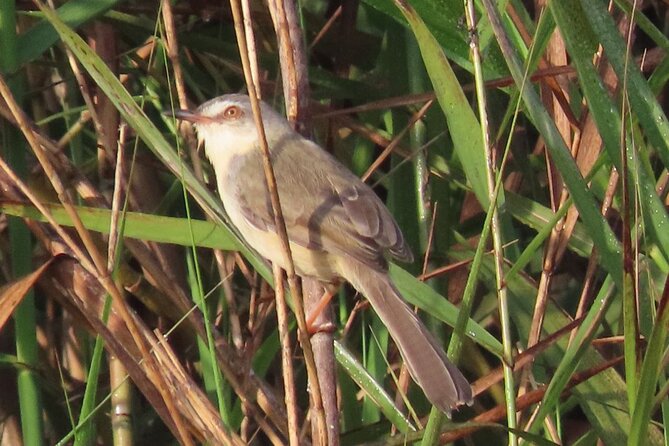
When you arrive, you’re working around a natural lake and landscapes where farmers grow lotus, paddy rice, and vegetables. That blend is the sweet spot for many wetland-and-edge birds. Lake margins and cultivated areas create “food + cover” pockets, so birds that can be hard in dense forest may show themselves in clearer, more open views.
What I like about this part of the tour is how it gives you multiple habitat types in one day. You’re not stuck in a single scenery box. You’re moving through cultivation edges and into the kind of lowland environment that supports birds with different feeding strategies—some hunt in open spaces, some prefer perches along reeds or low vegetation, and others are easier to locate by calls.
You’ll also appreciate the pacing. The tour doesn’t try to turn birds into a speed-run. Instead, you’re out long enough to build concentration and learn how your guide reads the landscape. That’s exactly the moment when beginner birders often feel the most progress: once someone shows you how to listen for a call pattern, many birds go from “I’ve never seen that” to “I hear it, then I spot it.”
For the evening, you’ll stay one night in a homestay connected to Chambok Community Based Ecotourism. Lunch and breakfast are included, but dinner and the entrance ticket fee at Chambok Ecotourism Community (7 USD) are not included. I’d plan for that additional small cost so you’re not negotiating money at the end of a long day.
Kirirom National Park sunrise: forest birds at an easy pace
Day 2 moves into Kirirom National Park, and it begins with another sunrise birdwatching session. This is where the trip shifts from wetland/cultivation birds toward forest specialties.
The plan calls for a walk at an easy pace, designed to help you keep sight of your guide and scan effectively. In forest birding, the pace is everything. Walk too fast and you miss call details and quick movement. Walk too slow and you start losing your line of sight and comfort. This kind of “easy but active” rhythm usually works best for mixed skill levels.
You’ll be looking for forest birds such as Greater Racket Tailed, Forest wagtail, White rumped Shama, Red-whiskered Bulbul, and Puff-throated Babbler—species names you may have heard of but likely haven’t chased in Cambodia before. And this is where your guide’s skill really shows. When birds are present but hard to see, good birding becomes mostly about timing and interpretation.
Your tour also covers birds found across habitats listed for the overall experience: woodland, cultivation, rice fields, lowland broad-leaved forest, and tropical moist forest. Kirirom is a strong match for that mix because it brings you into tree cover and edge transitions. Those transitions often trigger different species as the morning warms: some start calling from perches, others move through understory, and some shift closer to openings.
Photographers often do best at Kirirom with a patient strategy: watch for the moment a bird hops into a better angle, then be ready with your settings and frame. The tour notes that photographic opportunities are good, and in forest birding that often means the guide helps you position so you’re not only seeing birds in the distance.
The birds, the habitats, and why 50–80 species is realistic
The tour’s expected target is about 50 to 80 species, and that range makes sense for a two-day trip because it hits multiple habitat styles. You’re not locked into only one kind of environment. You get lakeside edges near lotus and rice, then you move into forest where different birds take over.
The species list is wide, including some that many birders love for their look and behavior:
- Cambodian Tailorbird and Dark-necked Tailorbird (tailorbirds often need good listening skills)
- Collared kingfisher and Green bee-eater (high-energy, visible moments when they cooperate)
- Blue-bearded bee-eater and Common Flameback (bright, patterned birds that can be spotted when the guide reads movement)
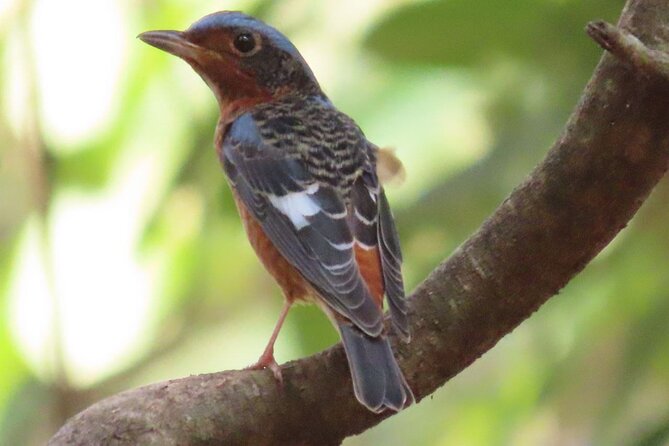
- White-throated Rock Thrush and Red-whiskered Bulbul (varied perching habits)
- Ashy Drongo and Black-naped Oriole (often active around their chosen patch)
- Chinese Francolin and Puff-throated Babbler (ground/understory species that can be tricky without cues)
Two key ideas help you get the most out of that checklist.
First: this is call-and-location birding, not just scanning. One of the strongest signals from the experience is that Thong locates birds by following their calls. When you’re listening for calls, you stop feeling like you’re “bad at birding,” because you’re using the guide’s method. You’re also more likely to understand why a species might be present but not visible for long stretches.
Second: your odds improve when you accept that some birds are naturally hard. The tour rates ease of birding as moderate with some very tricky species. That doesn’t mean it’s frustrating; it means you’re going to spend time learning how to spot movement, interpret silence, and read habitat edges. If you’re a beginner, this kind of guidance can be more valuable than a day full of easy sightings.
You’ll also be walking through lotus fields, woodland, and rice fields—areas that can produce birds you might not expect if you only think of Cambodia’s forests as “deep jungle only.” Cultivation areas often bring birds that feed in open or semi-open conditions, so your trip gives you that bonus layer of variety.
Thong’s guidance and the small-group advantage
A bird tour succeeds or fails based on the guide’s ability to translate the forest into bird sightings. In this case, the guide named Thong stands out in the feedback as a real professional with a clear command of English and a passion for birds.
Here’s what that means for you on the ground:
- You get faster “finds.” When a guide knows the calls and typical perches, you spend less time scanning aimlessly.
- You learn methods, not just results. Following calls teaches you what to listen for, not only what to photograph.
- You get better group coordination because the tour caps at 8 travelers. In a group that small, your guide can stop everyone and re-position without chaos.
I also like that the experience doesn’t treat birding as a separate activity from local life. The Chambok stay is framed through community-based ecotourism, and your guide’s messaging (including concerns about forest loss and poaching) gives the trip a sense of purpose. It’s not preachy; it’s the kind of perspective that makes you pay attention while you’re there.
That value matters because birding can be emotionally weird. When you’re new, you’re tempted to measure success only by how many birds you personally spotted. A guide like this helps you measure success by learning to locate birds, because the skill transfers to every future walk you do.


Price and value: what $350 buys you (and what it doesn’t)
At $350 per person for about two days, this isn’t a budget outing. But birding tours often cost more than you expect because good guiding, long drives, and early mornings are labor-intensive—and bird guides don’t come cheap.
Here’s what you do get:
- Local birding guide and local guide
- Air-conditioned vehicle
- One night homestay at Chambok Community Based Ecotourism
- Lunch (2) and breakfast (2)
What you should plan for separately:
- Dinner at Chambok and Chambok entrance ticket fee (7 USD)
- Entrance ticket fees at Kirirom (not included)
- Personal expenses and tips
- Travel insurance
So where’s the value? It’s mostly in the combination of guiding quality and time in the field. You’re paying for an early-start, habitat-hopping plan that covers different environments likely to produce the species range of 50–80. You’re also paying for the homestay night in a community-based setting rather than a standard hotel stop.
If you like wildlife but don’t care about bird-specific detail, this may feel pricey for what you could do on your own. But if you want to identify birds accurately, improve your spotting skills, and not waste daylight in random sightseeing loops, the price starts to make sense quickly.
What to pack and how to set yourself up for success
The tour expects humid lowlands with occasional rain showers, so you’ll want gear that handles sudden wet weather without killing your comfort. Light rain protection and quick-dry clothes help a lot, because rain in the morning can be brief but still annoying.
Because birding is rated moderate with tricky species, your best “equipment” is readiness:
- Be prepared to stop and look longer than you think you will.
- Keep your expectations flexible, especially for birds that may be detected by calls first.
- Plan to bring a camera you can operate quickly with wet fingers and changing light.
And don’t underestimate the walking and timing. Even though Kirirom is an easy pace, you still have 9-hour days on both days. The tour notes moderate physical fitness is expected. If you’re capable of long morning walks and you don’t mind a slow scanning pace, you’ll likely be fine.
Finally, because this is an early-day bird tour, being mentally awake matters. If you’re the kind of person who hates alarms, this isn’t for you. If you like the idea of spotting birds while the rest of Phnom Penh is still waking up, you’ll love it.
Who should book this tour, and who might skip it
This tour is a strong fit if you:
- Want a beginner-friendly bird introduction with professional help
- Enjoy mornings and can handle a 5:30am start
- Care about seeing birds in multiple habitats, not just one landscape
- Like the idea of small-group guiding (max 8) for better instruction
It may be less ideal if you:
- Want a relaxed sightseeing trip with minimal walking
- Dislike early mornings or don’t want to deal with occasional rain
- Only care about the easiest, most obvious wildlife sightings
If you’re aiming for bird identification growth, this tour is built for that. With Thong guiding by calls and known habitat behavior, you’ll come home with more than photos—you’ll come home with better bird instincts.
Should you book this Phnom Penh & Kirirom birds tour?
If you’re serious about improving your birding skills, I think it’s worth considering. The mix of Chambok countryside lake/lotus/rice habitats plus a Kirirom sunrise forest walk, guided by Thong, creates a realistic path to the target 50–80 species range. The small group size also helps you actually benefit from the guiding rather than being dragged along in a big crowd.
Book it if you’re willing to meet the day early, stay patient with tricky species, and treat the process—listening, scanning, and learning—as part of the fun. Skip it if you want a late start, a purely casual outing, or you’re only interested in easy wildlife photos.
FAQ
What time does the tour start?
The start time is 5:30am.
How long is the tour?
It’s 2 days (approximately).
What bird species range should I expect?
The tour expects 50 to 80 species.
Is pickup included?
Pickup is offered, and the meeting setup is near public transportation.
Are entrance tickets included?
No. The Chambok Ecotourism Community entrance ticket fee (7 USD) is not included, and entrance ticket fees at Kirirom National Park are also not included.
How difficult is the birding?
Birding is rated moderate, with some very tricky species. A moderate physical fitness level is recommended, and the pace is described as easy at Kirirom.