REVIEW · PHNOM PENH
The killing field and Toul Sleng Genocide museum (S21) Tour
Book on Viator →Operated by Cambodia green tour and transport · Bookable on Viator
Choeung Ek and S21 hit hard. I like that this tour pairs Choeung Ek and S21 in one smooth, half-day plan with pickup and an English-speaking guide. I also like the simple comfort touches: an air-conditioned vehicle and cold bottled water. One drawback to plan for: the admission fees for both sites are not included, so you’ll want extra cash on top of the tour price.
You’ll spend about 4 hours 15 minutes moving through two places tied to the Khmer Rouge. Expect a factual, respectful explanation of what happened—often graphic—so this is best if you’re ready for an emotional history lesson, not a casual sightseeing day.
In This Review
- Key highlights you should know before you go
- Why Choeung Ek and S21 belong on your Phnom Penh checklist
- Tour pace and logistics: how the half-day stays organized
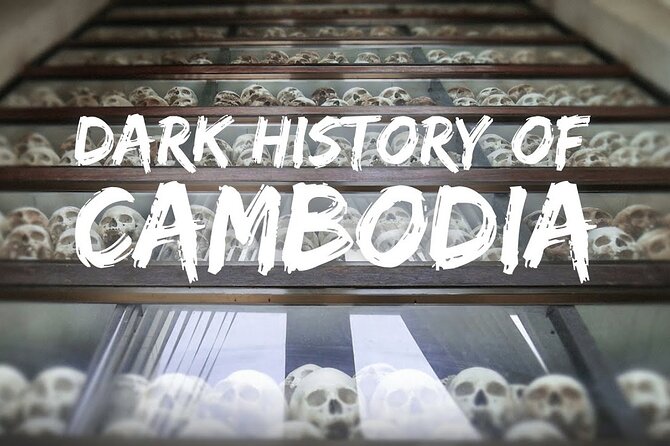
- Choeung Ek Genocidal Center: the killing fields and what you’ll actually see
- What can feel challenging
- A realistic pace note
- Tuol Sleng (S21): from a high school to a prison machine
- Why doing S21 right after Choeung Ek works
- Price and value: what $18 covers (and what to add)
- Who this price model suits best
- Choosing the right mood for this day
- What you’ll learn beyond the headlines
- Small-group touring: the difference between 1 guide and 20 people
- Should you book this Killing Fields and S21 tour?
- FAQ
- How long is the Killing Fields and S21 tour?
- Is pickup included?
- What is the price of the tour?
- Are admission tickets included in the price?
- Does the tour include an air-conditioned vehicle?
- How big is the group?
- What will I see during the tour?
- What should I know about cancellation or weather?
Key highlights you should know before you go
- Two major sites in one half-day: Choeung Ek first, then Tuol Sleng (S21)
- AC transport plus cold bottled water to keep the day manageable
- Small group size (max 20), which helps the guide keep control and pace
- Tickets are separate: plan for $3 for Choeung Ek and $5 for S21
- Guides can be very personal and careful, including examples like Mr Seth and Neang
Why Choeung Ek and S21 belong on your Phnom Penh checklist
If Phnom Penh feels intense when you arrive, that’s not your imagination. A big reason is that the city sits beside Cambodia’s recent history—history that didn’t stay in the past. The Khmer Rouge era is painful, complicated, and close enough that you’ll hear its impact in the way people talk about it.
This tour works because it doesn’t treat the subject like a set of attractions. Instead, you connect two different parts of the system: the place where victims were ultimately killed, and the prison where people were held, processed, and tortured for information. When you do both on the same day, the story clicks into place faster than bouncing between locations on your own schedule.
Also, the tour’s format is practical. You get an English-speaking guide and safe, hygienic transport, and you don’t have to coordinate rides between sites. That matters in Phnom Penh, where time is easy to waste if you’re negotiating multiple stops yourself.
You can also read our reviews of more museum experiences in Phnom Penh
Tour pace and logistics: how the half-day stays organized
The whole experience runs about 4 hours 15 minutes. That’s a real sweet spot in a city where you’ll also want time for markets, riverside walks, or just recovering. You’re not stuck for a full day, but you also aren’t rushed like a quick photo stop.
The tour includes:
- Pickup offered
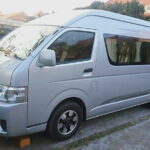
- Air-conditioned vehicle
- Cold bottled water
- Professional English-speaking guide with driver
- Mobile ticket
It’s also a small group (maximum 20 people). In practice, that helps the guide manage questions and keep the tone respectful. At places like this, pace matters—not just for comfort, but for attention.
One more practical point: both site entrances require separate tickets. The tour price is $18 per person, but you should budget an additional $3 for Choeung Ek and $5 for Tuol Sleng (S21). That makes the total out-of-pocket higher than the base rate, so factor that into your Phnom Penh planning.
Choeung Ek Genocidal Center: the killing fields and what you’ll actually see
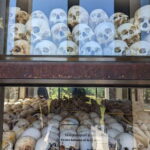
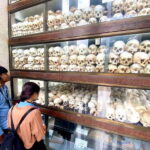
Choeung Ek sits about 15 km south of Phnom Penh, and the drive there gives you a short reset before the day turns heavy. Once you arrive, you’re stepping into a place that changed from ordinary land into part of a mass system of terror.
Here’s what the site context teaches, in clear terms:
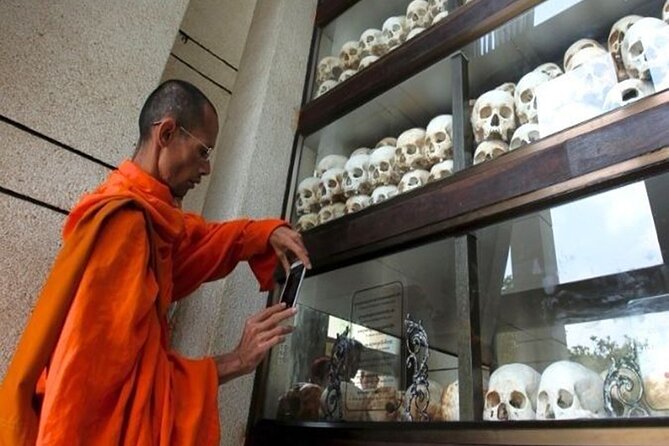
- It was once an orchard and a Chinese cemetery
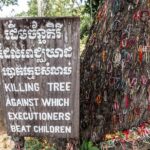
- Under the Khmer Rouge led by Pol Pot, it became the infamous killing fields
- The center records executions totaling around 20,000 victims
- Over roughly three years, the Khmer Rouge massacred and buried 2.5 million people
Even if you’ve read a bit about Cambodia’s past, seeing how the museum frames these numbers makes it harder to think in abstract terms. The guide’s role becomes crucial: you’re not just looking at objects or grounds; you’re being walked through meaning—what happened, why it happened, and how the place is remembered today.
What can feel challenging
This is not a light museum visit. Expect something close to the reality of the system—sad, explicit, and emotionally difficult. The tour is designed to be respectful, but you still need to know what kind of day you’re signing up for.
A realistic pace note
Some people find they’d like a bit more time at each stop. That’s not a failure of the tour; it’s the nature of doing two major sites in one half-day. If you want extra time for reflection or slow reading, you might prefer a longer standalone visit later.
Tuol Sleng (S21): from a high school to a prison machine
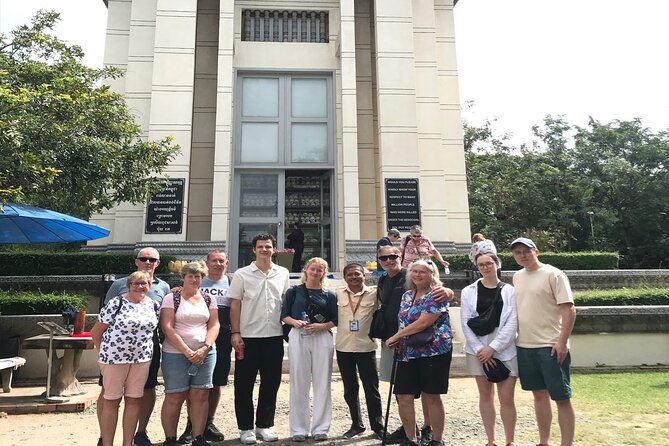
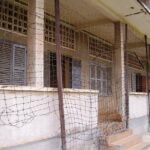
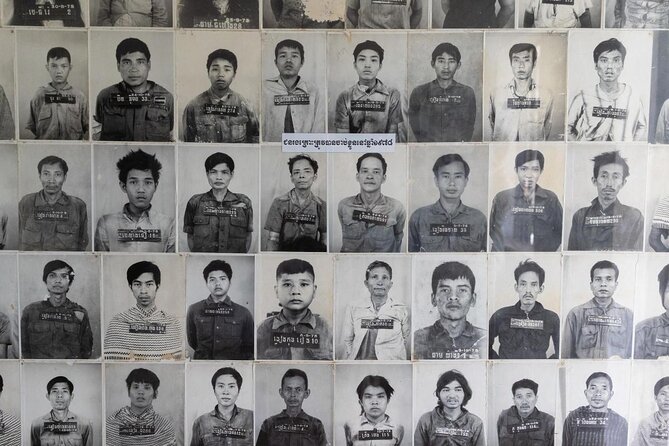
Next comes Tuol Sleng Genocide Museum, known as S21, which means hill of the poisonous trees. The site’s story is especially stark because it began as something everyday: a popular high school.
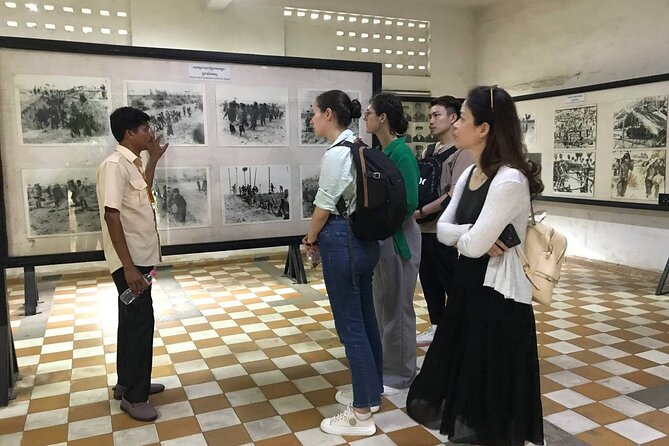
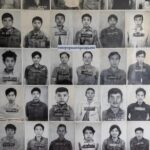
Under Pol Pot’s regime, it was converted into a high security prison. The museum explains that roughly 20,000 people were imprisoned there, and that many were tortured for information. That combination—mass detention plus interrogation under torture—helps you understand how the Khmer Rouge didn’t only kill. It also extracted information, broke people down, and used terror to control the country.
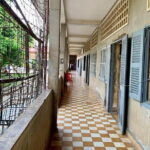
The museum layout makes it easy to follow the logic of the system. You move through areas that communicate confinement, procedure, and how a place designed for education became a place for punishment. A good guide keeps you from getting lost in details and instead steers you toward the big picture.
Why doing S21 right after Choeung Ek works
If you do Choeung Ek first, S21 lands with more weight. You’ve just learned about executions and burial. Then you see the machinery upstream—how prisoners got processed before the end stage. It’s one continuous system, shown from two angles.
Price and value: what $18 covers (and what to add)
At $18 per person, this is not priced like a premium private tour. The value comes from combining several practical items you’d otherwise pay for or organize yourself:
- Guide + driver
- Air-conditioned vehicle
- Cold bottled water
- A planned route that takes you from one major site to the other in a controlled timeframe
Then you add the site tickets that are not included:
- $3 for Choeung Ek
- $5 for Tuol Sleng (S21)
So a realistic working budget is the $18 tour fee plus the $8 total entrance fees. From there, consider tipping, since tipping service isn’t included.
Who this price model suits best
This setup is ideal if you:
- Want English explanation rather than piecing information together yourself
- Prefer not to deal with transport timing between Phnom Penh sites
- Still want half a day free afterward
If you’re someone who loves long museum time and slow pacing, you may find this schedule shorter than you’d like. But if you want a well-managed intro to Cambodia’s Khmer Rouge history, it’s a strong value.
Choosing the right mood for this day
This tour sits in a tough category: it’s educational and historically necessary, but it’s also emotionally heavy. I suggest treating it like a serious appointment, not a casual activity.
A few practical ideas based on how the day is set up:
- Wear comfortable shoes. You’ll be moving through both sites.
- Plan to keep your phone use minimal. You’ll get more out of the explanation when you’re not constantly snapping photos.
- Be ready for the guide to speak plainly about what happened. This is the kind of topic where softer phrasing won’t help you understand.
Some guides bring a personal touch to the way they explain the events—like Mr Seth and Neang—and that can make the history feel closer to real people instead of distant facts. That doesn’t make it less painful. It makes it more honest.
What you’ll learn beyond the headlines
This tour isn’t just about knowing dates or names. It helps you grasp how the Khmer Rouge system worked across different locations and stages.
By pairing these two sites, you understand:
- how victims were detained and processed at S21
- how the end result unfolded at Choeung Ek
- how a large-scale campaign led to mass death, described in the museum’s figures
That matters because it turns the story from a single tragic event into a system—one with steps, roles, and mechanisms. And once you see that structure, the rest of your Cambodia trip tends to make more sense, too.
Small-group touring: the difference between 1 guide and 20 people
A group capped at 20 travelers sounds like a minor detail, but it affects the experience a lot in museums like these. With fewer people, the guide can keep the pacing steady, check that everyone is following, and answer questions without letting the tone drift.
It also helps you avoid the common issue of “watching the back of someone’s head.” Here, the guide’s voice and organization help you keep your bearings fast.
Should you book this Killing Fields and S21 tour?
If you want a respectful, efficient introduction to Cambodia’s Khmer Rouge history in Phnom Penh, this is a smart booking. The combination of Choeung Ek + S21, guided English explanations, and comfortable logistics (AC ride and cold water) makes it easier to focus on learning rather than coordinating.
Book it if:
- You’re comfortable with an emotionally difficult topic
- You want the story connected across two major sites
- You prefer a small-group format with pickup
Consider a different plan if:
- You need more time at each location for reading and reflection
- You’re not ready for graphic, explicit material and strong historical detail
FAQ
How long is the Killing Fields and S21 tour?
It’s about 4 hours 15 minutes (approx.).
Is pickup included?
Yes, pickup is offered.
What is the price of the tour?
The tour costs $18.00 per person.
Are admission tickets included in the price?
No. Choeung Ek costs $3 per person, and Tuol Sleng (S21) costs $5 per person.
Does the tour include an air-conditioned vehicle?
Yes. An air-conditioned vehicle is provided, along with cold bottled water.
How big is the group?
The tour has a maximum of 20 travelers.
What will I see during the tour?
You visit both Choeung Ek Genocidal Center (the killing fields) and Tuol Sleng Genocide Museum (S21).
What should I know about cancellation or weather?
Cancellation is free up to 24 hours in advance for a full refund, and the experience requires good weather. If it’s canceled due to poor weather, you’ll be offered a different date or a full refund.