REVIEW · PHNOM PENH
A Day Trip To Phnom Chisor – Tonle Batti From Phnom Penh
Book on Viator →Operated by Day Trip Cambodia · Bookable on Viator
Two temples, one easy day from Phnom Penh. This private full-day trip stretches beyond the city with rural scenes and an English-speaking guide who puts the Khmer story into plain talk as you ride.
What I like most is the mix: a mountain climb at Phnom Chisor with big views, then a calmer lake stop at Tonle Bati. The main drawback to plan for is that temple admissions aren’t included, and Phnom Chisor involves steps, so you’ll want comfy shoes and be ready for rain.
In This Review
- Quick hit points: Phnom Chisor to Tonle Bati highlights
- Getting out of Phnom Penh: pickup, drive time, and what the day really feels like
- Stop 1: Phnom Chisor and the mountain-climb reward
- Dok Por village: the calmer, human-scale stop between temples
- Stop 2: Tonle Bati lake and its ancient temple
- The optional wildlife stop: passing Phnom Ta Moa Zoo and requesting time at the rescue center
- English-speaking guiding: why the explanations can make or break the day
- Price and value: is $61 per person a good deal?
- Who should book this Phnom Penh day trip
- Should you book this day trip? My practical recommendation
- FAQ
- How long is the Phnom Chisor and Tonle Bati day trip?
- Does the tour include hotel pickup in Phnom Penh?
- Are temple admission tickets included in the price?
- Is this a private tour or a shared group tour?
- What are the main stops on the itinerary?
- What is included besides the temples?
- What is the cancellation window?
Quick hit points: Phnom Chisor to Tonle Bati highlights

- Phnom Chisor’s mountain setting: a real climb to earn the viewpoint, not just a quick photo stop
- Bayon-style feel at Tonle Bati: an ancient temple on a small lake about 40 km south of Phnom Penh
- Dok Por village stop: a chance to see more than just stone and angles
- An English-speaking guide with strong context: guides like Thearak Chay or John (when available) are praised for clear explanations
- Optional wildlife center time: you can request a stop at Phnom Tamao Wildlife Rescue Centre after passing Phnom Ta Moa Zoo
- Private, pick-up included format: meet your guide at your accommodation and go as a single group
Getting out of Phnom Penh: pickup, drive time, and what the day really feels like
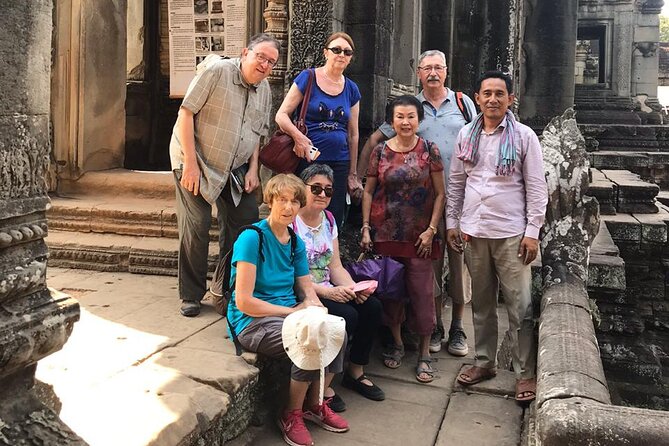
This is a proper day trip, not a half-hearted shuffle to a couple of viewpoints. You get picked up from your hotel or accommodation in central Phnom Penh, then you’re on the road for about two hours toward the south. Phnom Chisor sits roughly 65 km from the city, so the first part of your day is travel time—plus the chance to watch daily life change as you leave the built-up areas behind.
The format is also a big deal for comfort and pacing. It’s private, meaning it’s only your group, and you’re not squeezed with strangers who keep asking when the next stop is. Air-conditioned transport is part of the appeal, and that matters in Cambodia when the sun is doing its best work.
You’ll typically see the day structured around two main temple moments plus a countryside village stop. That can feel like a sweet spot if you’re staying in Phnom Penh and want more than a museum or a market. It’s also a good option if you like your history with commentary, because the guide’s explanations help you connect what you see to the Khmer Empire era.
The one thing to keep in mind is that this is a single-day loop. If you’re the type who wants long, slow wandering in one place, you may feel the schedule is brisk. If you’re okay with moving at a steady pace—driving out, visiting, driving back—that’s when the day clicks.
You can also read our reviews of more tours and experiences in Phnom Penh


Stop 1: Phnom Chisor and the mountain-climb reward
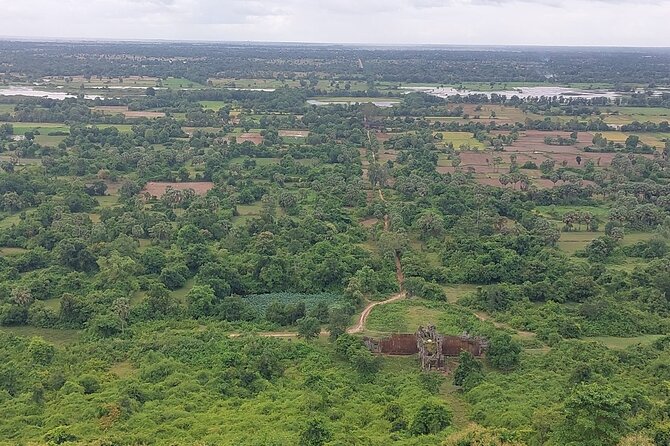
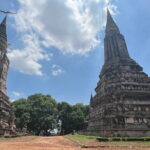
Phnom Chisor Temple is the star of the morning. The drive ends with you heading up to a temple complex set high above the plain. In practice, this means you’ll spend time walking paths and climbing steps to reach viewpoints and the most interesting temple areas.
How long you spend here is set for about 1 hour 15 minutes, and this is where your footwear choice matters. The climb doesn’t have to feel like a punishment, but it is a climb. People often say the views from the top are worth it, and that matches the basic logic of Phnom Chisor: you’re going higher so the panorama can do the talking.
Here’s where the guide really adds value. Without context, temple visits can become a series of carvings and towers. With the right explanations, Phnom Chisor becomes a place you can understand. You’ll learn about the ancient Khmer Empire and how the site fits into the broader story, not just the date on a signboard.
One practical consideration: temple admission tickets are not included. That’s not a reason to skip the trip, but it is a reason to budget a little extra so the day doesn’t feel more expensive once you arrive. Also, if rain hits, paths can be slippery. Plan for that with sensible shoes and a light rain layer so you don’t lose time worrying about weather.
Best for you if you enjoy temples with viewpoint energy and you want history explained in a way that makes the details stick.
Dok Por village: the calmer, human-scale stop between temples
After Phnom Chisor, the itinerary adds a stop around Dok Por village. This is the part that helps the day feel more complete. You’re not just going from one monument to another; you get a glimpse of rural Cambodia beyond the main sights.
Dok Por village also works as a mental breather. You’ve already climbed for the morning, and you’re about to head toward the next temple by moving back down and across toward Tonle Bati. A village stop breaks up the temple rhythm and gives you something more grounded to look at: daily life, roads, and how people live around the landscapes where these temples sit.
This is also a good moment for questions. When you have an English-speaking guide with time, you can ask about what you’re seeing—how the area developed, what people connect the temples to, and how Khmer history plays out in day-to-day culture. Even if you don’t get every answer, you’ll usually leave with a better sense of why these sites still matter to local communities.
Time-wise, you’re not spending hours here. That’s intentional. The goal is to add context without stealing too much of the main temple time. If you prefer deep immersion in villages or markets, you might want to pair this day trip with another half-day activity in Phnom Penh or nearby. But as a built-in stop, Dok Por village is a smart way to keep the day from feeling like a straight line.
Stop 2: Tonle Bati lake and its ancient temple
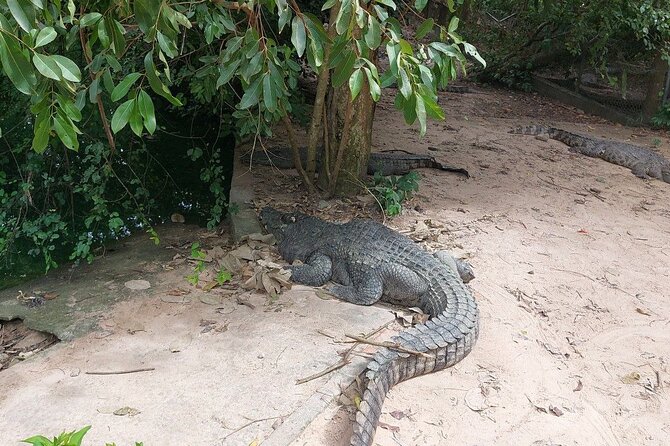
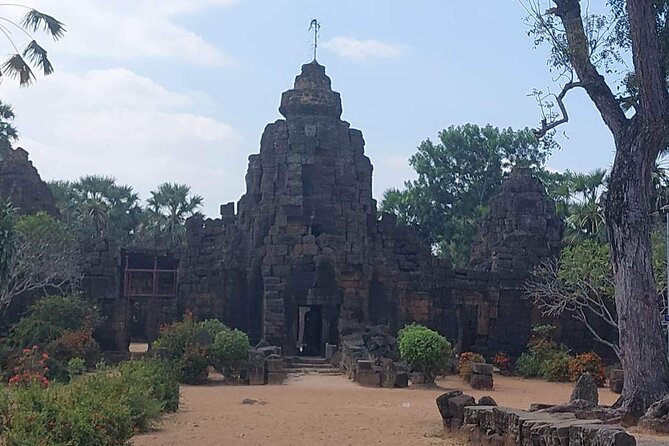
Tonle Bati is the quieter counterpoint to Phnom Chisor. It’s a small lake with an ancient Khmer temple, located around 40 km south of Phnom Penh. After the morning climb, the shift to water and open space can feel like a reset.
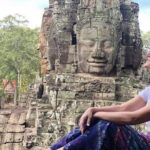
The temple at Tonle Bati is described as being built in the same Bayon style as Angkor’s homonymous jungle temple. That style detail matters because it gives you a lens for what to look for. When you’re told what architectural style to watch for, you start seeing features more clearly: shapes, stonework patterns, and the overall feel of the design rather than just taking in a generic “temple” view.
Your time at Tonle Bati is about 50 minutes. That’s enough to appreciate the site and take a slow walk without feeling rushed into a gift-shop sprint. The lake setting also changes the vibe. You’re not just looking at stone; you’re looking at an environment that shapes how the temple feels—open air, reflections, and that calm that a temple beside water can create.
As with Phnom Chisor, temple admissions aren’t included. So again, budget for ticket costs on arrival. Also, because this is outdoors time, sun and bugs can be part of the experience. You’ll do best with water and basic sun protection, and if rain returns, a light cover helps.
Best for you if you want a second temple with a different mood, and you like the idea of seeing Bayon-style design in a setting that feels less crowded than the most famous landmarks.
The optional wildlife stop: passing Phnom Ta Moa Zoo and requesting time at the rescue center
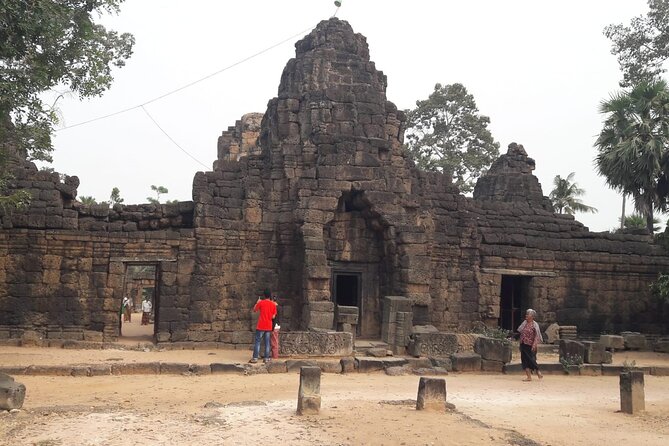
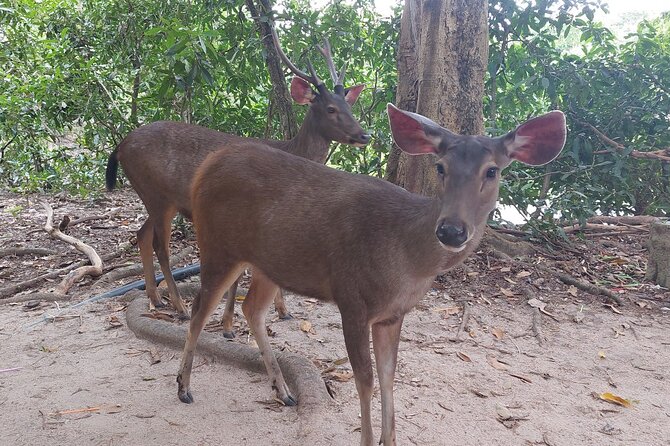
One more piece of the day is built into the drive: you pass by Phnom Ta Moa Zoo. Then, you can stop on request at Phnom Tamao Wildlife Rescue Centre, a wildlife center established in 1995. The property is described as over 6,000 acres of protected land.
This part can be a win if you like animals and want a more responsible kind of wildlife visit. It’s also time-flexible, because it’s a stop on request. That means you can decide based on your group’s energy level and interest.
The big practical point here is that your day still has to fit the schedule. If you add time at the rescue center, you may feel it in the overall rhythm—less time for extra photos or lingering in the temple areas. On the other hand, if you skip it, you’ll still get the main temple loop plus the village stop, so the day remains complete.
If you do request the stop, keep your expectations practical. Wildlife centers vary in what’s open and what you can see at any given moment. But the purpose is clear: conservation-focused work on protected land, established in the late 1990s. Even with limited time, it’s usually the kind of visit that adds meaning beyond temples.



English-speaking guiding: why the explanations can make or break the day
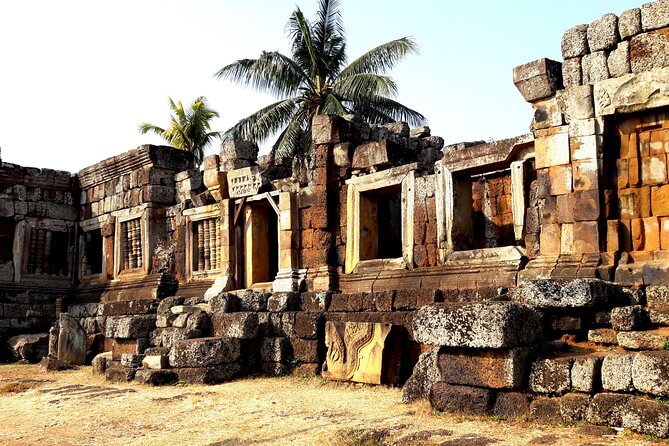
This trip’s core value isn’t just the temples. It’s the way they’re explained. An English-speaking guide turns Phnom Chisor and Tonle Bati from scenery into something you can actually place in your mind.
You’ll hear about the ancient Khmer Empire, with commentary that connects what you’re seeing to the broader picture. In the field, this is what helps a temple visit feel like education without turning into homework. You start noticing how the site design reflects the period’s style, and why certain details matter.
People also point out the guide as a standout part of the experience. Names that come up include Thearak (often spelled Therak in feedback) and John, and they’re described as having strong English skills and a knack for giving historical context in a way that feels organized, not random.
Even if your guide’s style differs, the lesson is the same: temple sites can be tough to read on your own. A good guide gives you a storyline. You stop thinking, What am I looking at? and start thinking, Oh, I see how this fits.
If you want to maximize value, go in with 2-3 questions of your own. For example: How does Phnom Chisor connect to the era you’re learning about? What Bayon style features should I watch for at Tonle Bati? Why does Dok Por village show up in this route? Asking questions early often leads to better explanations for the rest of the day.
Price and value: is $61 per person a good deal?
At $61 per person, this day trip sits in a mid-range price band for a private, full-day outing. The value hinges on what’s included: pickup, private transport, and an English-speaking guide’s commentary.
You’ll also spend most of your day moving between Phnom Penh and the temples—about two hours each way to reach Phnom Chisor, then another hour or so between Chisor and Tonle Bati. That alone is a lot of driving for a single day. When you add guide time and the structured route, the price starts to make sense, especially if you’re comparing it to the cost of doing it piecemeal with multiple taxis and uneven timing.
One important catch: temple admission tickets are not included. That doesn’t make the tour overpriced, but it does mean your real total will be a bit higher once you buy entry fees on site. If you’re budget-conscious, plan to add those admissions in your mental math before you book.
There are also notes about group discounts, and you’ll likely receive a mobile ticket. Those details matter most if you’re booking for more than one person, since the per-person value can improve.
My quick take on value: If you want a guided, efficient day outside the city with two temple visits and countryside variety, $61 feels fair. If you only care about one temple and you’re comfortable DIY-ing everything, you might find cheaper options—but then you’d lose the organized commentary that makes this day work.
Who should book this Phnom Penh day trip
I think this is a strong fit if you:
- Want a private day out with pickup and guided context
- Enjoy Khmer temple sites but don’t want to plan transport and timing yourself
- Like a day that balances views, temple design, and rural stops
- Are okay with a day that’s active enough for steps and walking
It’s also a good option for couples and small groups who want a calm pace without the pressure of a larger tour bus vibe. The “most people can participate” note is helpful if you’re wondering whether the itinerary is reasonable for average mobility.
If you’re someone who hates any kind of climb, then Phnom Chisor might be less fun than it is for others. If you’re someone who loves nature stops and animal time, the optional wildlife center request could turn this day from good into great, as long as your group’s schedule can handle the extra stop.
Should you book this day trip? My practical recommendation
Book this if you want an efficient, guided day that gets you out of Phnom Penh for real. You’ll get two different temple experiences—Phnom Chisor’s mountain payoff and Tonle Bati’s lake-and-Bayon-style vibe—plus the added cultural texture of Dok Por village. The English-speaking guide is the glue that makes the sites feel connected instead of random.
Skip or reconsider if you strongly dislike climbing steps, if you’re on a tight budget that can’t absorb temple admissions on top of the tour fee, or if you’d rather spend a full day lingering in one place rather than covering multiple stops.
If you do book, I’d go prepared for a mix of sun and possible rain, wear shoes you trust on steps, and carry a small amount of cash for admission fees. Do that, and this becomes one of the more satisfying ways to spend a day while staying based in Phnom Penh.
FAQ
How long is the Phnom Chisor and Tonle Bati day trip?
The tour runs about 6 to 8 hours (approx.).
Does the tour include hotel pickup in Phnom Penh?
Yes. Pickup is offered, and you meet your guide at your hotel or other accommodation.
Are temple admission tickets included in the price?
No. Admission tickets for both Phnom Chisor and Tonle Bati are not included.
Is this a private tour or a shared group tour?
This is a private tour/activity. Only your group will participate.
What are the main stops on the itinerary?
You visit Phnom Chisor, then Tonle Bati, and the route also passes by Phnom Ta Moa Zoo with an optional stop on request at Phnom Tamao Wildlife Rescue Centre.
What is included besides the temples?
The schedule includes time around Dok Por village at Phnom Chisor, and you can request a visit to the wildlife rescue center.
What is the cancellation window?
You can cancel for a full refund if you cancel up to 24 hours in advance of the experience start time.