REVIEW · PHNOM PENH
Half Day Trip to Killing Field and Genocidal Museum
Book on Viator →Operated by Private Tour Guide-Cambodia · Bookable on Viator
Hard history, close up and unforgettable. This half-day route takes you to Tuol Sleng (S-21) and Choeung Ek, where you can see how the Khmer Rouge built a prison-and-extermination system in plain sight. I especially like having a private guide (Ms Sreyneang was outstanding in one recent group) who helps make the timeline and purpose of each room and exhibit click, instead of you just staring at walls and photos. I also like that you start with an included hotel pickup and get A/C private transportation, so you spend your energy on the meaning of the places, not on logistics.
There is one drawback to think about first: this is emotionally heavy. The admission tickets for both sites cost extra (USD 8 per person), so you’ll want to budget that on top of the tour price, and you should expect a visit that asks you to slow down and take it in carefully.
In This Review
- Key highlights to know before you go
- A half-day plan that makes sense in Phnom Penh
- Entering Tuol Sleng (S-21) with real context
- Choeung Ek: the killing field beyond the prison walls
- How the private guide changes everything
- Price and logistics: is USD 130 worth it?
- What to expect from the timeline
- Respectful pacing: a practical way to handle such an intense visit
- Who this tour fits best
- Should you book this half-day Killing Fields and Prison visit?
- FAQ
- How long is the half-day trip?
- Do I get hotel pickup and drop-off in Phnom Penh?
- Are admission tickets included in the tour price?
- What does the tour include besides the guide?
- Is this tour private or shared?
- Is there a mobile ticket?
- What’s the cancellation policy?
Key highlights to know before you go
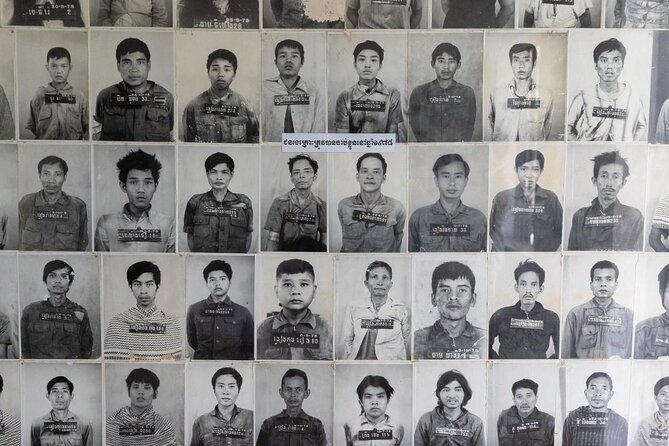
- Two major memorials in one compact half day: Tuol Sleng first, then Choeung Ek about 15 km southwest of Phnom Penh.
- Private English speaking guide: You get focused explanations, not a rush-through audio tour.
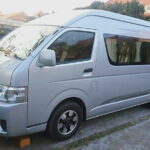
- A/C pickup and drop-off: Hotel transfers included, with pure drinking water in the vehicle.
- Small time commitments per site: Around 2 hours at each stop keeps the pace manageable.
- Mobile ticket option: Easier check-in on the day.
- A clear educational purpose: The museums present this history with the goal of encouraging visitors to be messengers of peace.
A half-day plan that makes sense in Phnom Penh
Phnom Penh can feel like it’s full of museums with half-built context. This tour fixes that problem by pairing two sites that belong together in your understanding, not just on a map. Tuol Sleng shows the machinery: interrogation, detention, torture, and extermination under the Khmer Rouge. Choeung Ek shows the result: mass graves and a memorial stupa with thousands of skulls. Put them side by side and the story stops being abstract.
The tour is designed to be efficient. You’re looking at about 3 to 4 hours total, roughly split into 2 hours at each location plus travel time. That’s long enough to take in what’s important and short enough that you can still function afterward.
Also, you’re not figuring out transport on your own. Included hotel pickup and drop-off, plus a private A/C vehicle, means you lose less time to traffic and more time to the experience.
You can also read our reviews of more museum experiences in Phnom Penh
Entering Tuol Sleng (S-21) with real context
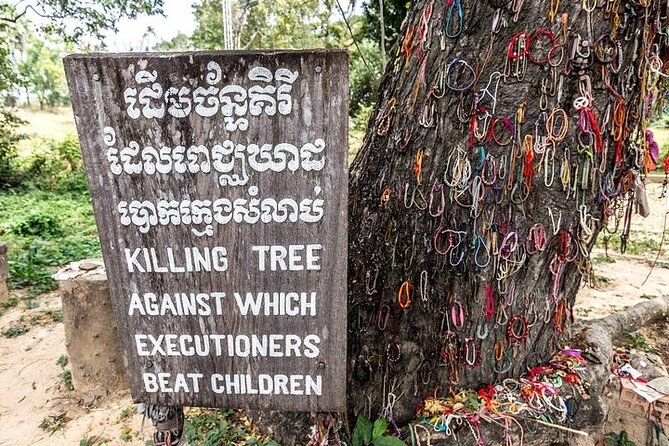
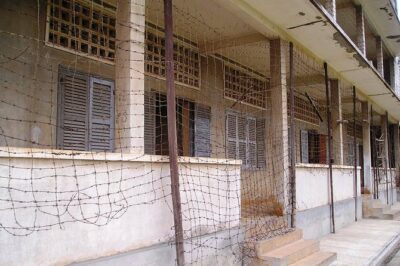
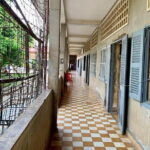
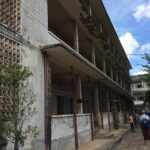
Tuol Sleng Genocide Museum is the memorial site of Security Office 21 (S-21), the Khmer Rouge’s interrogation and detention center. It sits in what was once an abandoned part of Phnom Penh, after residents were evacuated on 17 April 1975. Your guide’s job here is crucial, because without context the place can turn into a set of grim details. With context, it becomes evidence of a system.
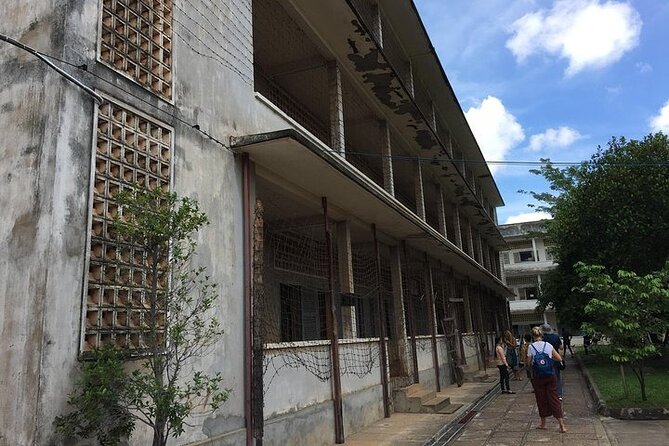
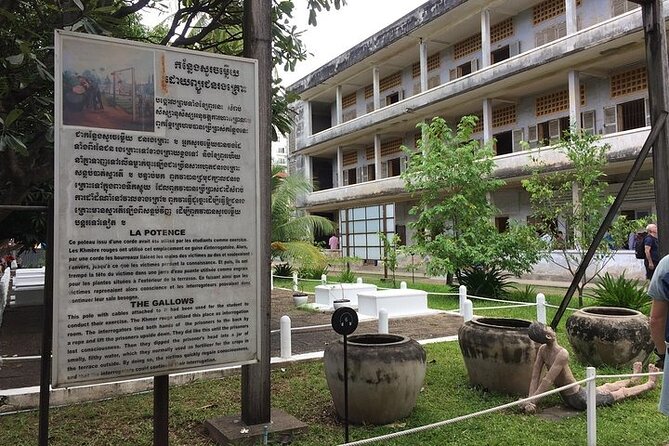
At Tuol Sleng, you’ll be looking at how S-21 functioned as the central hub of a vast prison network across the country. The museum preserves the site to show that it wasn’t just holding cells. It was used for detention, interrogation, torture, and extermination of people labeled political enemies of the regime.
Why that matters for you: this place is physically specific. Rooms, spaces, and surviving materials can make the events feel immediate and close. A skilled guide helps you connect what you see to what it meant inside that system. In a recent tour experience, the group highlighted how guide Ms Sreyneang helped them understand the history behind the conflict, and that kind of interpretation is exactly what you want here.
Practical note: the museum is heavy in both content and atmosphere. Plan to keep your pace slow. If you feel yourself skimming, ask your guide to explain another element. That’s how you get past a surface-level visit and into understanding.
Choeung Ek: the killing field beyond the prison walls
After Tuol Sleng, you head about 15 km southwest to Choeung Ek. This second stop is often described as a killing field, but the place also has layers before the Khmer Rouge era. Prior to 1975, the memorial area was described as an orchard and also a Chinese cemetery.
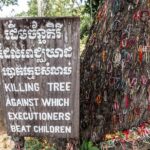
During the Khmer Rouge regime, Choeung Ek became a site of brutal executions, with more than 17,000 individuals noted as killed there. Many of them had first endured torture and deprivation in Tuol Sleng prison. That connection is one reason the order of the tour works: you see the prison system first, then you see where executions happened.
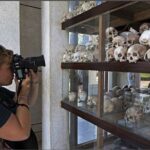
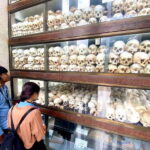
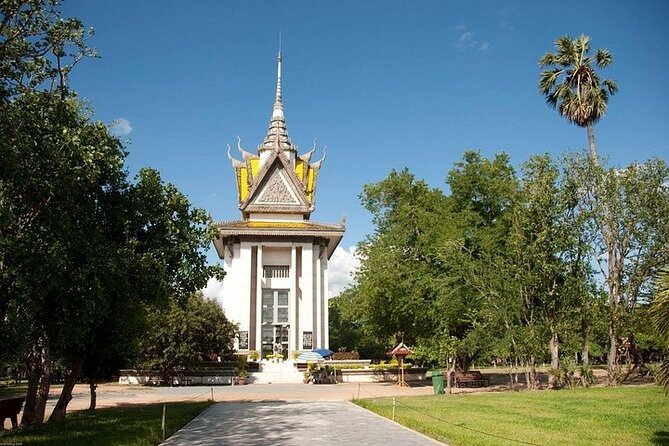
Today, Choeung Ek is organized around the reality of mass graves and remembrance. You’ll be looking at the memorial stupa containing thousands of skulls. It’s not a place for rushing, and it’s not a place for phone-scrolling. A good guide will help you understand why the memorial is structured the way it is and what visitors are meant to take away from it: remembrance and the prevention of repeating such violence.
One more thing to know: your emotional load increases slightly at this second stop. Tuol Sleng can feel like a mechanism; Choeung Ek can feel like the aftermath. If you’re sensitive, consider bringing a moment of quiet into your plan. A short pause away from the busiest paths can help you process what you’re seeing without losing the connection to the history.
How the private guide changes everything
This is not a “grab a ticket and go” kind of experience. The value of a private English speaking tour guide is that the sites are complex and you can miss key links if you’re left alone with signage. A guide helps you connect dates, roles, and spaces so the story doesn’t stay fragmented.
In one highlighted experience, the guide’s ability to explain the conflict’s history made the visit feel clearer and less chaotic. That matches what I’d tell you to look for: you want someone who can guide your attention. Not just someone who knows facts, but someone who can shape how you understand what the memorials are showing.
Also, being private means you can ask questions as they come up. If you have a background curiosity—politics, ideology, how prison systems work—your guide can steer you toward the relevant parts of the exhibits.
Price and logistics: is USD 130 worth it?
The tour price is USD 130 for a private half-day experience of about 3 to 4 hours, including hotel pickup and drop-off, private A/C transportation, a private English speaking guide, pure drinking water, and traveler insurance.
Then there’s the main extra cost: admission tickets to Tuol Sleng and Choeung Ek are USD 8 per person, not included in the tour price.
Here’s how I’d judge value for you:
- If you would otherwise spend time arranging transport, waiting, and figuring out tickets, the included pickup and private vehicle are a real convenience.
- If you care about understanding what you’re seeing (you probably do, because you’re choosing this), the private guide is the biggest value driver.
- The bottled water and A/C won’t make the subject lighter, but they help you arrive steadier and stay comfortable enough to absorb everything.
For many people, the math works out best when there are two or more in your group. Even if you’re solo, you’re buying clarity and pacing, not just transportation. In a visit this serious, that’s worth something.
You can also read our reviews of more tours and experiences in Phnom Penh
What to expect from the timeline
The itinerary is straightforward:
1) Tuol Sleng Genocide Museum (around 2 hours)
2) Travel about 15 km to Choeung Ek
3) Choeung Ek Genocidal Center (around 2 hours)
Total time sits at about 3 to 4 hours. That means there’s limited slack for wandering off-track. If you prefer long independent time inside museums, this tour might feel a bit structured. But structure is also what keeps you from spending half the day traveling and the other half trying to piece together meaning without help.
Also, it’s useful to know that this is a private tour/activity, so only your group participates. That can reduce stress. You won’t be matching your pace to a random crowd.
Respectful pacing: a practical way to handle such an intense visit
I’m going to be blunt because it helps: these are sites of torture, deprivation, executions, and mass death. You don’t need to force tears or perform emotion. You just need to give the content the attention it demands.
A few practical ideas:
- Wear comfortable shoes. You’ll want to stand and move without feeling rushed.
- Bring a light layer. Some memorial spaces can feel cool or drafty, depending on the layout.
- Use the guide’s explanations as your off-switch for numbness. When you feel overwhelmed, ask for the next context piece rather than pushing through on autopilot.
- Keep your phone use minimal. You can take in what’s in front of you without turning the experience into a scrolling activity.
The goal isn’t to leave with trivia. The museum aims to encourage visitors to become messengers of peace. Your best souvenir is understanding that you can carry into conversations afterward.
Who this tour fits best
This is a great fit if you want:
- Private, English-guided context for two connected sites
- A compact format that works well in Phnom Penh
- Hotel pickup and A/C transport
- A serious, education-focused experience rather than a fast photo stop
It may not fit as well if:
- You’re looking for a relaxed, casual outing
- You want lots of free time inside exhibits without structure
- You find torture-related memorial sites difficult to handle for extended periods
One reassuring note from the tour details: most people can participate. That doesn’t remove the emotional weight, but it suggests the pacing and logistics aren’t extreme.
Should you book this half-day Killing Fields and Prison visit?
Book it if you want a clear, guided route that connects the prison system at Tuol Sleng with the mass killing memorial at Choeung Ek. The private guide, included hotel pickup, A/C ride, and bottled water all support the kind of pace you need for an experience that’s heavy but important.
Skip it or rethink your timing if you know you’ll struggle with intense content for more than short stretches. In that case, you might prefer a shorter option or plan extra rest afterward.
If you do book, go in with the right mindset: not as a checklist, but as an education in how violence can be organized—and how remembrance matters.
FAQ
How long is the half-day trip?
It runs about 3 to 4 hours (approximately), with around 2 hours at each stop.
Do I get hotel pickup and drop-off in Phnom Penh?
Yes. Hotel pick-up and drop-off are included.
Are admission tickets included in the tour price?
No. Admission tickets to both Tuol Sleng and Choeung Ek cost USD 8 per person and are not included.
What does the tour include besides the guide?
Included items are private transportation with A/C, pure drinking water, traveler insurance, and a private English-speaking tour guide.
Is this tour private or shared?
It’s a private tour/activity. Only your group participates.
Is there a mobile ticket?
Yes, mobile tickets are offered.
What’s the cancellation policy?
Free cancellation is available up to 24 hours in advance for a full refund.