REVIEW · PHNOM PENH
Cooking Class in Phnom Penh
Book on Viator →Operated by Phnom Penh Spice Cooking Class · Bookable on Viator
Spices start pounding at 5 p.m. This Phnom Penh Spice Cooking Class is a hands-on evening where you build Khmer dishes from fresh local ingredients, then get the story behind rice, fish, herbs, and spice blends. I love the way the pace moves in clear steps—spice paste to steaming to BBQ—so you stay part of the action. A possible drawback: it’s an active cooking session, so if you hate getting your hands messy or prefer very mild flavors, you’ll want to flag that early.
I also like the small-group feel, with a maximum of 8 people. You end up eating what you made, not just nibbling while someone else cooks.
In This Review
- Key highlights you’ll care about
- Phnom Penh Spice Cooking Class: a smart use of your evening
- 5:00 PM meet-up: coconut water, fruit, and first contact with Khmer spices
- 5:15 to 6:45 PM: cutting, pounding, seasoning, and steaming
- 7:00 PM BBQ in Cambodian style: when the class turns social
- 7:15 PM dessert and 7:30 PM slide presentation on Khmer food
- By 8:00 PM: the dinner you make, plus drinks
- Price and value: what $31 really buys you
- Who this cooking class suits best
- Book it or skip it: my decision guide
- FAQ
- What time does the Phnom Penh Spice Cooking Class start?
- How long does the cooking class last?
- How many people are in a group?
- What’s included with dinner?
- How much does the experience cost?
- Can I cancel for a full refund?
Key highlights you’ll care about
- Start with coconut water and seasonal fruit before the real work begins
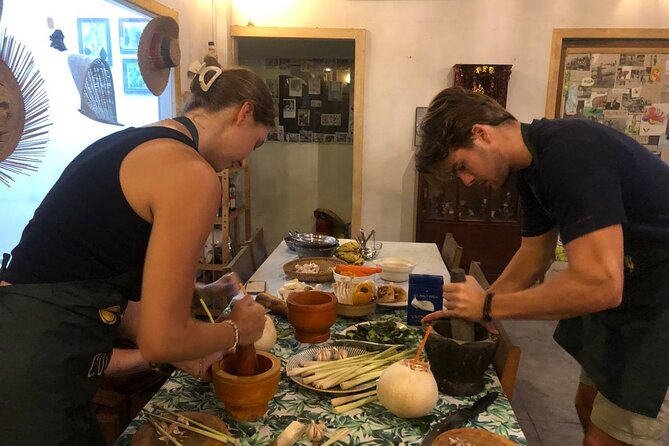
- Hands-on spice prep: cutting, pounding, and seasoning spice paste
- A full cooking timeline: steaming, Cambodian-style BBQ, then dessert
- A guided food culture slide presentation after you eat
- Included dinner drinks: water, soft drink, and one or two beers
Phnom Penh Spice Cooking Class: a smart use of your evening
If you only have a short time in Phnom Penh, a 3-hour cooking class is a great fit. You get something practical—real technique for Khmer flavors—and you also get context for what you’re tasting. The schedule is built so you’re not stuck waiting around; you’re working in the kitchen early and eating by the end.
This is also good value for the price because it wraps instruction and dinner together. At $31 per person, you’re paying for the experience (spice work, cooking steps, and the meal you create), not just a sit-down restaurant ticket. That matters when you’re budgeting in Cambodia.
One more plus: you’ll be capped at 8 people, so the host/instructor can actually check what you’re doing and guide you through the steps.
You can also read our reviews of more cooking classes in Phnom Penh
5:00 PM meet-up: coconut water, fruit, and first contact with Khmer spices
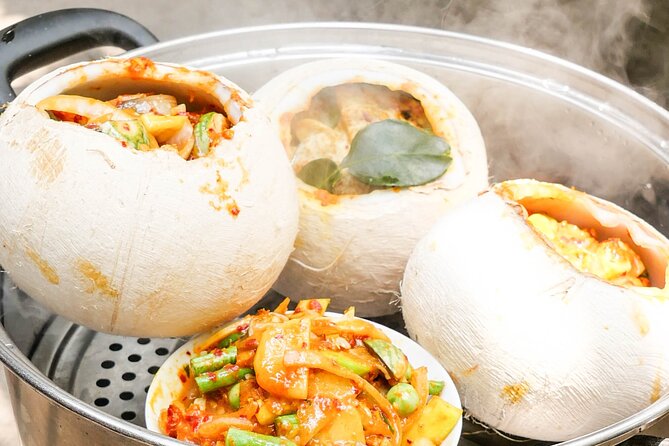
The evening kicks off at 5:00 PM at Phnom Penh Spices, located at 111, St 1MC, Phnom Penh. Before you touch a cutting board, you refresh with coconut water and enjoy seasonal fruit. It’s a small thing, but it makes the class feel like an actual welcome, not a frantic start.
Then you settle in to learn about Cambodian spices. Even if you’ve cooked before, this is where the experience becomes more than just a recipe lesson. The focus is on understanding what goes into Khmer flavor—how different herbs and spices work together, and why rice, fish, and spice pastes are so central.
Practical tip: since the session starts early evening, it’s smart to eat lightly beforehand. You’re heading toward full dinner at the end, so a heavy meal earlier can leave you feeling stuffed before the BBQ and dessert.
5:15 to 6:45 PM: cutting, pounding, seasoning, and steaming
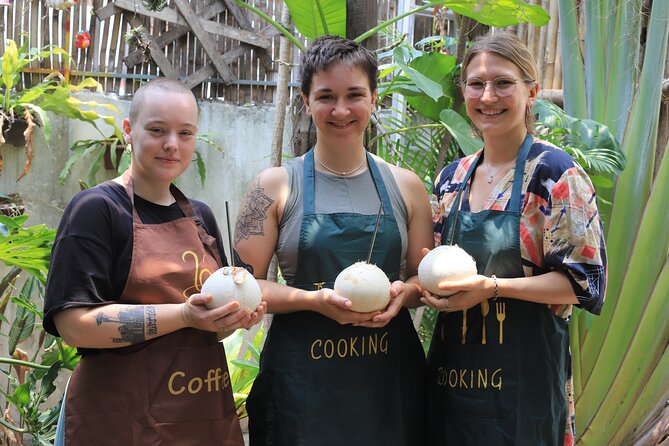
At 5:15 PM, the real work starts: you begin cutting spices and pounding them to make the base. That pounding step is more than showmanship. You’re learning how Khmer cooking builds depth through texture and mix—spices don’t just get thrown in; they’re processed into a usable paste.
By 5:30 PM, you move to seasoning the spice paste, mixing it with vegetables and meat. This is the moment where you can taste the class’s logic: you’re building flavor in layers. The seasoning step is also where you’ll likely notice how aromatic ingredients change as they’re combined—something you don’t get when you cook from a packaged spice blend.
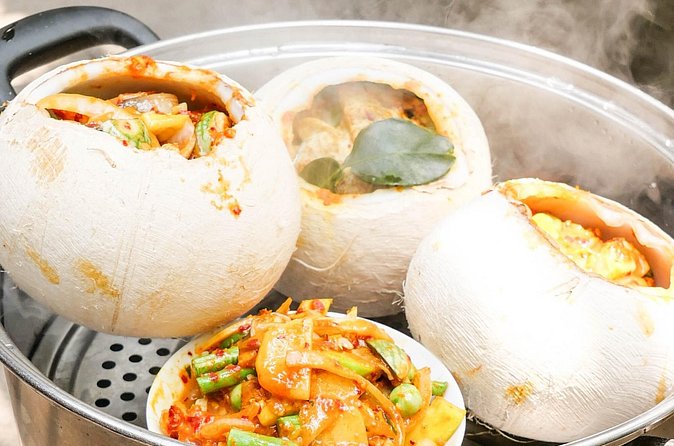
At 6:45 PM, it’s time to steam. Steaming is part of the rhythm of Khmer food preparation: it helps keep dishes balanced, especially when you’ve made a strong spice paste. You’ll see the transition from raw ingredients to something soft, fragrant, and ready to eat.
Why this matters: hands-on classes are only useful if you understand the sequence. This one is set up so you practice the workflow, not just the final dish.
Possible drawback to keep in mind: the instructions are active and hands-on. If you have limited comfort with chopping/pounding or you don’t like spice aromas up close, you’ll want to set expectations at the start and move carefully.
7:00 PM BBQ in Cambodian style: when the class turns social
At 7:00 PM, you shift gears and make BBQ in Cambodian style. This part of the evening is where cooking stops feeling like a lesson and starts feeling like a meal. The hands-on energy continues, but now you’re working toward something with a smoky, grilled character.
Even if you’ve never cooked Cambodian BBQ before, you’ll have the advantage of having already worked with the spice base earlier. So when the flavors show up again here, it all feels connected—not like random recipes.
Practical tip: if you’re sensitive to smoke or heat, position yourself so you can work comfortably. BBQ-style cooking can bring stronger smells and a warmer setup, especially around the grill.
7:15 PM dessert and 7:30 PM slide presentation on Khmer food
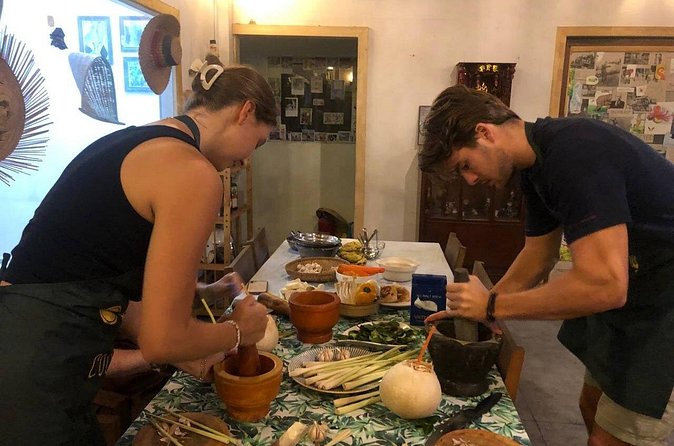
Dessert arrives at 7:15 PM. The timing is nice because you’ve already had your savory dishes in the process, so the sweet part feels like a proper finish rather than an interruption.
Then at 7:30 PM, you’ll sit through a slide presentation about Cambodian food in general. The class doesn’t only teach how to cook. It also explains what shapes the food: the importance of rice and fish, plus how herbs and spices define Khmer cooking. There’s also a component about influences from neighboring cuisines, so the dishes you made aren’t presented as isolated “traditions,” but as something that developed over time through contact.
If you care about food history in a practical way, this slide portion is helpful. You’ll likely connect what you taste in your own dishes to the broader patterns: why certain ingredients show up repeatedly, and why sauces and spice pastes matter.
By 8:00 PM: the dinner you make, plus drinks
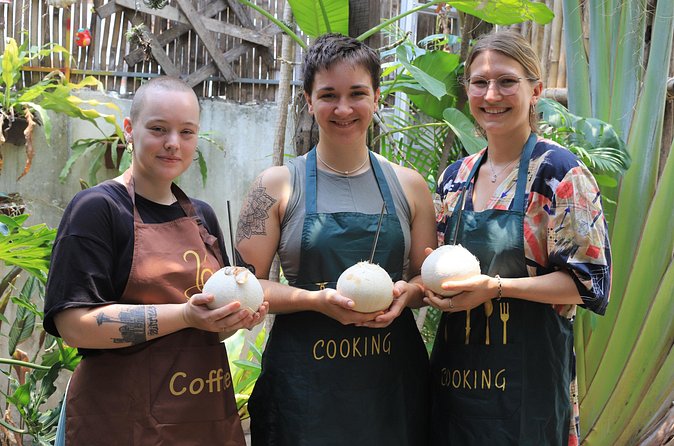
At 8:00 PM, it’s dinner time. You eat the meal you’ve created, which is a big part of why this format works. You’re not guessing whether your outcome is “right.” You can taste immediately and understand what the steps were trying to do.
Drinks included with dinner: water, a soft drink, and one or two beers. That’s a nice perk, and it also makes sense for an evening class—beer is included, but it’s not the whole point. If you’d rather skip alcohol, you still get non-alcoholic drinks, so you can keep things comfortable.
One practical note: since the class runs for about 3 hours, you’ll be fully done by the end. That makes it easy to plan the rest of your night without a complicated schedule.
Price and value: what $31 really buys you
At $31 per person, this class is priced like a mid-range food experience—but with more included than many “tourist-friendly” cooking sessions. You get:
- hands-on spice and cooking steps (not just watching)
- a full flow: paste → steaming → BBQ → dessert
- a slide presentation about Cambodian food
- dinner with included drinks
The small group size (max 8) also matters. When instructors can see what each person is doing, you learn faster and you’re less likely to end up stuck copying someone else’s technique.
Should you treat this as a full meal replacement? Yes. Dinner is part of the experience, and dessert is included too. Treat it like your evening anchor, not an extra activity tacked onto an already full day.
Who this cooking class suits best
I’d put this class at the top of your list if you:
- want a hands-on Phnom Penh food experience with real technique
- like learning why flavors work, not only which ingredients to add
- enjoy Khmer staples like rice, fish, herbs, and spice pastes
- prefer small groups and direct guidance in the kitchen
It may be less ideal if you:
- strongly prefer very mild food (Khmer cooking uses herbs and spice blends, and aromas are part of the process)
- don’t enjoy chopping/pounding/actively cooking
- are looking for a purely restaurant-style dining experience rather than a workshop
Book it or skip it: my decision guide
Book it if you want the best kind of “souvenir”: food knowledge you can actually use. The step-by-step sequence (cut/pound/season/steam/BBQ/dessert) makes it easy to remember what you learned, and the slide presentation helps you understand what’s behind the flavors.
Skip it if you’re only interested in eating and not interested in cooking technique. This isn’t a quick tasting; it’s a working kitchen class designed to end with a meal you made.
FAQ
What time does the Phnom Penh Spice Cooking Class start?
It starts with a meet-up at 5:00 PM.
How long does the cooking class last?
The class runs for about 3 hours.
How many people are in a group?
There’s a maximum of 8 travelers.
What’s included with dinner?
Dinner includes water, a soft drink, and one or two beers.
How much does the experience cost?
The price is $31.00 per person.
Can I cancel for a full refund?
Yes. You can cancel up to 24 hours in advance for a full refund.