REVIEW · PHNOM PENH
Phnom Penh: City (no genocide) half day Tour
Book on GetYourGuide →Operated by Visal Tuk-Tuk Tours in Phnom Penh · Bookable on GetYourGuide
Five hours, a lot of Phnom Penh. I like how this half-day tour keeps you in the city center and uses an open-air tuk-tuk, so you’re not stuck in traffic for hours just to see a few sights. You’ll also get a clean run of the city’s most recognizable landmarks, from Khmer stonework to river views, with plenty of stops built for photos.
I especially like the way the route tells you what symbols mean in modern Cambodia—starting with liberation stories and moving through major royal and religious sites. One heads-up: several key stops require extra spending for entry, and the Royal Palace includes an optional guide fee if you want extra help inside.
In This Review
- Key things I’d plan around
- Why this Phnom Penh half-day makes sense
- Independence Monument: Khmer design and the liberation story
- Park Strip icons: Norodom Sihanouk and Chuon Nath
- Diamond Island and the Friendship Monument: meaning with river views
- Royal Palace without the guesswork: entry costs and what you’ll see
- National Museum: free outside views that still feel worthwhile
- Wat Ounalom and Wat Phnom: two important temples, different entry rules
- Central Market time: the practical final stop
- Price and value: what $25 really buys (and what doesn’t)
- The guide makes the day work
- What to bring so the day feels easy
- Who this tour is best for
- Should you book this tuk-tuk tour?
- FAQ
- How long is the Phnom Penh city half-day tour?
- What’s included in the $25 price?
- What entry fees should I expect?
- Is an audio guide available for the Royal Palace?
- Is this tour private, and how do you get around?
- Where does pickup happen?
- Can I cancel and get a full refund?
Key things I’d plan around
- Open-air tuk-tuk route designed to cover top Phnom Penh landmarks in one 5-hour block
- Independence Monument Khmer design with a clear liberation-from-French-rule story
- Royal Palace + National Museum photo time, including outside visits that keep costs lower
- Temple sequence from Wat Ounalom (free) to Wat Phnom (with a small entry fee)
- Diamond Island + Friendship Monument stops that focus on views and meaning, not just photos
- Central Market drop-off so you can browse and buy without rushing
Why this Phnom Penh half-day makes sense
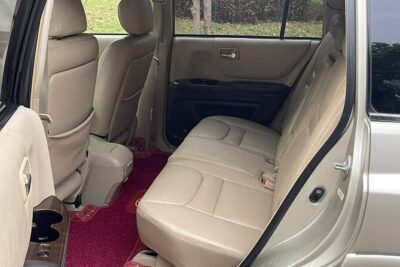
Phnom Penh is a city where locations are spread out enough that a self-guided day can turn into a lot of crossing town. This tour smartly solves that with a compact route inside the center, using a traditional open-air tuk-tuk for the main sightseeing loop.
The price is also easier to judge than you might expect. Yes, it’s $25 per person, but the bigger picture is that you’re paying for transport, a live English-speaking guide, and a guided path between major monuments. Then, you only top up with the specific entry fees you choose to pay—mainly at Wat Phnom and the Royal Palace.
You can also read our reviews of more city tours in Phnom Penh

Independence Monument: Khmer design and the liberation story
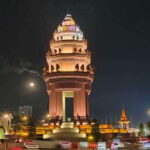
You start with pickup from your accommodation (from the lobby or reception area), then head to Independence Monument. This is more than a photo stop. The monument is a symbol of Cambodia’s liberation from French rule, and the guide’s job is to connect the details you see in the Khmer design to the meaning behind the stone.
For your photos, aim to slow down right at the moment you can frame the monument’s full shape against the street and sky. If you’re used to monuments that feel generic, this one is different: the design looks like it belongs to Khmer architectural language, not just a modern landmark.
Park Strip icons: Norodom Sihanouk and Chuon Nath
From there, the tour moves along the Park Strip area, where two major statues act like bookends for modern Cambodian identity: King Norodom Sihanouk and Chuon Nath.
The King Norodom Sihanouk Statue was built in 2013 after his death. It’s placed right where you’d expect a national figure to be visible, and the guide’s explanation helps you understand why this kind of public memorial matters in Phnom Penh’s civic landscape.
Next comes the Chuon Nath Monument. This one is especially worth your attention if you care about education and language. Chuon Nath is celebrated for literary works, education curricula, the first Khmer dictionary, and even a national song—so this isn’t only about a religious or royal figure. It’s about ideas that shaped everyday Cambodian learning.
Practical tip: bring your camera and keep your phone charged. These statue stops are short, and good angles depend on quick positioning.
Diamond Island and the Friendship Monument: meaning with river views
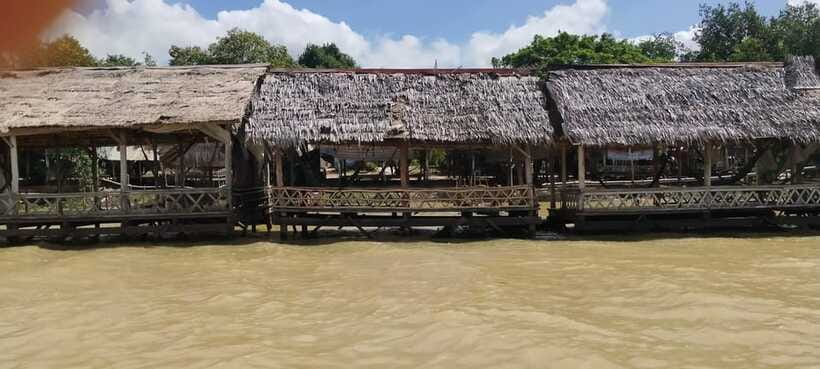
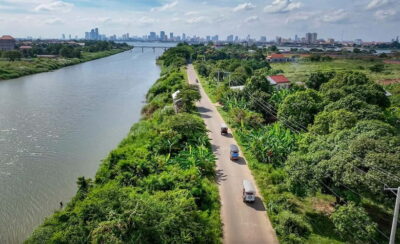
Then you head toward Diamond Island, described as where four faces rivers connect together. Even if you don’t know the geography before you arrive, the stop gives you the feeling of Phnom Penh as a river city, where waterways influence where people live, travel, and trade.
Right after that, the tour includes the Cambodian Vietnam Friendship Monument. The whole point here is context: it commemorates the former alliance between the two countries. For me, that’s the kind of stop I’d rather have guided than skip—because a plain photo doesn’t automatically tell you why the monument exists.
When you’re taking pictures around here, watch for glare and harsh sun. If you can, shift your stance a few steps to avoid blown-out highlights and to keep the monument or river in balance.
Royal Palace without the guesswork: entry costs and what you’ll see
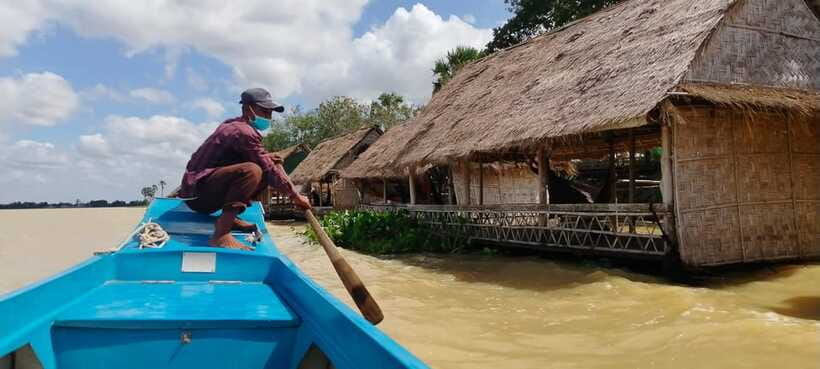
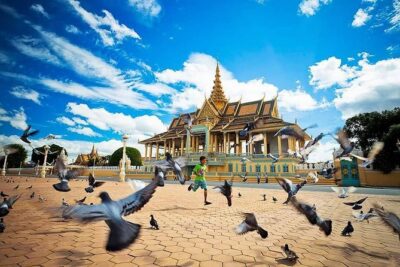
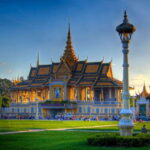
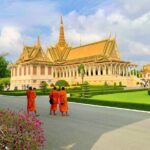
The Royal Palace is one of Phnom Penh’s biggest draws, and it’s included in the route as a visit where you can go inside and admire the architecture and take photos. Here’s the important part for your wallet: Royal Palace entry is $10, and there’s another $10 if you choose a guide inside. There is no audio guide available.
That means two things for your planning:
- If you want more than a quick look, budget for the extra guide fee.
- If you’re mostly after the photo angles, you can still visit and enjoy the architecture, but you’ll be relying more on your tuk-tuk guide for explanations.
A quick decision guide: if you enjoy architecture stories—how design ties to power and religion—pay for the inside guide. If your goal is mainly to see the palace from key viewpoints and capture your best images, you might feel comfortable keeping it simpler.



National Museum: free outside views that still feel worthwhile
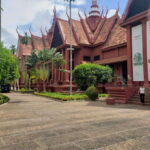
After the Palace, the tour goes to the National Museum for one of the best “low-cost photo wins” in the day. You get an outside visit only, and that part is free.
Outside-only doesn’t mean you’re missing the whole point. The building itself is a major architectural feature, and the photo opportunities around the museum can be excellent. It’s a useful stop if you’re trying to keep entry costs down while still checking a top-name site.
Wat Ounalom and Wat Phnom: two important temples, different entry rules
The tour then shifts into a calmer, more reflective rhythm with two major temple stops.
First is Wat Ounalom. It was originally built in 1442 and is one of Phnom Penh’s most important temples. The best part: entry is free. That makes it a strong “fit it in even if you’re on a budget” stop, and it also gives you a break from the more civic monuments.
Next is Wat Phnom, which includes the Lady Penh Statue. Wat Phnom costs $1 for entry, a small fee that keeps the stop accessible without turning it into a major spend. Even if you’re not deeply religious, temples in Phnom Penh are where you feel daily life and tradition more directly than at the big monuments.
What to do once you arrive: slow your pace and take your time. Temples reward respectful attention. Also, keep your camera ready, but don’t start shooting until you’ve taken a few seconds to see how locals move through the space.
Central Market time: the practical final stop
To close, you’ll be dropped back in the Central Market area. This is a great last stop because it turns the tour into something you can use immediately. You can buy anything from clothing to handmade crafts, and you can browse at your own pace after the structured route.
For best results, treat Central Market like a scavenger hunt. Start with the kinds of things you can use right away—souvenirs, simple textiles, small gifts—then see if any stall catches your eye. It’s also a good place to pick something small because your day plan is already done, so you won’t feel like you must decide fast.
Price and value: what $25 really buys (and what doesn’t)
At $25 per person for a 5-hour private-group tour, the value is in the structure. You’re paying for guided movement between key Phnom Penh highlights on an open-air tuk-tuk, plus pickup from your accommodation and cold drinking water.
You’re not paying for:
- Lunch
- Entry fees
Entry fees you should plan around:
- Wat Phnom: $1
- Royal Palace: $10 entry, plus $10 for a guide inside if you choose that option
Everything else in the route is designed so you still get major experiences without piling on costs—for example, National Museum is outside visit only and free, and Wat Ounalom is free to enter.
If you’re trying to do Phnom Penh fast and intelligently, this pricing works. If you want a strictly cash-free day, this won’t be that, because the Royal Palace is paid and the Palace guide fee is optional but real.
The guide makes the day work
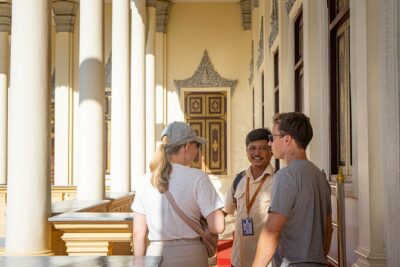
The tour uses a live guide (Cambodian, English), and the biggest payoff is the context between stops. The best parts of Phnom Penh landmarks often feel abstract until someone explains what the monument represents, why the statue was built when it was built, and what the temple’s role is in the city.
I also like the private-group setup. You’re not sharing your day with a big pack that forces everyone into the same pace. That flexibility is useful when you’re trying to photograph buildings, adjust for heat, or spend a little longer at a single stop because the details are pulling you in.
And if you end up with a guide like Nick—praised for friendliness and clear insights—that can turn a standard sightseeing loop into a real orientation to the city.
What to bring so the day feels easy
You’ll be doing a mix of walking and standing, often in strong daylight. Here’s what to pack so you’re comfortable from pickup to drop-off:
- Comfortable shoes
- Sun hat
- Camera (or a phone you trust for photos)
- Comfortable clothes
- Charged smartphone
A charged smartphone matters more than you think. You’ll likely want quick reference photos for angles and to keep track of where you want to return after the market.
Who this tour is best for
This is a smart fit if you:
- Want a first introduction to Phnom Penh’s major landmarks in one half day
- Prefer an open-air tuk-tuk style sightseeing day instead of a car-and-museum shuffle
- Care about meaning behind monuments (liberation, memorials, education, religion), not just surface photos
- Like a private-group pace and don’t want to feel rushed
It also avoids the heavy, difficult subject matter implied by the tour name focus. If you want city sights without centering on genocide-related sites, this route is aligned with that goal.
Should you book this tuk-tuk tour?
Book it if you want an efficient, guided orientation to Phnom Penh’s top sights—Independence Monument, major statues, Royal Palace architecture, two important temples, and Central Market time—wrapped into a single 5-hour plan with transport handled.
Skip or reconsider if you hate paying entry fees on principle, or if you prefer a slower day with fewer stops and deeper time inside every paid site. The Royal Palace costs add up a bit, especially if you want the inside guide.
Bottom line: for $25, you’re buying a practical route, an English-speaking guide, and a way to see a lot of Phnom Penh center without the hassle of planning. If that’s your style, this half-day tour is a strong choice.
FAQ
How long is the Phnom Penh city half-day tour?
The tour lasts about 5 hours.
What’s included in the $25 price?
Transport is included, along with cold drinking water.
What entry fees should I expect?
Wat Phnom has a $1 entry fee. The Royal Palace requires a $10 entry fee, and there’s an additional $10 if you choose to have a guide for the visit inside.
Is an audio guide available for the Royal Palace?
No audio guide is available for the Royal Palace.
Is this tour private, and how do you get around?
It’s a private group tour, and you travel by traditional open-air tuk-tuk.
Where does pickup happen?
Pickup is included, and you wait inside your accommodation’s lobby or reception area for the driver.
Can I cancel and get a full refund?
Yes. You can cancel up to 24 hours in advance for a full refund.