REVIEW · PHNOM PENH
Phnom penh full day Tour
Book on GetYourGuide →Operated by cambodia tour minivan · Bookable on GetYourGuide
Phnom Penh history hits hard and then shifts gears. I like the way this tour connects Tuol Sleng with Choeung Ek, so the Khmer Rouge story isn’t just dates on a wall. You also get the other side of the city through the Royal Palace area and the calm, scenic payoff at Wat Phnom, with a guide who can explain both politics and day-to-day culture in plain English.
My favorite part is the guide. Names I’ve seen connected to this tour include Sovann and Ned, and both are known for being patient and informed—good when your schedule changes or when a site is unexpectedly closed. One drawback to plan for: entrance fees for the big sights are not included, so your day’s cost can jump once you total them up.
In This Review
- Key things that make this Phnom Penh day tour work
- A day built for context, not just checkboxes
- Price and value: what $35 really turns into
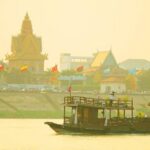
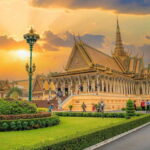
- The Royal Palace: imperial roots above Chaktomuk
- Tuol Sleng (S-21): what a prison can teach you
- Choeung Ek (Killing Fields): the scale becomes real
- National Museum of Cambodia: where culture rebuilds your footing
- Wat Phnom: the calm end with a real skyline landmark
- How the guide makes or breaks the day
- Logistics that actually help you enjoy the tour
- Tips for pacing your emotions (so the day feels meaningful)
- Who this tour suits best
- Should you book this Phnom Penh day tour?
Key things that make this Phnom Penh day tour work
- A clear Khmer Rouge sequence from S-21 interrogation to the Killing Fields outside town
- Royal Palace context: built 1866–1870 after King Norodom moved the capital to Phnom Penh
- National Museum stop that balances the emotional weight with Khmer art and archaeology
- Wat Phnom at the end: a 46-meter pagoda landmark that feels like a reset button
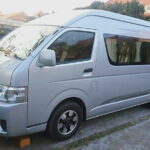
- Small-group feel with an English guide plus a comfortable minivan and cold drinks
A day built for context, not just checkboxes
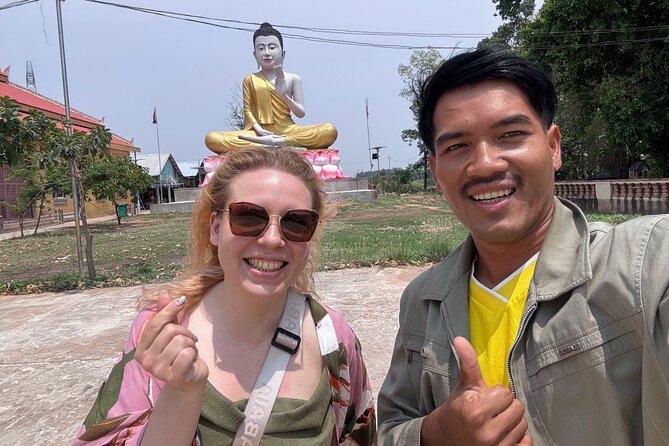
This is a 6-hour Phnom Penh sampler with five major stops that most people want to see, but in a way that actually helps the pieces fit together. You start with the Royal Palace complex, then you move into the heart-wrenching Khmer Rouge sites, and you finish with cultural anchors like the National Museum and Wat Phnom.
The value is that you’re not trying to arrange transport, guide time, and explanations for multiple scattered locations by yourself. You’re also not stuck with a super-fast “look and run” pace. The itinerary gives each place enough time—about an hour at the Killing Fields and Wat Phnom, and about 1.5 hours each at Tuol Sleng and the Royal Palace—so you can read, ask questions, and adjust to the mood of the day.
And yes, it’s a day with heavy themes. Cambodia’s 1970s history isn’t easy, and these sites ask for your full attention. If you’re the kind of traveler who likes emotional honesty over polished sightseeing, this format will feel right.
You can also read our reviews of more tours and experiences in Phnom Penh
Price and value: what $35 really turns into
The tour price is $35 per person for 6 hours and includes an English-speaking guide, a driver, minivan transport, and cool water plus soft drinks.
What’s not included are the entrance fees for each stop:
- Royal Palace: $10
- Tuol Sleng Genocide Museum: $5
- Choeung Ek Killing Field: $3
- National Museum of Cambodia: $10
- Wat Phnom: $1
That’s $29 total in entry fees, assuming you visit all five. So a realistic all-in budget is about $64 per person before any optional tips.
For Phnom Penh, that’s fairly solid value because you’re paying for a guide who connects the story across multiple sites, plus private/organized transport in a city where grabbing the right ride can be its own mini-project.
If you’re trying to travel on a tight budget, you’ll want cash or card ready for those ticket costs. One practical note: there’s at least one documented moment where a guide stepped in to cover an entrance fee when a traveler didn’t have cash, and then the traveler repaid later. That’s kind of the human touch you hope for—but don’t treat it as a guarantee.
The Royal Palace: imperial roots above Chaktomuk
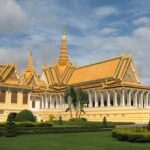
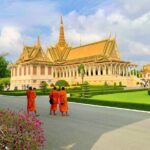
You’ll spend about 1.5 hours at the Royal Palace complex. Even if you don’t consider yourself a palace person, it’s a smart first stop because it shows you Phnom Penh as a living center of Cambodian identity, not just a backdrop.
A few useful details to know before you go:
- The palace complex was constructed between 1866 and 1870 after King Norodom relocated the royal capital from Oudong to Phnom Penh.
- It was built atop an older citadel called Banteay Keo.
- The palace faces roughly east, and it sits near Chaktomuk—the confluence area associated with the Tonle Sap and the Mekong, often described as an allusion to Brahma.
Why start here? Because it makes the later visits feel less like random tragedy tourism. When you understand where royal power sits geographically and historically, the contrast becomes clearer: authority, suffering, and national memory all share the same city grid.
Practical tip: if the Royal Palace is closed on the day you visit, your guide may still keep the day meaningful by adjusting the flow and focusing on what’s open.
Tuol Sleng (S-21): what a prison can teach you
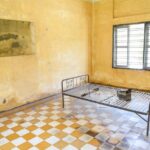
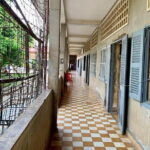
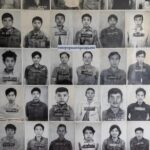
Next up is Tuol Sleng Genocide Museum, also known as S-21. Plan about 1.5 hours. This place isn’t designed for casual browsing. Expect a quiet, heavy pace as you move through interrogation and detention spaces.
What makes Tuol Sleng especially important is its specific role in the Khmer Rouge system:
- The site started as a school (a former secondary school).
- From 1975 to 1979, it functioned as Security Prison 21 under the Khmer Rouge.
- Between 1976 and 1979, an estimated 20,000 people were imprisoned there.
- Tuol Sleng was one of roughly 150 to 196 torture and execution centers established by the regime.
A good guide matters here. Someone like Sovann or Ned—both known for strong context in this tour style—can help you read what you’re seeing without turning it into a confusing lecture. You’ll likely get clarification on what S-21 represented and how it connected to the larger genocide system.
If you’re sensitive to grim content, give yourself permission to slow down. Standing in these rooms is a physical experience, not just information. Cameras are allowed, but it helps to ask yourself what you want to capture. Photos don’t replace understanding, and the understanding is the point.
Choeung Ek (Killing Fields): the scale becomes real
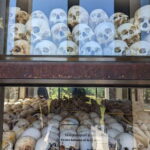
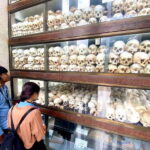
From Tuol Sleng, you’ll head to Choeung Ek, the Killing Field and execution/burial site. It’s about 1 hour on the schedule, and it’s located roughly 17 kilometers south of the city center, attached to the Tuol Sleng detention network.
This stop gives you something Tuol Sleng alone can’t: the geographic link between interrogation, execution, and burial. That’s why the pairing works so well. You’re not just learning about methods; you’re tracing a system.
What to know before you arrive:
- Choeung Ek was an orchard in Dangkao.
- It was used as a Killing Field between 1975 and 1979 by the Khmer Rouge.
- It’s strongly connected to the Tuol Sleng detention center, which is why the sequence makes sense.
The emotional level here is high. You’ll want to wear comfortable shoes, keep your pace respectful, and let your guide handle the story in a way that fits your tolerance.
If you feel yourself getting overwhelmed, take small breaks. Step aside, drink your included water, and reset your brain. The tour gives time; you don’t have to rush.
National Museum of Cambodia: where culture rebuilds your footing
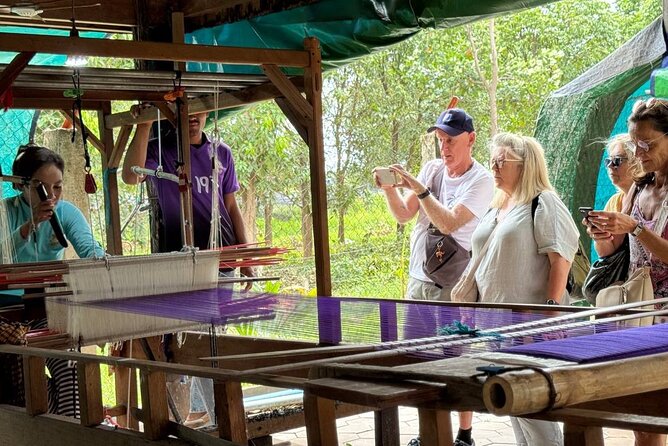
After the Khmer Rouge sites, the day needs a breather—and that’s where the National Museum of Cambodia earns its place. You’ll get about 1 hour here.
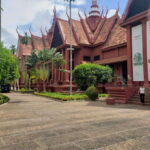
This museum is Cambodia’s largest museum of cultural history, and it’s a leading historical and archaeological museum. In other words, it’s not just decorative temple pieces—it’s a structured way to see how Khmer culture developed through time.
Why it’s such a good pairing on this itinerary:
- After the tragedy stops, your mind needs symbolism, craft, and context.
- Seeing Khmer art and artifacts helps you remember that genocide is not the whole story of a country.
- It gives you a sense of continuity—something that the Khmer Rouge period tried to destroy.
This is also a strong moment to ask your guide about what you’re seeing. A good guide will help connect motifs and styles to the broader story of Cambodia, without turning it into an exam.
Wat Phnom: the calm end with a real skyline landmark
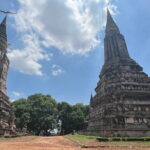
The final stop is Wat Phnom, a Buddhist temple in Doun Penh. It’s a 46-meter pagoda landmark and the site is strongly tied to the name and identity of Phnom Penh itself.
You’ll spend about 1 hour. This part of the day often feels like a gentle exhale after the heaviness earlier on, and that contrast is real, not artificial.
Even if you don’t know much about Buddhism, you’ll likely appreciate:
- the atmosphere
- the views from the temple complex area
- the way it marks Phnom Penh in your mind as more than just history museums and memorials
Practical note: Wat Phnom has a very small entrance fee on this tour, $1, so it’s one of the cheapest add-ons for the day.
How the guide makes or breaks the day
This is the kind of tour where the guide isn’t optional.
In the experience set for this itinerary, guides like Sovann and Ned are described as:
- well versed in Cambodian history
- patient and clear
- able to discuss politics and the past in a way that doesn’t feel scripted
- flexible if the day shifts
That flexibility can matter in Phnom Penh. A palace closure, a late pickup, or a site timing change can throw off a rigid schedule. A good guide keeps you moving with a plan that still makes sense.
Also watch for the small, practical kindness: one guide handled a ticket issue when a traveler didn’t have cash on hand and collected repayment afterward. That’s the kind of calm problem-solving that keeps the day from turning stressful.
Logistics that actually help you enjoy the tour
Here’s what you can count on from the tour structure:
- You’re picked up in Phnom Penh (pickup is optional).
- Transport is by minivan, and you get cool water and soft drinks.
- The tour is run in English, with private or small-group options available.
- You can bring a camera.
It’s also worth noting what’s not suitable:
- It’s listed as not suitable for babies under 1 year, and for people over 95 years.
- Alcohol and drugs are not allowed.
If you want the day to feel smooth, show up ready to walk and stand for extended periods—especially at Tuol Sleng and Choeung Ek. Bring water, wear shoes you can stand in, and keep your camera use respectful and purposeful.
Tips for pacing your emotions (so the day feels meaningful)
This itinerary is emotionally heavy, but it doesn’t have to feel chaotic. You can set yourself up for a better day with a few simple choices:
- Start the day grounded: you’re going from palace-era context to modern tragedy, not the other way around.
- Give yourself permission to pause inside memorial spaces.
- Don’t try to “outthink” the sites. If you feel it, you’re doing it right.
- After Choeung Ek, lean into the museum stop. It’s not a distraction. It’s part of restoring your sense of place in Cambodia.
A guide who knows how to explain without rushing is the difference between feeling overwhelmed and feeling informed.
Who this tour suits best
This full-day plan is best for you if:
- you want the major Phnom Penh sights tied into a coherent story
- you’re comfortable with serious historical content
- you like learning from an English guide who can handle both the political and cultural angles
- you want one organized day instead of piecing together transport and tickets
It’s less ideal if you want a purely “light” sightseeing day, or if you know you’ll be unable to handle memorial sites. The itinerary includes both Tuol Sleng and Choeung Ek, and they are the core of the experience.
Should you book this Phnom Penh day tour?
If your goal is to understand Phnom Penh as a place with layers—royal power, national identity, and the scars of the Khmer Rouge—then this tour is a strong choice. The guide-led context is the big selling point, and the sequence from Royal Palace to genocide sites to National Museum and Wat Phnom helps you process the day rather than just stacking stops.
Book it if you’re ready for a heavy history day and you appreciate clear explanations. I’d skip it only if you want a low-emotion itinerary, or if you’re not comfortable walking through memorial spaces for an extended stretch. Otherwise, you’ll come away with a much smarter view of Cambodia’s past and present—plus a calmer ending overlooking the city at Wat Phnom.