REVIEW · PHNOM PENH
Phnom Penh: Silk Island Tour by Vespa with Tuk Tuk Available
Book on GetYourGuide →Operated by Vespa Backstreet · Bookable on GetYourGuide
A Vespa makes Phnom Penh feel worlds apart. This Silk Island outing jumps from city streets to rural Cambodia fast, with ferry crossings, family workshops, and temple learning along the way. I especially like the way you get fresh air and countryside views in just a few hours, and I also like that the tour focuses on real village life, not a rushed checklist. One thing to think about: you’ll be on a motorbike for much of the tour, so it’s not a great match if you have back problems.
I’ve found that guides really set the tone here, and names like Kim and Tintin come up again and again for clear English and careful pacing at each stop. You’ll visit places like the tofu skin producers and a multi-generation silk weaving studio, then get time to chat, watch, and ask questions. The only drawback is the weather: you’ll want to dress for sun and be ready for sudden rain, since you’re outdoors a lot.
In This Review
- Key things I’d mark on your map
- Vespa, ferry crossings, and how the day actually flows
- Mongkol Serey Temple: the quick culture primer that makes the rest click
- Koh Oknha Tei Market: daily life you can smell and taste
- Koh Oknha Tei Secondary School: a human stop, not a photo prop
- Silk Island and the tofu-skin craft: where the tour turns hands-on
- The 7-generation silk weaving studio: more than souvenirs
- Akreiy Ksatr Village: the break that keeps the day human
- What makes it good value at $29 per person
- Who should book this, and who should skip it
- Should you book the Phnom Penh Silk Island Vespa tour?
- FAQ
- FAQ
- How long is the Phnom Penh Silk Island tour?
- Where do I meet the guide, and where do I get dropped off?
- Do I ride a Vespa the whole time?
- Are ferry trips included?
- What stops are included on the tour?
- Is there an English-speaking guide?
- What’s included in the price?
- What should I bring with me?
- Is the tour suitable for people with back problems?
- Can I cancel or pay later?
Key things I’d mark on your map
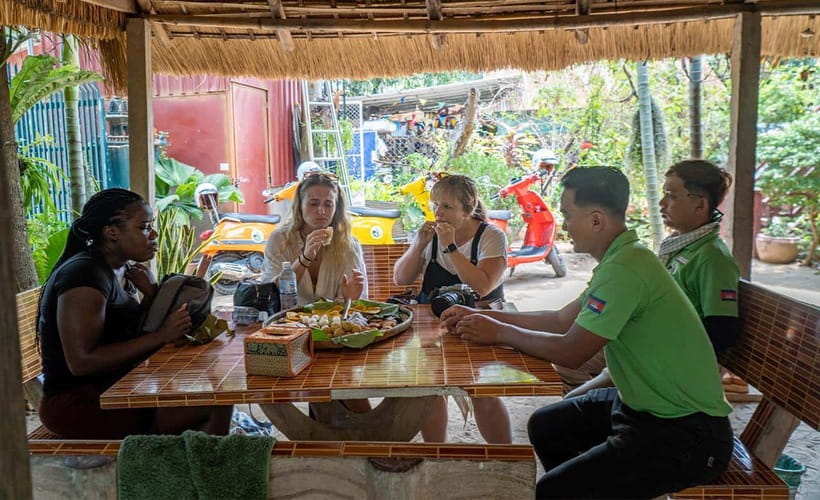
- Vespa + ferry route: a fast, fun way to leave Phnom Penh behind without feeling trapped in traffic
- Family-run workshops: dried tofu skin production plus 7-generation silk weaving storytelling
- Temple stop that actually explains Buddhism in Cambodian life
- Koh Oknha Tei market time: see daily routines and pick up small treats to taste
- A real village break with photo stops and local snacks at Akreiy Ksatr Village
Vespa, ferry crossings, and how the day actually flows
This is a half-day style tour, running about 4–5 hours, with hotel pickup and drop-off in Phnom Penh. If you can, aim for the earlier departure—several guides and riders note mornings feel cooler and more comfortable for countryside riding.
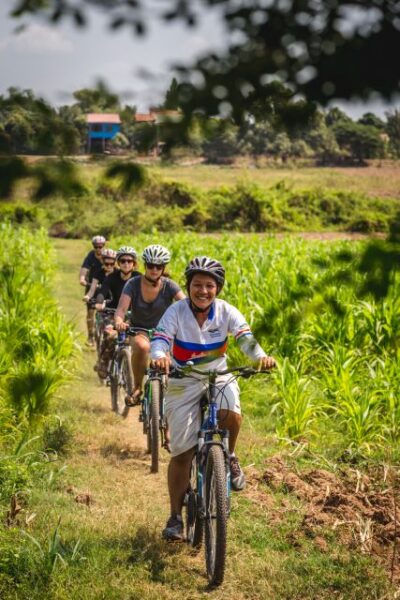
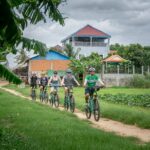
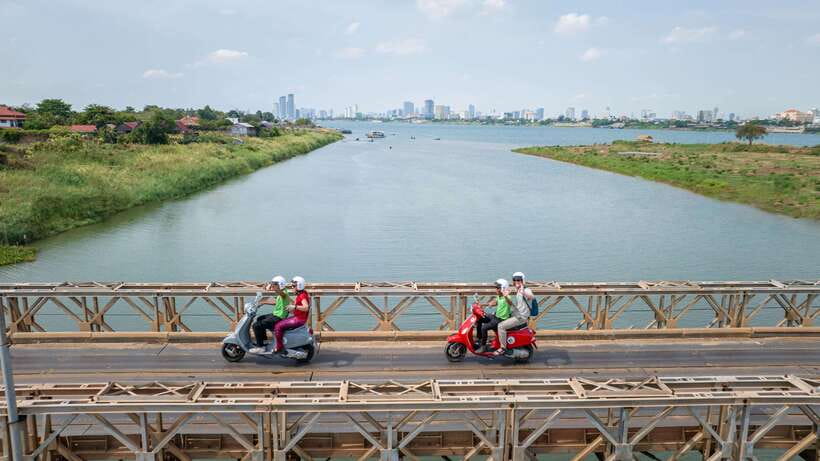
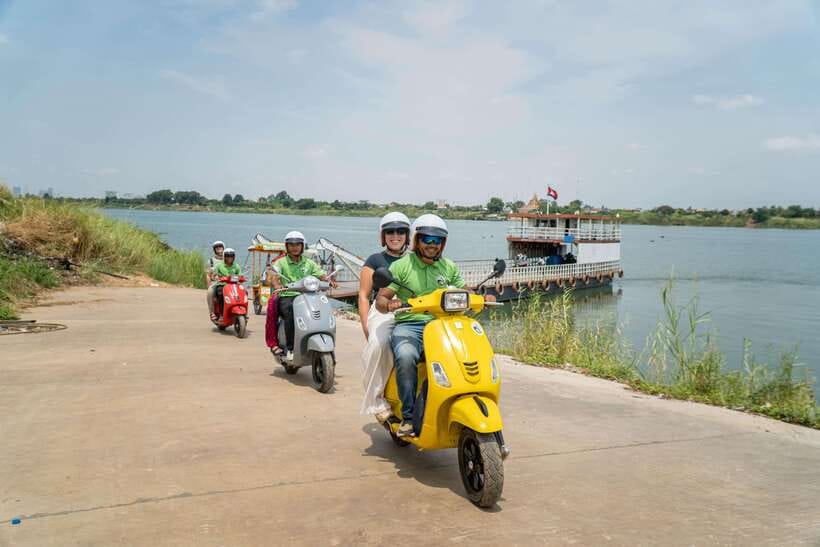
You’ll start in the city, then head out with your driver on a Vespa. Helmets are provided, and the driving style is designed for safety—drivers keep it steady so you can enjoy the views instead of white-knuckling the whole ride. If you’d rather not ride the Vespa, tuk-tuk options are available.
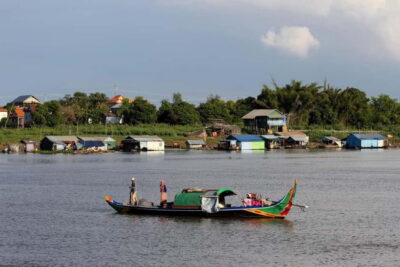
The ferry legs are part of the fun. You’ll use the boat crossings to reach Silk Island, which means you get a different perspective of the river and the surrounding countryside. One practical point: bring sunglasses and sunscreen and assume you’ll be outside more than you think.
You can also read our reviews of more tours and experiences in Phnom Penh
Mongkol Serey Temple: the quick culture primer that makes the rest click
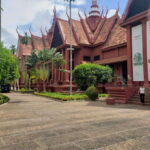
Early on, you’ll stop at Mongkol Serey Temple for a photo stop, a visit, and a guided introduction (about 30 minutes). This isn’t just a look-and-go temple stop. It’s timed to help you understand what you’ll see later—religion is woven into daily Cambodian life, and learning the basics up front changes how you notice things.
The guide explains Buddhism in a way that’s practical for first-time visitors: what people do at temples, why certain spaces matter, and what you’re seeing when you’re there. It also gives you a calmer moment before the day shifts into markets, workshops, and rural rides.
If you like history but also like not getting dragged through lecture mode, this stop is well-paced. You’re getting the context without turning the tour into a classroom.
Koh Oknha Tei Market: daily life you can smell and taste
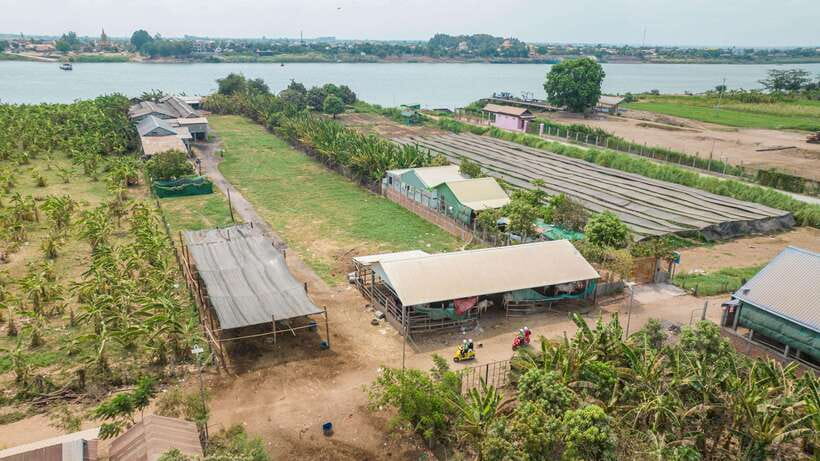
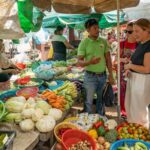
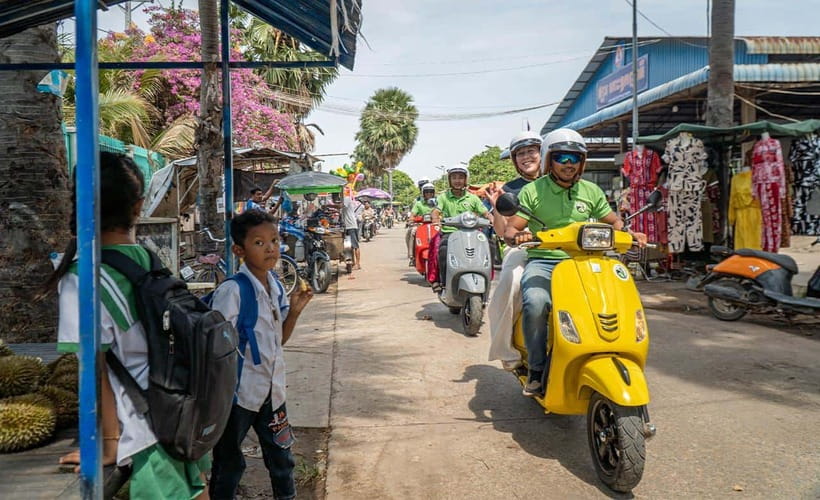
Next comes Koh Oknha Tei Market (about 1 hour), with time to shop and a guided visit. This is where you see how people actually run their day—what they buy, how they prepare food, and how the market fits into village rhythm.
You’ll have opportunities to snack and try items along the way, and the guide usually points out what’s worth tasting and how to approach food stands respectfully. Don’t rush this part. Even if you skip buying much, you’ll get value just by watching how vendors work and how locals move through the stalls.
If you’re the kind of traveler who likes small, sensory moments—fruit colors, spices, everyday chatter—this market stop is a highlight.
Koh Oknha Tei Secondary School: a human stop, not a photo prop
After the market, you’ll visit Koh Oknha Tei Secondary School for a guided visit (about 30 minutes). This stop adds a different lens to the day. You’re not only seeing crafts and food production—you’re seeing education and community life.
The best way to get something out of this segment is simple: be respectful, ask your guide what you should notice, and keep your interactions appropriate for the setting. There’s no need to overthink it; the guide helps you read the moment.
This is one of those stops that can feel quiet compared to the workshop visits, but it’s often what makes the tour feel real instead of staged.
Silk Island and the tofu-skin craft: where the tour turns hands-on
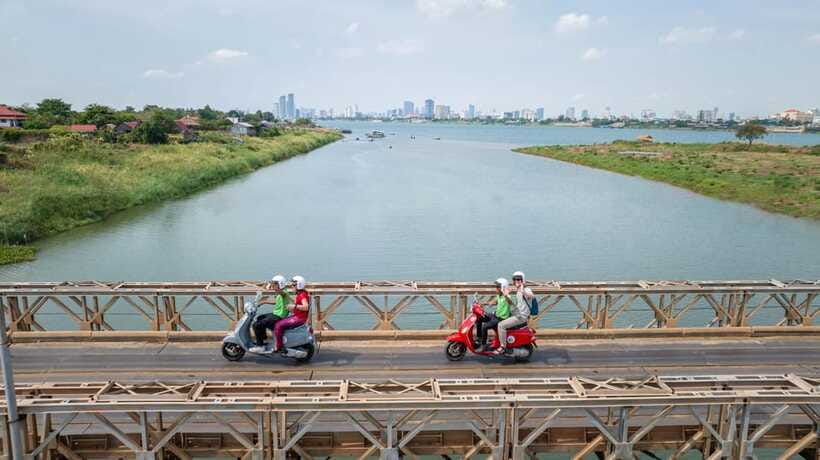
Silk Island itself is both a destination and a working area. You’ll have a photo stop and a guided visit (about 1.5 hours), and this is where you’ll connect most strongly to the tour’s food and craft side.
One of the standout stops is meeting a family-run business that specializes in dried tofu skin production. This is one of those foods you might not expect to find a production story for in Cambodia, and the tour makes it understandable: where the raw materials come from, how the process works, and why people have kept the craft alive.
If you’re curious about how everyday foods are made—rather than just tasting them—this segment is a winner. You’ll see the work behind the product, and it changes how you think about what you eat.
Practical note: you’ll spend time outdoors and walking between activity areas. Wear comfy sandals or shoes you don’t mind getting dusty.
You can also read our reviews of more tours and experiences in Phnom Penh
The 7-generation silk weaving studio: more than souvenirs
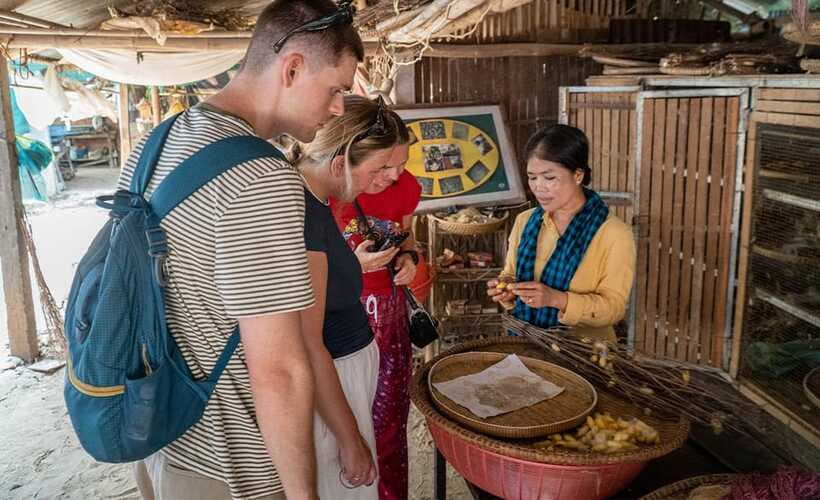
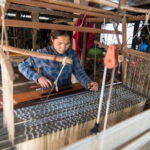
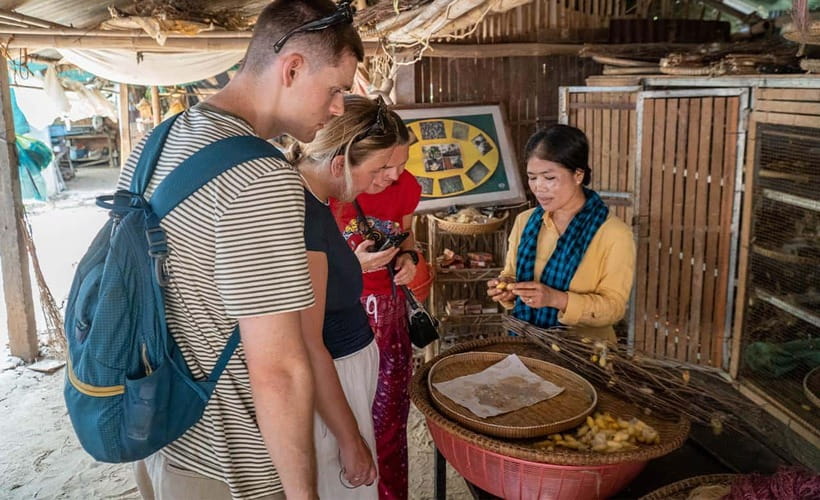
Later, you’ll visit a silk weaving studio tied to an old local tradition passed down through generations (often described as 7 generations). This portion is about technique and continuity—your guide explains the history and how the process is taught from parent to child.
You may see different stages of production and the finished goods, and you’ll get time to ask questions rather than being herded past a counter. Some guides also encourage visitors to look closely at methods and materials so you understand what you’re seeing.
In the best case, you’ll leave with more than a scarf purchase. You’ll understand why silk matters here—socially, economically, and culturally.
A small heads-up: this is a craft visit. If you hate shopping stops at all, just treat it like a workshop. You don’t have to buy to benefit.
Akreiy Ksatr Village: the break that keeps the day human
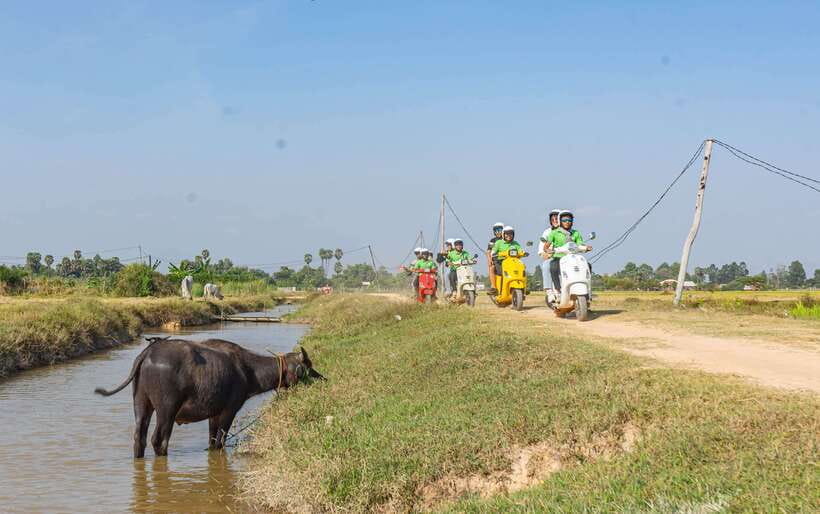
At Akreiy Ksatr Village, you’ll get a break, a photo stop, and local snacks for about 1 hour. This part is designed to slow you down after the structured stops.
Expect a more casual rhythm: you can rest, take photos, and snack while your guide gives you background about village living. It’s also a nice chance to talk informally with locals in a way that feels natural, since you’re in their daily space, not at a big commercial site.
If you’re hoping to feel that sense of you’re-not-in-a-theme-park Cambodia, this is where it lands.
What makes it good value at $29 per person
At $29 per person, the value is strong for what’s included. You’re not just paying for transport—you’re paying for hotel pickup and drop-off, an English-speaking tour guide, Vespa/driver, ferry trips, water and snack, and a village donation.
The price also makes sense if you’re trying to maximize time efficiently. You’re seeing multiple village-side stops—temple, market, school, tofu skin production, and silk weaving—in a half-day window. And because the route uses Vespa and ferry, you’re getting a different feel than standard city tours.
One more value angle: the tour is built to be interactive. Guides like Kim and Tintin (and other team members you might be paired with) tend to explain the “why” behind what you see—food production, religion, and daily routines—so you don’t just collect photos.
Who should book this, and who should skip it
This tour is a great fit if you want:
- a fun way to see Cambodian countryside close to Phnom Penh
- hands-on style cultural stops (tofu skin and silk weaving)
- a guide who can explain Buddhism and everyday village life in clear English
It’s probably not a great fit if:
- you have back problems (the Vespa ride is a core part of the experience)
- you hate being outdoors in sun and possible rain
If you’re traveling solo, it’s also a decent choice. The group format is small enough that you can ask questions without feeling lost.
Should you book the Phnom Penh Silk Island Vespa tour?
Yes—if you want real-world Cambodian village crafts and routines within a short time, this tour is a smart pick. The combo of Vespa travel, ferry crossings, and visits to both dried tofu skin makers and a 7-generation silk weaving studio is exactly the kind of variety that makes a day feel full without feeling frantic.
If motorbike riding is a dealbreaker for you, then consider the tuk-tuk option (when available). Otherwise, pack sunscreen, wear something comfy, and come ready to watch, ask, and snack.
FAQ
FAQ
How long is the Phnom Penh Silk Island tour?
The tour runs about 4 to 5 hours.
Where do I meet the guide, and where do I get dropped off?
Pickup is from your Phnom Penh hotel lobby, and you’ll be dropped back in Phnom Penh at the end. The day typically returns around 12:30 pm.
Do I ride a Vespa the whole time?
You’ll ride on a Vespa with your driver as part of the experience. Tuk-tuk is available if you prefer not to ride a Vespa.
Are ferry trips included?
Yes. Ferry trips to reach the island are included.
What stops are included on the tour?
The tour includes Mongkol Serey Temple, the ferry terminal area, Koh Oknha Tei Market, Koh Oknha Tei Secondary School, Silk Island, and Akreiy Ksatr Village.
Is there an English-speaking guide?
Yes. An English-speaking tour guide is included.
What’s included in the price?
Included are hotel pickup and drop-off, an English-speaking guide, a Vespa and experience driver, village donation, ferry trips, plus water and snacks.
What should I bring with me?
Bring sunglasses and sunscreen.
Is the tour suitable for people with back problems?
No, it’s not suitable for people with back problems.
Can I cancel or pay later?
Free cancellation is available up to 24 hours in advance for a full refund, and you can reserve now and pay later to keep your plans flexible.