REVIEW · PHNOM PENH
Half-Day Tour of the Killing Field and S21
Book on Viator →Operated by The Killing Field and S21 Genocide Tour · Bookable on Viator
Two sites, one painful chapter. This half-day tour pairs Choeung Ek with Tuol Sleng (S-21), using an English-speaking guide and careful transport to make the Khmer Rouge story easier to follow. I like the way the guides turn big, hard-to-grasp events into a clear timeline, and I like the simple, practical setup: pickup, water, and a small group size. The drawback: it’s very dark and emotionally intense, and entrance fees are not included in the $19.20 price.
You’ll head about 17 km south of Phnom Penh to Choeung Ek, then return for Tuol Sleng in the city. The whole outing runs around 4 hours and keeps numbers low, with a maximum of 15 people—so you can actually hear the guide and ask questions if you want to.
I also appreciate the human touch. In past runs, guides like Visal and Sum have been praised for clear English and for explaining the meaning behind what you’re seeing, not just reciting dates. Expect a serious day with a lot of learning. Bring extra patience for silence, emotion, and the fact that some parts are hard to process.
In This Review
- Key Highlights You’ll Notice Right Away
- Choeung Ek Genocidal Center: What You See, What It Means
- Tuol Sleng (S-21): From School Building to Security Prison 21
- The Half-Day Schedule: How the Timing Works in Real Life
- Price and Value: What You’re Paying For (and What You’re Not)
- Guides Like Visal and Sum: Why Explanation Changes Everything
- Respectful Expectations: How to Handle a Visit This Heavy
- Who Should Book This Tour?
- Should You Book the Killing Fields and S-21 Half-Day Tour?
- FAQ
- How long is the Half-Day Tour of the Killing Field and S21?
- Does the tour include hotel pickup?
- Where does the tour start?
- Is the tour in English?
- Are entrance tickets included in the $19.20 price?
- What’s included in the tour cost?
- What about group size?
- Can I cancel for a full refund?
Key Highlights You’ll Notice Right Away
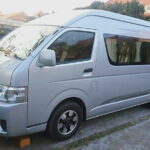
- Hotel pickup plus clean, licensed-driver transport that keeps logistics simple in a city where things can feel chaotic
- Two unforgettable sites in one outing: Choeung Ek Genocidal Center and Tuol Sleng Genocide Museum
- English-speaking guide who connects the Khmer Rouge system between arrests, imprisonment, and executions
- Small group size (up to 15 people) which makes the experience feel more controlled and personal
- Water and snack included for a long, emotionally draining couple of hours
- Mobile ticket for easy entry on the day
Choeung Ek Genocidal Center: What You See, What It Means
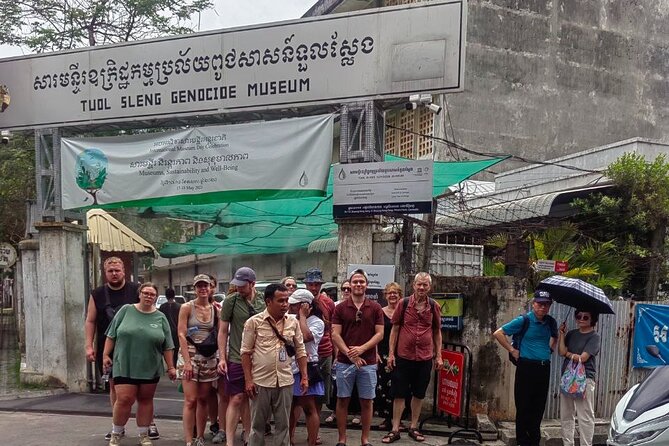
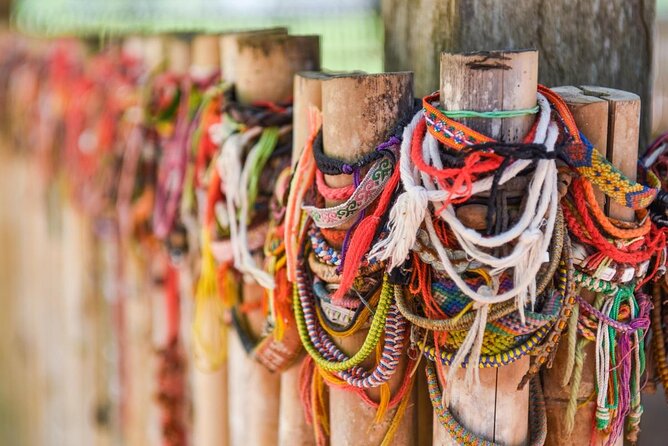
Choeung Ek is the best-known site among Cambodia’s Killing Fields. The location itself carries layers of change: it used to be an orchard and a Chinese cemetery, then the Khmer Rouge transformed it into a place of mass killing. The center is tied to the years 1975 to 1979, when the regime executed roughly one million people nationwide, and Choeung Ek became one of the places where victims were killed.
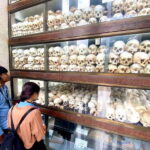
The heart of Choeung Ek today is the mass grave area and what was uncovered after the fall of the Khmer Rouge. Bodies were discovered at the site, and the center includes a memorial structure displaying remains. The point isn’t to shock you. The point is to show you that this was real, organized violence—not an abstract “history lesson.”
A strong guide makes a difference here. I like that the tour format gives you time—about two hours—so you can move slowly between information points and the memorial spaces. You’re not rushed through the grounds. You also get enough explanation to understand why the site matters in the broader Khmer Rouge system.
One practical note: admission is not included. So when you budget, plan for entrance tickets on top of the $19.20 tour price. That keeps the value question honest: you’re paying mainly for transport and a guide, then adding the museum/site fees when you arrive.
You can also read our reviews of more tours and experiences in Phnom Penh
Tuol Sleng (S-21): From School Building to Security Prison 21
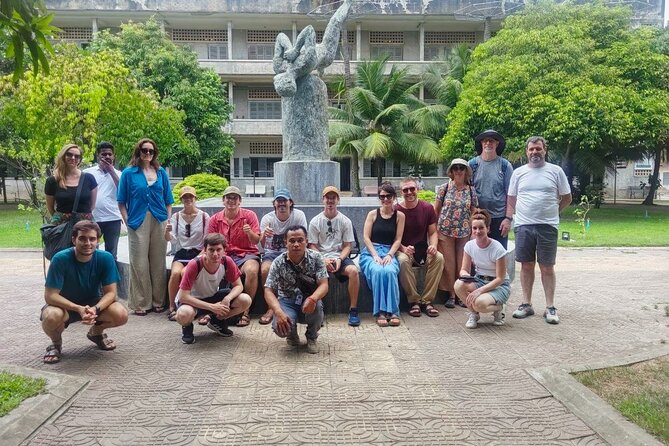
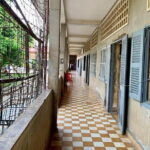
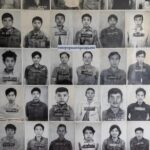
Tuol Sleng is the other half of the story—and it’s a different kind of heavy. The museum sits in what was originally a secondary school, later used by the Khmer Rouge as Security Prison 21 (S-21) from 1975 until the regime fell in 1979.
This place matters because it shows the process. At Choeung Ek, you see the ending of the system. At Tuol Sleng, you see the middle: detention, interrogation, and the way people were processed through a regime that demanded punishment as policy.
You’ll hear about how the buildings were converted into prison and interrogation centers. The complex included five buildings that were turned into detention and interrogation spaces starting around March or April 1976. That timeline detail helps you grasp that this wasn’t a chaotic breakdown. It was planning—converted into machinery for control.
Tuol Sleng is also where the connection to other parts of Cambodia’s Khmer Rouge network becomes clearer. Many of the victims at killing sites were political prisoners held in prisons like Tuol Sleng, plus other detention centers across the country. A good English guide explains how the detention system fed into executions elsewhere.
Plan on another two hours at S-21. The museum setting can feel quieter in a way that still doesn’t make it “easy.” Some rooms and exhibits can be emotionally intense, even when you’re prepared. I find it helps to let the guide’s pacing and wording work for you. If you need a moment, you’ll be glad you’re in a small group that can slow down when you do.
The Half-Day Schedule: How the Timing Works in Real Life
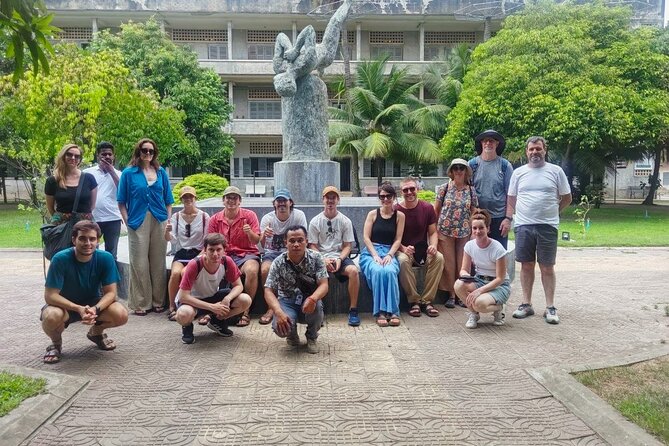
This tour is built as a half-day loop: you get picked up, then you travel out to Choeung Ek, and you finish at Tuol Sleng in Phnom Penh. The driving time matters because Choeung Ek is about 17 km south of the city center.
At around 4 hours total, the format is designed for people who want both sites without turning the day into a full marathon. Two hours at each stop is a lot when you consider how emotionally demanding both places are. It means you’ll likely spend meaningful time inside the memorial and museum areas rather than just “checking the box.”
You should also know how the day ends. The tour returns you back to the meeting point, which is listed as the Grand River Sports Bar area (178 Corner Sisovat quay, Riverside Path, Phnom Penh 120201, Cambodia). Even if pickup is offered, ending at that meeting point helps the route stay predictable.
The tour caps at a maximum of 15 people. That sounds like a marketing detail, but it becomes real during explanations. In smaller groups, it’s easier to hear the guide and harder for conversations to form a loud barrier. For an experience like this, that matters.
Price and Value: What You’re Paying For (and What You’re Not)
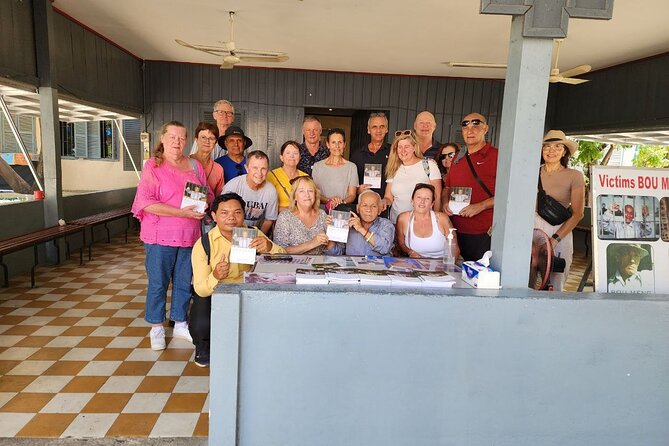
The tour price is $19.20 per person. That’s relatively low for a guided half-day that includes transport between two major sites and a professional English-speaking guide.
Here’s the honest breakdown of value:
- What’s included: the guide, a licensed driver, clean and safe transportation, plus water and snack.
- What’s not included: entrance fees for Tuol Sleng and Choeung Ek.
So you’re not paying for museum tickets inside that $19.20. You’re paying for the parts that can be hard to manage on your own: language support, coordinated timing, and safe transport between locations.
In terms of value, the real question is this: do you want help connecting the dots? If yes, then the low price makes sense. If you prefer to self-tour and read everything without explanation, you might feel differently—because you’d still pay entrance fees either way, and you’d be doing more of the interpretation work yourself.
Based on the feedback around the guides, the guide quality is a major part of why people rate this tour so highly. When the English is clear and the explanations are thoughtful, both sites land with greater meaning instead of just raw facts.
Guides Like Visal and Sum: Why Explanation Changes Everything
This is one of those tours where the guide’s role isn’t optional. The subject is complex. The timeline is heavy. The system described at Tuol Sleng only becomes truly understandable when it’s connected to what happened afterward.
In the feedback, Visal gets mentioned for being extremely informative and for making the history understandable in English. Sum is also praised for explaining the tour very well. That kind of guidance is what turns a visit into learning you can carry home, rather than a blur of names and dates.
Look for guides who do more than recite. I’m drawn to explanations that help you see how the Khmer Rouge operated: from detention and interrogation to execution. When that connection is made clearly, you spend less energy trying to “figure it out” on the spot and more energy absorbing what the site is trying to communicate.
Also, the tour includes water and snack. That might sound minor, but it matters because you’re spending two hours in spaces that can drain you mentally. Small comfort helps you stay present rather than rushing yourself to cope.
Respectful Expectations: How to Handle a Visit This Heavy
Let’s be direct. This isn’t a light cultural outing. The sites are memorials connected to mass killings, and you’ll be surrounded by evidence and documentation of genocide.
I think the best way to handle it is to treat it like a serious visit, not a spectacle. Keep your phone use quiet. Take breaks when you need them. If you feel off, that’s not a failure—it’s a normal reaction to what you’re learning.
A practical way to approach the day is to remember that two hours is enough time to be moved without feeling lost. You’ll get enough context to understand what you’re looking at: orchard becomes mass execution site; school becomes prison and interrogation center. The guides help you see the transformation without turning it into a shock game.
There’s also a small but important detail: the tour provides water and snack, but entrance fees are separate. So don’t let money logistics distract you mid-visit. Check your plan before you go so you can focus on the experience itself.
Who Should Book This Tour?
This tour fits best if you want:
- A guided, English-speaking explanation at both major Khmer Rouge sites
- One efficient half-day instead of trying to coordinate everything yourself
- A small-group format that keeps the experience orderly enough to hear the guide
If you’re traveling with limited time in Phnom Penh and you want the key sites covered, this is a sensible choice. It’s also a good option if you want the context delivered by someone who can translate the history into something you can follow in real time.
If you’re the type who needs a break from heavy topics, you might want to pace the rest of your itinerary around this day. Pair it with lighter activities on the same trip schedule—because the emotional hangover can be real.
Should You Book the Killing Fields and S-21 Half-Day Tour?
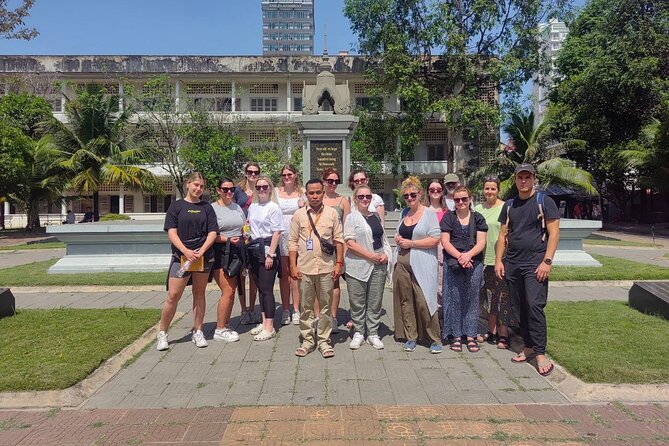
I’d book it if you care about getting the story straight and you value guided context. The combination of Choeung Ek and Tuol Sleng in a single half-day is efficient, and the guide-led explanations are a major reason for the strong ratings.
I’d hesitate only if you’re worried about emotional intensity or you truly don’t want a guide. The content is inherently difficult, and entrance fees are added separately, so make sure your budget can handle those tickets.
If you do book, go in with respect and patience. This tour is less about entertainment and more about understanding. And if you pay attention to how the guide connects the two sites, you’ll leave with a clearer sense of how the Khmer Rouge system worked—and why these places are preserved.
FAQ
How long is the Half-Day Tour of the Killing Field and S21?
It runs for about 4 hours (approx.), with around 2 hours at each stop.
Does the tour include hotel pickup?
Pickup is offered, and the tour returns to the meeting point.
Where does the tour start?
The listed starting point is Grand River Sports Bar, 178 Corner Sisovat quay, Riverside Path, Phnom Penh 120201, Cambodia.
Is the tour in English?
Yes. The tour includes a professional English-speaking tour guide.
Are entrance tickets included in the $19.20 price?
No. Entrance fees for Tuol Sleng Genocide Museum and Choeung Ek Genocidal Center are not included.
What’s included in the tour cost?
Included are the English-speaking guide, a professional driver, clean and safe transportation, and water and snack.
What about group size?
The tour has a maximum of 15 people.
Can I cancel for a full refund?
Yes. There is free cancellation, and you can cancel up to 24 hours in advance for a full refund. If you cancel less than 24 hours before the start time, the amount paid is not refunded.