REVIEW · PHNOM PENH
Learn about a dark period of Cambodian history by expert guide
Book on Viator →Operated by Phnom Penh Tours · Bookable on Viator
History hits hard in Phnom Penh. This tour pairs Royal Palace grandeur with the Khmer Rouge reality at Choeung Ek. You get an English-speaking, licensed guide and a small group limit of 15, so the day feels more like a focused lesson than a rushed bus stop.
I especially like how the route starts with Cambodia’s royal sites and then shifts gears into the people’s story from 1975 to 1978. I also like the practical flow: hotel pickup and drop-off, plus a tuk-tuk ride that makes Phnom Penh feel local rather than tour-bus sterile. The main drawback is that major entry tickets are not included, so you’ll want to budget for them before you go.
One more honest note: this is heavy subject matter. You should come prepared for what you’ll see and hear, and you’ll probably need a minute afterward to reset your head.
In This Review
- Key points to know before you go
- Royal Palace and Silver Pagoda: start with power, then brace for truth
- Tuol Sleng (S-21): where the story turns from history to people
- Choeung Ek Killing Fields: the scale is hard, so listen carefully
- Tuk-tuk and timing: why the logistics feel designed, not accidental
- Price and logistics: what you’re really paying for
- Who this tour suits best
- Should you book this Phnom Penh dark history tour?
- FAQ
- FAQ
- How long is the tour?
- What time does the tour start?
- Is hotel pickup included?
- What transportation will I use?
- How many people are in the group?
- What’s the price, and what’s included?
- What entrance fees are not included?
- Is there a schedule for the main stops?
- What happens if the weather is poor?
- Is free cancellation available?
Key points to know before you go
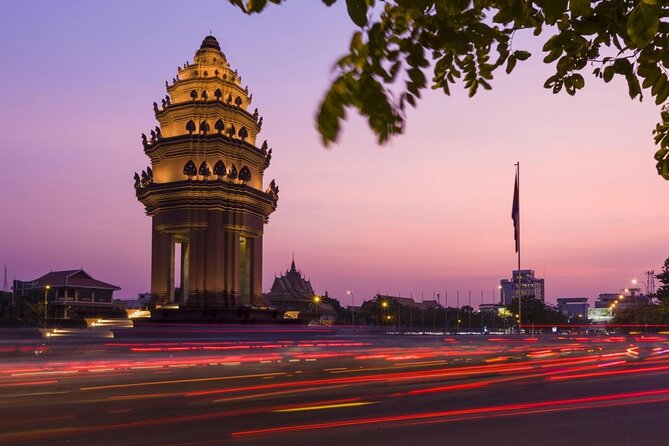
- Royal Palace (1866–1870): built after the royal capital shifted to Phnom Penh, sitting on an older citadel site called Banteay Keo
- Silver Pagoda: also known as Wat Ubaosoth Ratanaram, home to the Emerald-Crystal Buddha temple area
- Tuol Sleng / S-21: a former school turned interrogation center, with 14,000–17,000 detainees mentioned in the tour narrative
- Choeung Ek Killing Fields: described as an orchard and Chinese cemetery before the Khmer Rouge transformed it into a killing site
- Small-group feel: maximum 15 travelers, with an English guide who can answer questions
- Tuk-tuk transportation: a Phnom Penh must-do that keeps the day from feeling like a straight line
Royal Palace and Silver Pagoda: start with power, then brace for truth
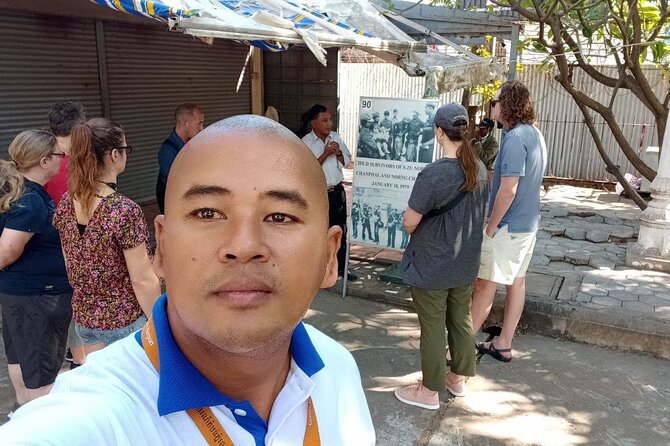
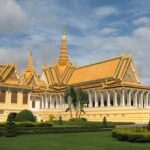
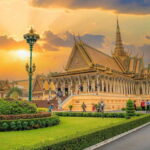
Most tours into Cambodia’s darker history begin with something calmer. Here, you’ll start at Phnom Penh with hotel pickup and then head to the Royal Palace and Silver Pagoda. That opening matters. It gives you a visual anchor before the day gets brutally specific.
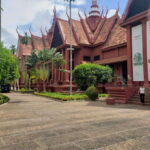
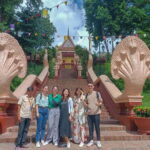
At the Royal Palace, you’ll learn why the palace exists where it does. The structure was built between 1866 and 1870, after King Norodom moved the royal capital from Oudong to Phnom Penh. The palace is also said to sit atop an older citadel called Banteay Keo, and it faces roughly east. Even if you’re not a history nerd, you can feel the logic: this is architecture meant to project legitimacy and permanence.
A practical heads-up: the Royal Palace entrance fee is $10 per person, so you’ll pay that directly since it isn’t included in the tour price.
Next comes the Silver Pagoda, located on the south side of the Royal Palace. Its official name is Wat Ubaosoth Ratanaram, and it’s also known as Wat Preah Keo Morakot. The tour points out its connection to the Emerald-Crystal Buddha, which people often shorten to Wat Preah Keo. In plain terms, this stop helps you understand why so much Cambodian religious life and royal culture are braided together.
One drawback at these early stops: you’ll still be dealing with the fact that entry fees for both locations aren’t included. If you like knowing your total cost up front, keep a small amount of cash aside for tickets.
You can also read our reviews of more guided tours in Phnom Penh


Tuol Sleng (S-21): where the story turns from history to people
Then you shift from gold roofs and temple halls to Tuol Sleng Genocide Museum. In the tour framing, this is the most notorious of Cambodia’s interrogation centers, known as S-21.
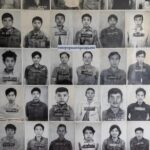
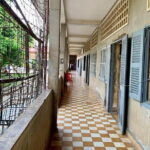
What makes Tuol Sleng particularly hard to understand at first is that it wasn’t a purpose-built prison in the usual sense. It was housed in a former school and later became Tuol Sleng—named for the hill where it stands. The tour narrative is clear about what happened there: between 14,000 and 17,000 prisoners were detained and tortured, often in primitive brick cells that were built in former classroom spaces.
This stop is scheduled for about 1 hour 30 minutes, and that time is part of the value. You need enough minutes to follow the explanation without feeling like you’re rushing through pain.
Also, your guide’s role becomes more important here. A licensed English-speaking guide can help you connect what you’re seeing (cells, descriptions, and timelines) to what those details mean. It’s not just “facts on a wall.” It’s why Cambodia’s genocide isn’t only about dates—it’s about how a system broke people down.
If you’re sensitive to grim content, you might want to plan a quiet buffer afterward, even if you don’t think you’ll need it. Your brain catches up later.
Choeung Ek Killing Fields: the scale is hard, so listen carefully
After Tuol Sleng, the tour heads to Choeung Ek Genocidal Center, about 9 miles south of Phnom Penh. This is where the tour becomes the heaviest part of the day.
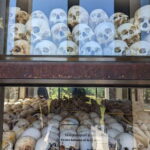
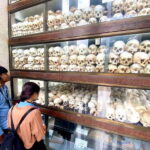
Choeung Ek is often described in numbers, and the tour gives you those key figures: it’s estimated that around 20,000 men, women, and children were killed there between 1975 and 1978, carried out by the Khmer Rouge, led by Pol Pot. The tour also includes a wider scope: it mentions that about 2.5 million people were massacred and buried in killing fields like this across Cambodia.
But what’s also useful here is the context. The site wasn’t always a killing field. The tour says it was once an orchard and a Chinese cemetery before the Khmer Rouge transformed it into an execution and burial place. That detail helps your mind understand the horror of transformation: a place with ordinary human associations became machinery for death.
Expect about 1 hour 30 minutes for this stop. If you find yourself overwhelmed, focus on listening rather than forcing quick reactions to what you see. Let the guide pace your understanding. When the subject is this brutal, slow attention is a kindness to yourself.
Tuk-tuk and timing: why the logistics feel designed, not accidental
The day runs for about 5 hours 15 minutes. Start time is 8:15 am, which is handy. You’ll be on the move early, before the heat and crowds fully take over Phnom Penh.
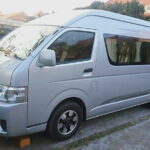
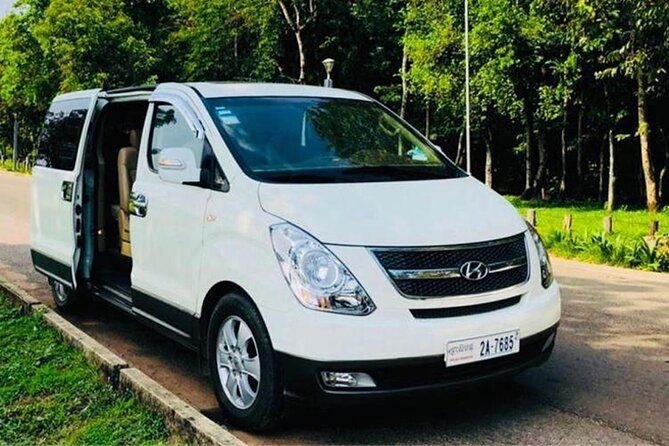
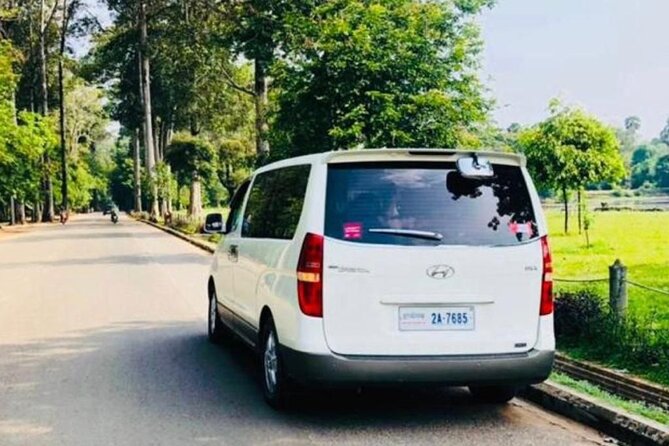
Your day includes hotel pickup and drop-off, which you’ll appreciate if you’re not already comfortable navigating the city on your own. For transportation, you’ll use a mix of a tuk-tuk and air-conditioned minivan. The “tuk-tuk portion” is more than a gimmick. Phnom Penh has a rhythm that you feel when you’re moving through it at street level rather than only from a window.
The tour also keeps it intimate. With a maximum of 15 travelers, you’re less likely to get the “everyone hear me now” treatment. That smaller group size tends to make questions easier, and it helps your guide adjust the pace.
One practical note: the experience is said to require good weather. If conditions are bad, you’ll be offered a different date or a full refund. That matters because you’ll spend time moving between sites.
Price and logistics: what you’re really paying for
The tour price is listed at $29 per person. That sounds affordable, and it’s because the entry fees aren’t included.
Here’s what’s included in the $29:
- Hotel pickup and drop-off
- Tuk-tuk and air-conditioned minivan
- English-speaking licensed tour guide
- Cold water
What’s not included (and what you should budget):
- Royal Palace: $10 per person
- Tuol Sleng genocide museum: $5 per person
- Killing Fields (Choeung Ek): $3 per person
If you add those up, you’ll likely pay about $18 in entrance fees on top of the $29 tour cost, bringing a realistic total to roughly $47 per person (before any incidental spending). For what you’re getting—multiple major sites, transport, and a licensed English guide—that total usually makes sense.
Group discounts are listed as a feature too. If you’re traveling with friends or family, it’s worth asking how pricing changes when you book together.
You can also read our reviews of more historical tours in Phnom Penh
Who this tour suits best
This experience is a good match if you want context, not just sightseeing. You’ll cover the Royal Palace, the Silver Pagoda, Tuol Sleng (S-21), and Choeung Ek in one structured day. That’s useful if you only have a limited time window in Phnom Penh.
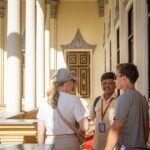
It’s also a solid choice if you like learning from an English guide and asking questions. One of the strongest themes from the guide feedback is how well the guide can explain and keep things engaging, with clear English and an ability to tailor to what you care about.
If you’re short on time, the hotel pickup and the compact group size are major benefits. If you hate paying separate tickets, just remember you’ll need to add the three entry fees listed above.
Should you book this Phnom Penh dark history tour?
I’d book it if you want the day to make sense. The pairing of royal-era landmarks with Khmer Rouge sites gives you a fuller picture of how Cambodia’s story changed from power and tradition to terror and state violence.
Book it especially if you appreciate structure: early palace stops, then Tuol Sleng, then Choeung Ek, each with time to understand what you’re looking at. The tuk-tuk ride and the small group (max 15) keep it from feeling like a forced march.
Skip it or choose a different style of day if you’re extremely uncomfortable with genocide-related sites. This isn’t a “quick look.” It’s a guided, emotionally intense itinerary. If that’s not your thing right now, Phnom Penh has plenty of lighter options.
FAQ
FAQ
How long is the tour?
It runs for about 5 hours 15 minutes.
What time does the tour start?
The start time is 8:15 am.
Is hotel pickup included?
Yes. The tour includes hotel pick up and drop off.
What transportation will I use?
You’ll use a tuk-tuk and an air-conditioned minivan.
How many people are in the group?
The tour has a maximum of 15 travelers.
What’s the price, and what’s included?
The tour price is $29 per person and it includes hotel pickup and drop-off, tuk-tuk and minivan transport, an English-speaking licensed tour guide, and cold water.
What entrance fees are not included?
Royal Palace is $10 per person, Tuol Sleng genocide museum is $5 per person, and Choeung Ek killing field is $3 per person.
Is there a schedule for the main stops?
Yes. The tour covers the Royal Palace, Silver Pagoda, Tuol Sleng Genocide Museum, and Choeung Ek Genocidal Center, in that order.
What happens if the weather is poor?
The experience requires good weather. If it’s canceled due to poor weather, you’ll be offered a different date or a full refund.
Is free cancellation available?
Yes. You can cancel up to 24 hours in advance for a full refund.