REVIEW · PHNOM PENH
Guided Phnom Penh Heritage Tour
Book on Viator →Operated by Phnom Penh Heritage · Bookable on Viator
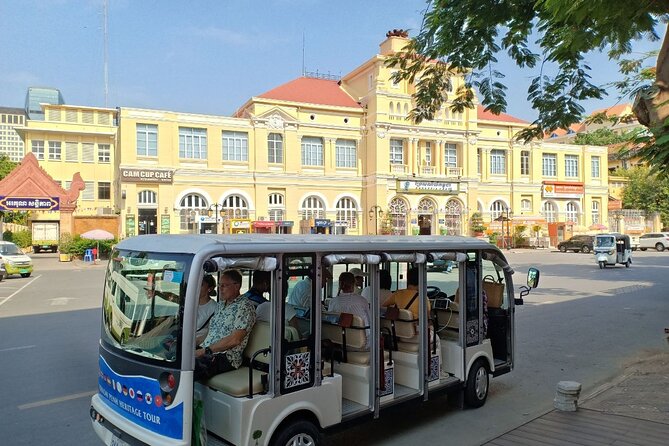
Phnom Penh history moves fast here. This 2.5-hour heritage tour strings together 19 stops and 22 major sites with a digital tablet and headphones, while the on-the-ground guide helps you make sense of what you’re seeing. I like the way the stops cover big turning points, from French protectorate planning to the Khmer Rouge years, without turning into a dry lecture.
The best part is the format: you watch short videos with vintage photos and film-like stories, and you can still grab photos during the ride. One heads-up: a few major sights are only viewed from outside, and some interiors are only possible if they’re open—so this is a great overview, not a full museum day.
In This Review
- Key Reasons This Tour Works So Well
- Price and Value: What $24.36 Buys You in Phnom Penh
- The Format: Tablet Videos, Headphones, and a Human Guide
- Where You’ll Go: A Smart Loop Through Power, Trade, and Colonial Style
- Stop-by-Stop: From the Post Office Core to Colonial Hotels
- Wat Phnom and the Royal Area Without the Time Sink
- Arts Education, Renovations, and the Museum Zone You Don’t Walk Through
- Photos, Heat, and How to Make This Tour Feel Less Rushed
- Who This Tour Suits Best (And Who Might Want Something Else)
- FAQ
- Is the tour self-guided or guided?
- How long is the Phnom Penh Heritage Tour?
- What does the tour include?
- Are there any stops where entrance is not included?
- Can I go inside some buildings?
- Are photos allowed everywhere?
- Where does the tour start and end?
- Should You Book This Phnom Penh Heritage Tour?
Key Reasons This Tour Works So Well
- Digital tablet + headphones, in 10 languages: You get consistent audio even when streets get noisy.
- Small group size (max 10): Easier navigation through busy intersections and quick help when you have questions.
- 19 stops focused on major sites (22 total): You get breadth in a short window.
- Inside access when open: You can sometimes step into places like the old bank area, the Hokkien temple, the National Library, and the Royal University of Fine Arts.
- Clear photo rules at sensitive spots: You can take pictures in many areas, but some embassy-adjacent locations restrict photos.
- Ends right by the Royal Palace area: Ideal if you plan to continue exploring on your own.
Price and Value: What $24.36 Buys You in Phnom Penh
At $24.36 per person for roughly 2 hours 30 minutes, this tour is priced like a budget-friendly city orientation—except it feels more structured than a simple walk. The value comes from three things you normally pay extra for: a tablet-based audiovisual guide, headphones, and a live in-guide person, plus bottled water.
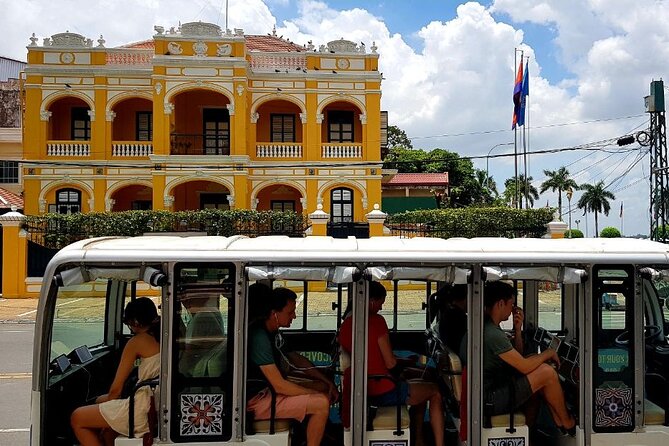
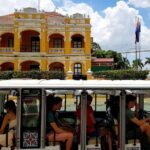
The tour also keeps the time efficient. You’re not trying to cover the whole center by yourself in Phnom Penh’s heat and traffic. And even though it’s not private transportation, the experience is clearly designed to move you by group vehicle between key points, with time to take photos from the bus.
If you’re short on days, this is one of the smarter ways to spend a half-morning or afternoon. The tour gives you enough context that your later visits feel less like random sightseeing and more like a story you can follow.
You can also read our reviews of more guided tours in Phnom Penh


The Format: Tablet Videos, Headphones, and a Human Guide
You start at Corner Street 102 & Street 13, and the tour ends on Oknha Chhun St. (240) near Wat Botum Square and the Royal Palace zone. Along the way, you’re set up with a digital tablet and headphones so you can follow along in your chosen language while the guide handles the practical side.
This matters in Phnom Penh. The city is fast-changing, and it can be hard to connect a building you see today with what it was decades ago. The audiovisual guide bridges that gap with films, vintage images, and historical anecdotes, so you’re not just collecting photos—you’re collecting reasons.
Also, the group stays small (up to 10 people). That makes it easier to spot your stop, get your bearings quickly, and ask questions without getting lost in the shuffle.
Where You’ll Go: A Smart Loop Through Power, Trade, and Colonial Style
This tour is built around major sites tied to major eras. You’ll pass through the story of Phnom Penh’s growth: a fishing village becoming a capital, early urban planning shaped by a French model, a wave of Art Deco tastes, the social organization of elite life in the early 1900s, and then the dark rupture of the Khmer Rouge regime.
You’ll also notice a pattern: many stops are named for what they are today, but the tour explains what they were back then. That’s what makes the route feel like a time machine rather than just a list of landmarks.
A couple of practical notes:
- Some sights are view-only, especially the big-ticket places.
- Interiors can be possible in a few stops only if open, so don’t expect guaranteed entry everywhere.
Stop-by-Stop: From the Post Office Core to Colonial Hotels
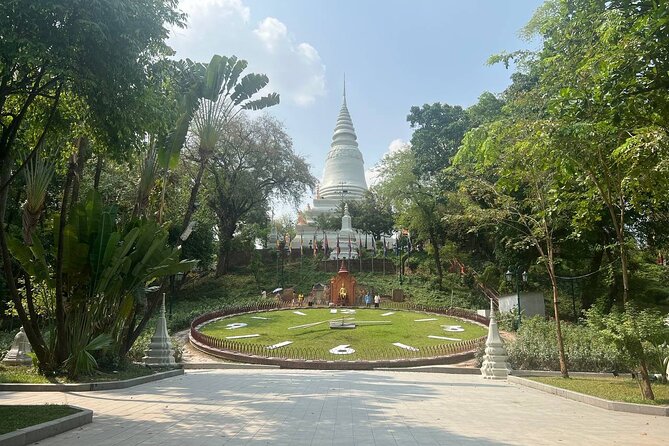
1) Phnom Penh Heritage overview stop
You kick things off with a citywide introduction that frames what you’re about to see. It’s a helpful setup, especially if you’re doing this early and want your later self-guided wanderings to make sense.
2) Cambodia Post Office (with audiovisual intro)
The Cambodia Post Office is one of those Phnom Penh landmarks that looks like it already belongs in a history book. The audio guide gives you the background so you understand why this kind of French-influenced infrastructure mattered in an evolving capital.
3) Palais de la Poste (old Indochina Bank area)
Right after, you’re pointed toward the old bank connection. The audiovisual segment focuses on the former Indochina Bank, and it’s a good “how finance and power worked” stop—especially if you like architecture tied to real life.
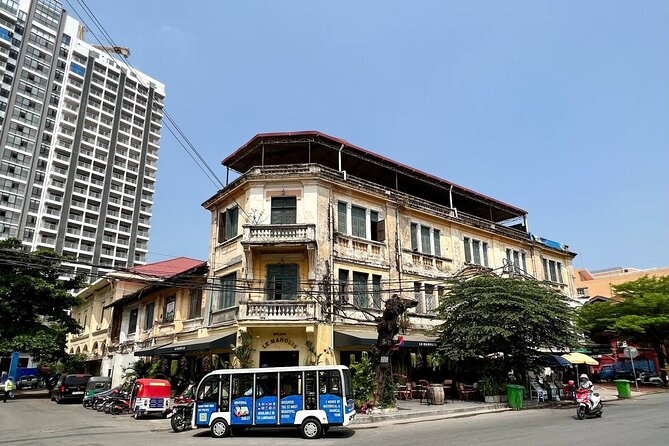
4) Le Manolis (first hotel of Phnom Penh)
This is where the tour starts mixing colonial architecture with lifestyle history. You’re not just seeing a building; you’re being told what “arrival,” “status,” and “elite living” looked like at the time.
5) Commissariat of Phnom Penh Municipal Police (old police station)
The police-station stop changes the mood. It’s a reminder that the colonial era was not only about style—it also meant systems of control. If you want the full story, this is the kind of stop most quick tours skip.
6) Council for the Development of Cambodia (former governor’s house)
A governor’s house is power made physical. The guide ties the political center to urban development, so you see how decisions shaped the city’s layout and priorities.
7) Chinese house and Hokkien temple (关帝古廟 / Min Sheng Middle School area)
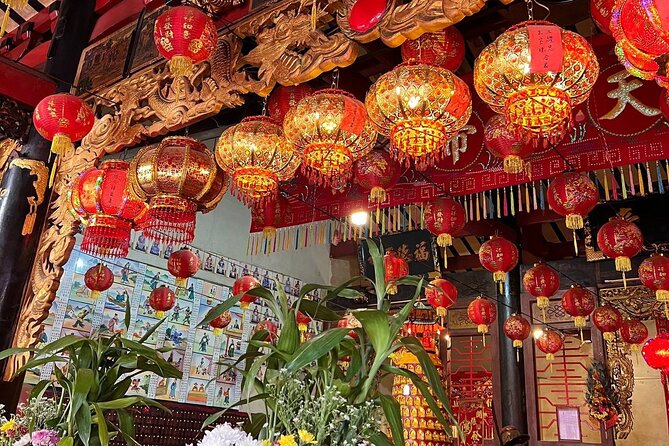
This stop adds the merchant and community thread to the French-planned narrative. You get a look at the Chinese house and the Hokkien temple context, and it helps explain how different communities shaped Phnom Penh alongside colonial institutions.
8) Naeggas Bridge (old naga bridge)
Short but memorable. Bridges in Cambodia often carry cultural symbolism, and the audiovisual guide frames the naga connection without you needing a map in your lap.
Wat Phnom and the Royal Area Without the Time Sink
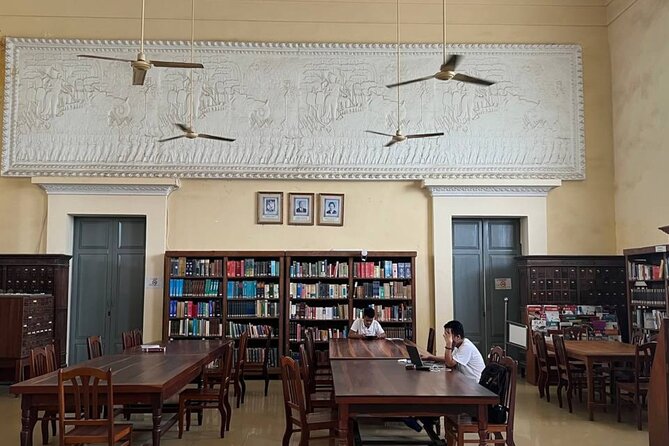
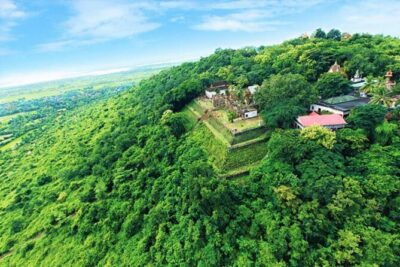
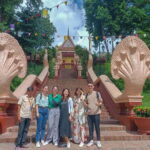
9) Wat Phnom (temple photos, hill visit not included)
You’ll reach Wat Phnom and learn about the site. You can take pictures, but the temple hill visit itself is not included as part of this city tour. It’s a good compromise: you get the landmark moment without losing an hour to stairs and queues.
10) Country club area linked to the US Embassy location (photos not allowed)
This is one of the tricky stops. The tour explains the connection to the country club where the actual US Embassy location is today, and it notes that photos are not allowed. Treat this as a “listen and look” moment and keep your camera tucked away so you don’t waste time getting corrected.
11) National Library (possible interior if open)
The National Library stop is brief, but it gives you a solid sense of the city’s learning side. If it’s open, you may be able to visit inside, which turns the stop from visual to hands-on.
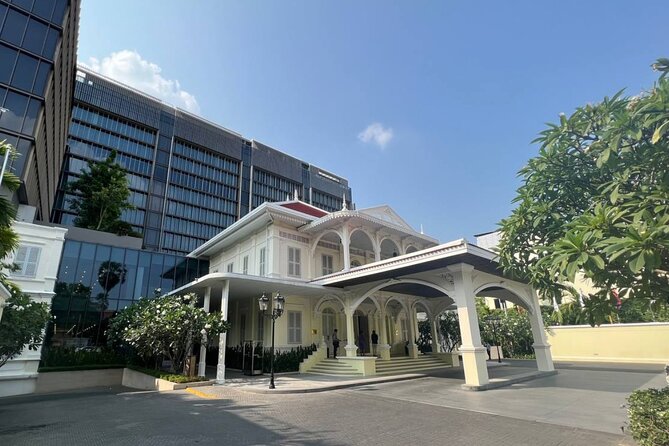
12) Raffles Hotel Le Royal (iconic hotel stop)
This one is for people who like architecture and social history. The audiovisual guide frames why Raffles Hotel Le Royal matters, and it works well as a break between heavier themes.
13) Hyatt Regency Phnom Penh (No Problem Villa connection)
The tour connects today’s Hyatt area with the old No Problem Villa. It’s the kind of historical footnote that makes your later neighborhood walk more meaningful—because you start noticing what used to happen in places that look normal now.
You can also read our reviews of more historical tours in Phnom Penh

Arts Education, Renovations, and the Museum Zone You Don’t Walk Through
14) Royal University of Fine Arts (guided visit; students often practicing)
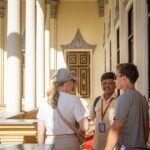
This is one of the most rewarding stops. The guide covers the Royal University of Fine Arts and, when possible, you get a guided visit with stories and anecdotes. The tour often allows you to watch students practicing their art, which brings Phnom Penh’s present into the picture.
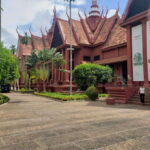
15) National Museum (visit not included)
This stop is mainly about orientation. The museum itself is not included during the city tour, so plan a separate time slot if you want full exhibits.
16) FCC Phnom Penh (old Mansion under renovation, covered 2024/2025)
The Mansion is currently under renovation and covered (2024/2025), so expect more scaffolding-like visuals than a full architectural reveal. Even so, it’s still a helpful stop because you learn what the building represents before you see it in its current state.
17) UNESCO Cambodia (UNESCO house)
A short stop, but meaningful if you like institutions tied to preservation and culture. The audiovisual guide helps you understand why this kind of hub exists in the city.
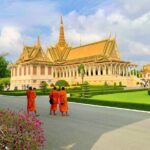
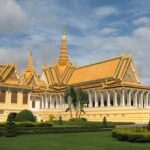
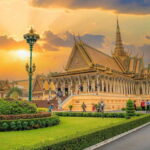
18) Royal Palace (visit not included)
You’ll get the Royal Palace context from the outside during the tour window. The visit itself is not included, so if the palace is high on your list, treat the tour as a prelude and then book/plan time to go inside separately.
19) Residence of the British Ambassador + Street 240 epilogue
You end near Street 240, with a final epilogue connected to the area and the residence of the British Ambassador to Cambodia. It’s a satisfying close because you finish right where many visitors want to be anyway: by the Royal Palace zone and Wat Botum Square area.
Photos, Heat, and How to Make This Tour Feel Less Rushed
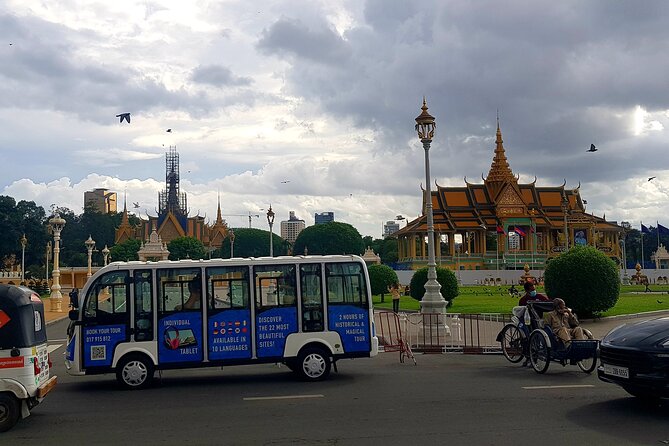
This tour is built to help you cover ground in a short time. That’s a win—but it also means you’ll move on even when you’re still curious. To get the best out of it, think of the tour like a guided highlight reel.
A few photo and timing tips based on what’s built into the experience:
- You can take pictures at many stops, including Wat Phnom.
- There are photo restrictions near the US Embassy-linked country club area, so follow local rules.
- You’ll also get time for photos from the bus, which is useful when you’re trying to capture facades quickly.
- Expect indoor entry only if open at select stops like the old bank area, Hokkien temple, National Library, and Royal University of Fine Arts.
Weather is also real here. Even with a vehicle ride, Phnom Penh can feel hot and bright. The tour includes bottled water, which helps, but I’d still plan for sun protection and comfortable shoes for short stops and transitions.
Who This Tour Suits Best (And Who Might Want Something Else)
This experience is ideal if:
- You want a first-time orientation to central Phnom Penh.
- You like architecture and want the colonial-to-20th-century connections explained.
- You want the big historical narrative in a short window, including the French protectorate era and the Khmer Rouge years.
- You prefer a small group and clear audio support in multiple languages.
You might want a different format if:
- Your main goal is full museum time or palace interior exploration. Those visits are specifically not included here.
- You want long, unhurried walking time at every stop. This route is designed for coverage and context.
FAQ
Is the tour self-guided or guided?
It is guided. You’ll have an in-guide person along with a tablet-based audiovisual guide and headphones.
How long is the Phnom Penh Heritage Tour?
It runs about 2 hours 30 minutes.
What does the tour include?
It includes bottled water, an in-guide person, and a tablet with audiovisual guides in 10 languages. You also get headphones.
Are there any stops where entrance is not included?
Yes. The tour notes that the Wat Phnom hill visit is not included, and it also states that the National Museum and the Royal Palace visits are not included during the city tour.
Can I go inside some buildings?
Sometimes. The experience says you may be able to visit the inside of the old bank (if open), the Hokkien temple, the National Library (if open), and the Royal University of Fine Arts.
Are photos allowed everywhere?
Not everywhere. The stop connected to the country club where the US Embassy is located indicates that pictures are not allowed there.
Where does the tour start and end?
It starts at Corner Street 102 & Street 13 in Phnom Penh and ends on Oknha Chhun St. (240) near the Royal Palace area and Wat Botum Square.
Should You Book This Phnom Penh Heritage Tour?
If you want context fast, book it. This is one of those “great first day” experiences because it turns scattered landmarks into a connected story—French protectorate planning, Art Deco influence, the royal and elite world, and the brutal break of the Khmer Rouge era.
I’d especially recommend it if your schedule is tight. You get 19 stops and a lot of architectural and historical cues in one ride, with audio that stays consistent across languages and helps you move smarter through the city.
Just go in with the right expectation: it’s a highlight-style loop. If you fall in love with a specific place—like the Royal University of Fine Arts—you’ll be set up to spend more time there later on your own.