REVIEW · PHNOM PENH
Phnom Penh to Siem Reap, Angkor Wat & Return, 2 Day Private Tour
Book on Viator →Operated by Siem Reap Private Taxi · Bookable on Viator
Angkor Wat at sunrise is worth it. This private 2-day run strings together Oudong Hill views, local life at Skun, and a temple day timed for the light. You get hotel pickup and drop-off plus a local English guide for the temple circuit, which keeps things organized without turning it into a race.
I especially like two parts. First, the trip is built around real stops (Oudong and Skun) rather than only jumping from one big temple to the next. Second, you’re traveling in an air-conditioned vehicle with an English-speaking driver, so the long road day feels manageable.
One thing to consider: the Angkor temples require an Angkor Pass you buy separately, and Day 2 includes an early start plus a long ride back toward Phnom Penh, so you’ll want to pace your energy.
In This Review
- Key Things I’d Focus On
- How This Private Phnom Penh–Siem Reap Plan Really Feels
- Day 1: Oudong Hill Views, Skun Market Life, and a Straight Shot Toward Siem Reap
- Phnom Penh Hotel Pickup and the Northbound Ride
- Oudong (Oudong Hill): Former Royal Capital, Stupas, and Panoramic Views
- Skun Spider Sanctuary (Spiderville): Market Food Culture Up Close
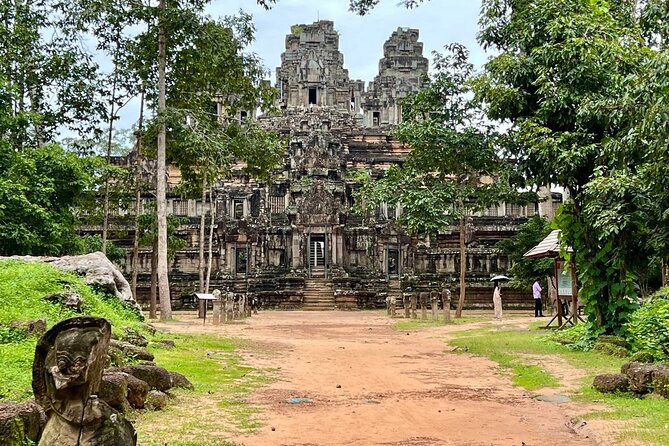
- Prasat Kuha Nokor: A Quiet Angkorian Temple Pause
- Lunch at Prey Pros: Traditional Khmer Meal (Optional)
- Banteay Kdei (Ancient Bridge in Kampong Kdei) for Photos and a Short Break
- Arrive in Siem Reap and Keep the Evening Free
- Day 2: Angkor Wat Sunrise With a Local Guide, Then Bayon to Ta Nei
- Sunrise at Angkor Wat: Why Starting Early Changes Everything
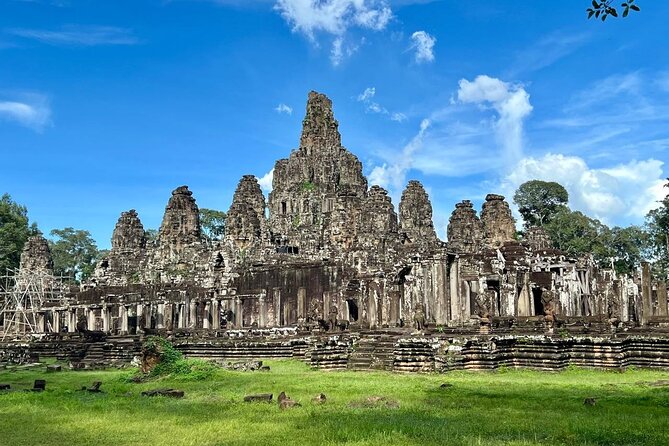
- Bayon: Giant Smiling Faces
- Terrace of the Elephants: A Royal Ceremonial Platform
- Baphuon: A Classic Temple Mountain
- Ta Prohm: Tomb Raider Temple, Roots and All
- Ta Nei: The Quieter Ending
- Price and Passes: The Real Cost of Angkor Isn’t Just the Tour Fee
- Transportation Comfort: Why the Driver Names Matter
- What’s Included vs Not Included: Plan Your Meals and Sleep
- How Long Is This, Really? Timing and Energy Check
- Who This Tour Suits Best (and Who Should Rethink It)
- Should You Book This Phnom Penh to Siem Reap Private Tour?
- FAQ
- Is pick-up and drop-off included?
- How much does the tour cost?
- What’s included in the tour price?
- What isn’t included?
- Do I need to buy the Angkor Pass?
- How long is the tour?
- Is this a private tour?
- Can I end the trip in Siem Reap instead of returning to Phnom Penh?
- Is this tour suitable for most travelers?
Key Things I’d Focus On
- A driver-led private taxi setup with hotel pickup and drop-off, which cuts the stress of coordinating transit
- Oudong Hill and its former-royal-capital setting, with golden stupas and big panoramic views
- Skun Spider Sanctuary (Spiderville) for a hands-on look at market food culture
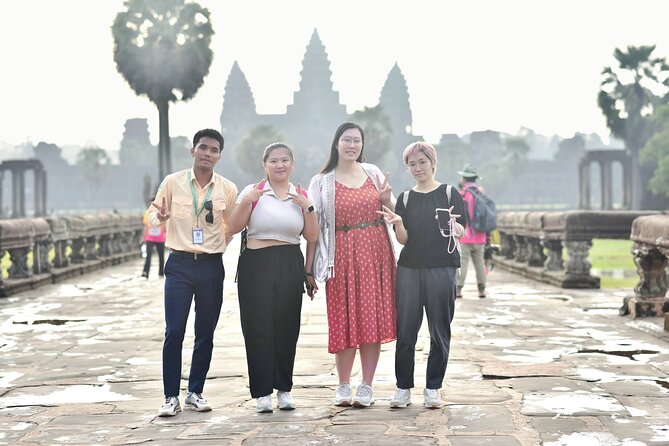
- A sunrise Angkor Wat start with a local guide, so you’re not just looking at stones
- A full Angkor temple circuit: Bayon, Ta Prohm, Baphuon, and quieter Ta Nei
- Flexible trip ending: you can return to Phnom Penh or conclude in Siem Reap for more time
How This Private Phnom Penh–Siem Reap Plan Really Feels
This is a private, 2-day road trip with sightseeing built in on both days. The value isn’t only that it’s comfortable; it’s that the pacing is designed so you see more than the famous photo spots while still keeping the logistics simple.
You start with hotel pickup in Phnom Penh and end Day 1 in Siem Reap. Day 2 is where Cambodia’s history gets loud: Angkor Wat at sunrise, then a guided route through Bayon, Ta Prohm, and the others, before a return ride back toward Phnom Penh unless you choose to end in Siem Reap.
I also like that the tour is explicitly set up for small-group privacy—only your group participates. That matters when you’re doing early sunrise timing. It’s easier to manage the day when it isn’t a big cattle-car tour.
You can also read our reviews of more private tours in Phnom Penh
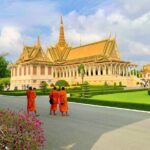

Day 1: Oudong Hill Views, Skun Market Life, and a Straight Shot Toward Siem Reap
Day 1 is the “get oriented” day. You leave Phnom Penh in the morning and spend the day moving through countryside and smaller stops before arriving in Siem Reap in the evening.
Phnom Penh Hotel Pickup and the Northbound Ride
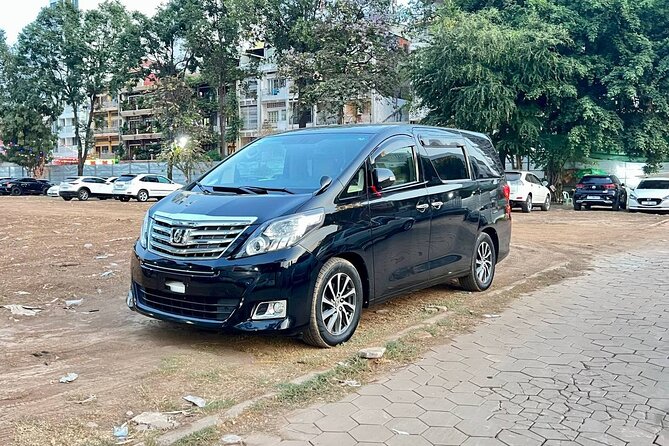
The tour begins with a private taxi pick-up from your hotel. You’re in an air-conditioned vehicle with an English-speaking driver, which makes a difference on long drives. Even if you’re not looking at the clock, you’ll feel the comfort by mid-afternoon.
On road days, the best part of a driver-led tour is not having to figure out directions or whether you’re at the right place. That’s especially helpful when you’re doing multiple short stops.
Oudong (Oudong Hill): Former Royal Capital, Stupas, and Panoramic Views
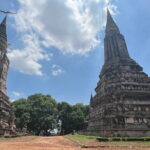
Oudong Hill is a strong first historical stop because it feels like a chapter from Cambodia’s past, not just a viewpoint. You’ll visit the former royal capital perched on a hill, explore Buddhist temples, and see the stupas that hold ashes of former kings.
The walk-up to the top is part of the experience. You’re not just looking—you’re climbing into the story. The reward is the kind of wide view you can’t get from inside a temple complex.
This stop is also a good mental switch before you hit Angkor the next morning. It sets context: Cambodia’s temple culture didn’t start at one famous site.
Skun Spider Sanctuary (Spiderville): Market Food Culture Up Close
Skun is short but memorable. You stop at the market area and see the famous fried spiders. I’m not going to dress it up—it’s a bold cultural food stop, and it’s meant to be watched as much as sampled.
If you’re the type who likes learning through daily life, this is one of the most interesting stops on the whole itinerary. If you’re not into insects as a food idea, you can still get plenty from the market atmosphere and local snacks.
Either way, it’s a useful reminder that Cambodia isn’t only temples. Food traditions like these are a big part of identity.
You can also read our reviews of more tours and experiences in Phnom Penh
Prasat Kuha Nokor: A Quiet Angkorian Temple Pause
After Skun, you’ll visit Prasat Kuha Nokor. This is a smaller, quieter Angkorian temple stop, focused on well-preserved stone structures.
What I like about a stop like this is that it gives you a breather from the more intense Angkor-famous sights. You’ll get a sense of Angkor-era architecture without the crowd pressure you’ll see later in Siem Reap.
Lunch at Prey Pros: Traditional Khmer Meal (Optional)
There’s an optional traditional Khmer lunch stop at Prey Pros. The tour keeps it flexible, with around a half-hour allocated for the meal.
This is one of those moments where it’s worth being practical. If you like to eat local while you’re traveling, use the time. If you’re picky or trying to keep costs tight, you can treat it as an opportunity rather than a must-do.
Banteay Kdei (Ancient Bridge in Kampong Kdei) for Photos and a Short Break
Near the end of Day 1 you’ll stop at Banteay Kdei, including the Ancient Bridge in Kampong Kdei. It’s timed as a short break and a photo stop.
Even if you’re not obsessed with bridges, it works as a “stretch your legs” moment before the final drive into Siem Reap. When Day 2 starts at dawn, you’ll be happy you didn’t spend the entire day sitting.
Arrive in Siem Reap and Keep the Evening Free
You end Day 1 with arrival in Siem Reap and transfer to your hotel. Evening is at leisure, which is smart. You’ll likely want sleep, or at least an early night, because sunrise on Day 2 is non-negotiable.
Day 2: Angkor Wat Sunrise With a Local Guide, Then Bayon to Ta Nei
Day 2 is the headline. It starts with sunrise at Angkor Wat—about an hour allocated—then continues through Bayon, the Terrace of the Elephants, Baphuon, Ta Prohm, and Ta Nei.
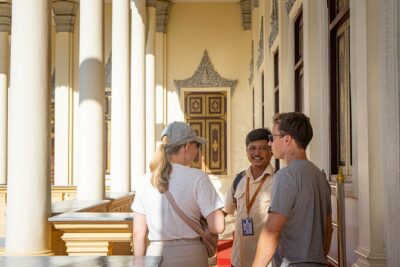
The key detail here is the local guide for the temple portion. A guide doesn’t just tell you where to stand. They help you understand what you’re seeing and why it matters.
Sunrise at Angkor Wat: Why Starting Early Changes Everything
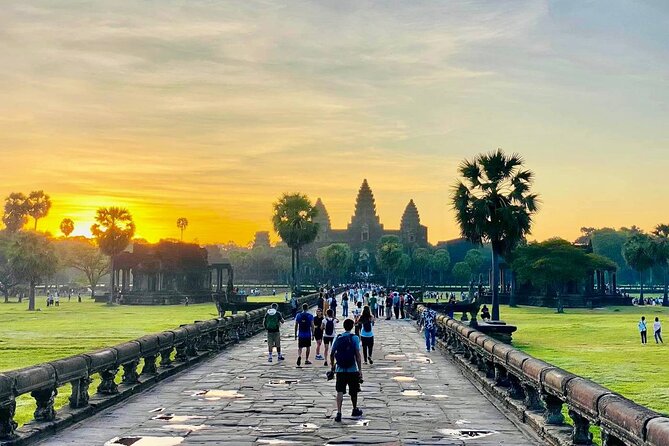
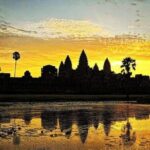
You meet your local guide early for sunrise at Angkor Wat. Sunrise is popular for a reason: you’re catching the temple in softer light, and the atmosphere feels different before daytime crowds fully arrive.
Photos look better, sure. But the bigger win is how the temple structure “reads” when it’s lit from the right angle. You also get that early-day calm that makes it easier to focus.
A guide also helps you move efficiently so you don’t waste your limited sunrise time hunting for the best perspective.
Bayon: Giant Smiling Faces
Next up is Bayon Temple, famous for its giant smiling stone faces. With a guide, you’ll spend less time figuring out what you’re looking at and more time noticing the details around the faces.
Bayon is one of those stops where crowds can make it hard to connect the dots on your own. A guide makes the experience feel more like a story than a checklist.
Terrace of the Elephants: A Royal Ceremonial Platform
Then comes the Terrace of the Elephants, a royal ceremonial platform carved with intricate detail. This stop is shorter, but it’s a good “architecture-and-symbols” pause between larger complexes.
If you like carvings and want something calmer than Ta Prohm’s famous jungle look, this is a nice middle step.
Baphuon: A Classic Temple Mountain
Baphuon is next. It’s a three-tiered temple mountain style—classic Angkorian architecture. This stop is about getting your bearings in the larger Angkor design language.
Even if you’ve seen photos before, seeing it in person with the guide framing what to pay attention to is worth it. It helps your brain stop treating the temples like random set pieces.
Ta Prohm: Tomb Raider Temple, Roots and All
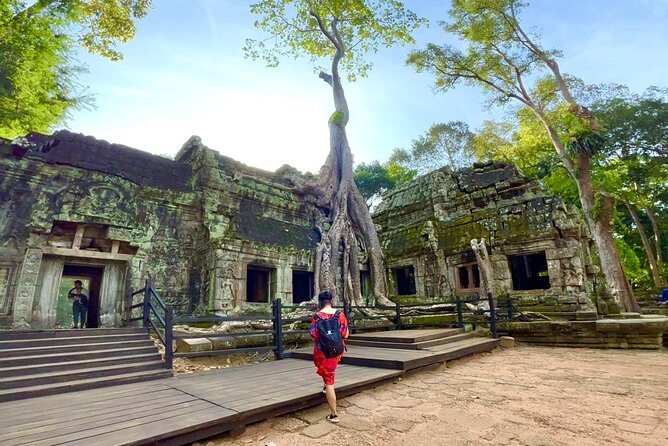
Ta Prohm is the “Tomb Raider temple” stop, known for massive roots wrapping around structures. It’s one of the places where the temple almost looks alive.
In practice, what matters is time and placement. You’ll want to linger for photos, but not so long you end up tired for the next stops.
Ta Nei: The Quieter Ending
Ta Nei is the quieter temple finish. It’s lesser-visited and offers a more serene atmosphere compared to the heavyweights.
This is a great way to end the day. After all the motion and big sights, you get a calmer final temple where you can slow down and just look.
Price and Passes: The Real Cost of Angkor Isn’t Just the Tour Fee
The tour price is $125 per person for the 2-day private experience. You’re also getting a lot for that money: air-conditioned transport, hotel pickup and drop-off in Phnom Penh, an English-speaking driver, and a local English guide at the temples.
But here’s the practical part: Angkor Pass is not included, listed at $37 per person. You’ll need that for the temple area.
Also, the tour information notes that temple passes (and Kulen pass, if you’re doing that separately) are something you need to obtain yourself when you arrive at the checkpoint. So don’t assume someone will magically hand you everything on arrival.
If you’re budgeting, treat the Angkor Pass as the main add-on. Meals and accommodation are also not included, so plan for hotel costs in Siem Reap and meals during the days you’re not covered.
Transportation Comfort: Why the Driver Names Matter
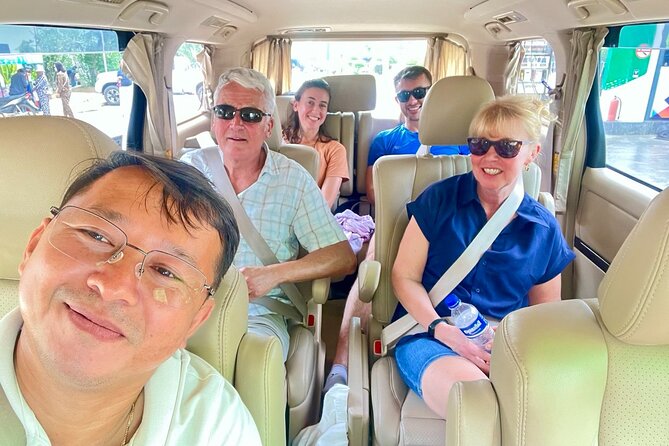
A good driver makes early mornings easier and long rides less painful. This tour is built around a private taxi approach with an English-speaking driver and an air-conditioned vehicle, which you’ll feel on both days.
In the service track record, the team includes drivers like John, praised for being super friendly, patient, punctual, and easy to work with. There are also examples of other drivers, like Luch Leang, highlighted for kindness and punctuality and for knowing local specialties.
The temple guide is often paired as well. I’ve seen the name Ben come up as a guide for Angkor temple touring, and it’s exactly what you want: someone who can explain what you’re seeing while keeping the pace comfortable.
Bottom line: you’re paying for convenience and smooth timing as much as you’re paying for the car.
What’s Included vs Not Included: Plan Your Meals and Sleep
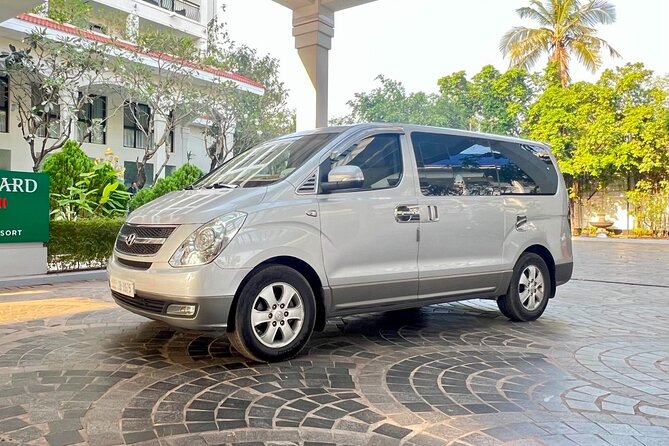
Included:
- Air-conditioned vehicle
- Professional English-speaking driver
- Hotel pick-up & drop-off
- Local English guide at the temple
Not included:
- Angkor Pass ($37 per person)
- Accommodation
- Meal
That might sound obvious, but it changes how you plan your trip. If you need lodging in Siem Reap, you’ll book it separately. If you’re hungry between the stops, you’ll rely on the meal options provided (like the optional Khmer lunch) and your own choices.
Since Day 1 ends with an arrival transfer to your Siem Reap hotel, you’ll have time to eat and rest before the sunrise start.
How Long Is This, Really? Timing and Energy Check
This is a two-day tour, but Day 2 is the full-on temple day. You’ll start early for sunrise, spend time at multiple major sites, and then you’re set up for a return ride to Phnom Penh in the evening.
That’s a lot of hours, even with comfort. If you’re sensitive to fatigue, consider choosing the option to end your trip in Siem Reap instead of returning all the way back to Phnom Penh after the temples.
If you do return to Phnom Penh, pack like you’re going to be tired at the end—water, a light layer, and something simple for the ride home.
Who This Tour Suits Best (and Who Should Rethink It)
This tour fits best if you want:
- A private plan with less hassle and no complicated transport coordination
- A mix of major Angkor sights and more local stops like Oudong and Skun
- A sunrise Angkor Wat experience with a guide, not just a random drop-off
- Comfortable pacing with a driver who can handle the long road day
It might not fit if:
- You’re only interested in Angkor Wat and want the simplest, shortest route with minimal driving
- You hate the idea of a bold food stop like the fried spiders at Skun (even if you can skip sampling)
- You’re traveling with very strict timing in Phnom Penh and can’t handle an early wake-up and long Day 2 schedule
Should You Book This Phnom Penh to Siem Reap Private Tour?
If you want a well-run private experience that covers both Cambodia beyond Angkor and the temples themselves, I’d book it. The value is in the combination: comfortable transport, hotel pickup/drop-off, and a guided temple day plus local culture stops that feel like more than scenic filler.
Before you commit, do two quick checks. First, budget for the Angkor Pass ($37 per person) and remember you’ll need to get it at the checkpoint. Second, decide whether you want the full return to Phnom Penh after temples or prefer to end in Siem Reap so you can recover and continue exploring.
If those two points work for your trip style, this is a smart way to connect Phnom Penh and Siem Reap without turning the journey into a logistical headache.
FAQ
Is pick-up and drop-off included?
Yes. The tour includes hotel pick-up and drop-off in Phnom Penh, plus an included transfer upon arrival in Siem Reap on Day 1.
How much does the tour cost?
The price is $125 per person for the 2-day private tour.
What’s included in the tour price?
You get an air-conditioned vehicle, a professional English-speaking driver, hotel pick-up & drop-off, and a local English guide at the temple.
What isn’t included?
The Angkor Pass is not included ($37 per person). Also not included are accommodation and meals.
Do I need to buy the Angkor Pass?
Yes. The Angkor Pass is not included, and the tour notes that temple passes need to be obtained by you at the checkpoint when you arrive.
How long is the tour?
It runs for about 2 days.
Is this a private tour?
Yes. It’s a private tour/activity, so only your group participates.
Can I end the trip in Siem Reap instead of returning to Phnom Penh?
Yes. You can choose to return to Phnom Penh after the temple tour or conclude your trip in Siem Reap for continued travel.
Is this tour suitable for most travelers?
The tour information says most travelers can participate.