REVIEW · PHNOM PENH
Phnom Penh City & Silk Island Full Day Tour by Tuk Tuk
Book on GetYourGuide →Operated by Siem Reaper Travel · Bookable on GetYourGuide
Phnom Penh moves fast, and so does this tour. It’s a great way to pack in Royal Palace’s Silver Pagoda plus Silk Island craft time in one day, using a tuk-tuk for city hops and a ferry for the island portion. I like that you’re not just chasing landmarks—you also get a hands-on look at silk production and a local family business making dried tofu skin. The price is also reasonable for what’s included, as long as you understand where the extra ticket fees pop up.
Here’s the trade-off: the pacing can feel tight. Parts of the day are self-guided or brief (like a quick Independence Monument photo stop), so if you’re hoping for constant commentary at every stop, you may end up wanting more time in the tuk-tuk or more explanation on-site.
In This Review
- Key Things to Know Before You Go
- Royal Palace Silver Pagoda and Phnom Penh’s must-see start
- Independence Monument: a quick photo stop, not a big attraction
- Central Market at Phsar Thmey: snacks, fruit, and real city noise
- Wat Phnom: why a self-guided temple hour works
- The city-to-island rhythm: tuk-tuk, timing, and a midday reset
- From Koh Oknha Tei to Silk Island by ferry
- Silk weaving craft: what you learn (and what you watch)
- Price, value, and the tickets you need to plan for
- Who should book this Phnom Penh and Silk Island tour?
- Should you book it?
- FAQ
- How much does the Phnom Penh City & Silk Island full day tour cost?
- How long is the tour?
- Are hotel pickup and drop-off included?
- Does the tour include an English-speaking guide?
- What are the extra fees for Royal Palace and Wat Phnom?
- Is lunch included?
- Do I get a snack and water?
- What’s included for the Silk Island part?
- When is the full-day option?
- What’s the half-day option schedule?
Key Things to Know Before You Go
- Silver Pagoda inside the Royal Palace complex gives you a major cultural stop even though the Royal Palace itself is largely closed off.
- Phsar Thmey Central Market is built into the plan for guided wandering, with a local snack and water included.
- Wat Phnom is self-guided for about an hour, which means you can move at your own pace up the hill.
- A ferry plus countryside villages make the afternoon feel like a real change of scenery, not just another city round.
- Craft focus on silk weaving (and a dried tofu skin specialist) turns this into more than sightseeing.
- English speaking guide, but not everywhere: some parts are guided, others are pickup-and-explore.
Royal Palace Silver Pagoda and Phnom Penh’s must-see start
Your day usually begins with hotel pickup and an English-speaking guide (or guide-supported segments) plus a tuk-tuk ride into the center of Phnom Penh. This matters because Phnom Penh traffic can be chaotic, and a tuk-tuk is an easy way to get from point to point without wasting half your day figuring out routes.
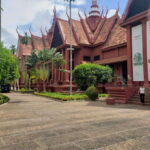
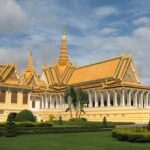
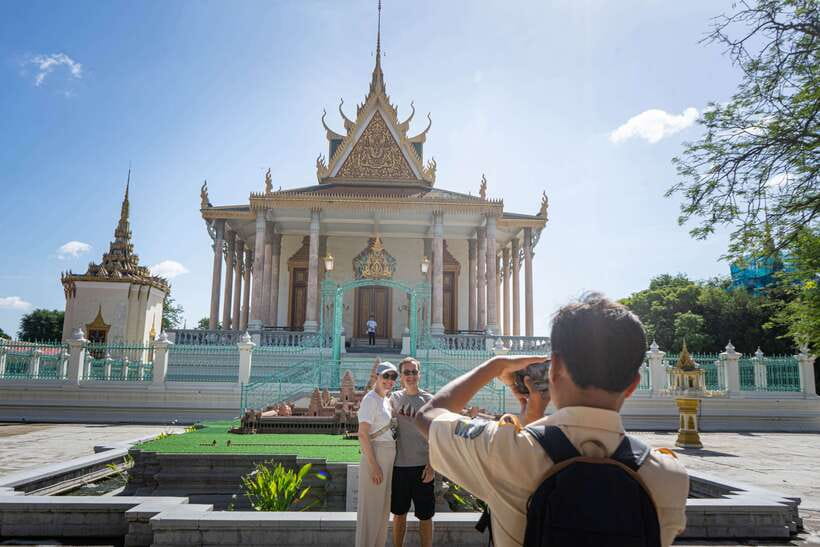
The first major stop is the Royal Palace complex, where the headline visit is the Silver Pagoda. The Royal Palace itself is described as closed off to the public, but the Silver Pagoda is accessible, and that’s the part that gives the visit its punch. You’ll be in a space tied to Cambodia’s royal tradition and artistic heritage, without the trip turning into a long, “walk through every room” marathon.
In a city where you can feel overwhelmed fast, this is a smart opening move. You start with one of the biggest cultural draws, then you move on before the heat and crowds drain your energy.
You can also read our reviews of more city tours in Phnom Penh


Independence Monument: a quick photo stop, not a big attraction
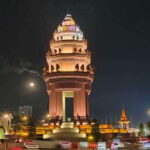
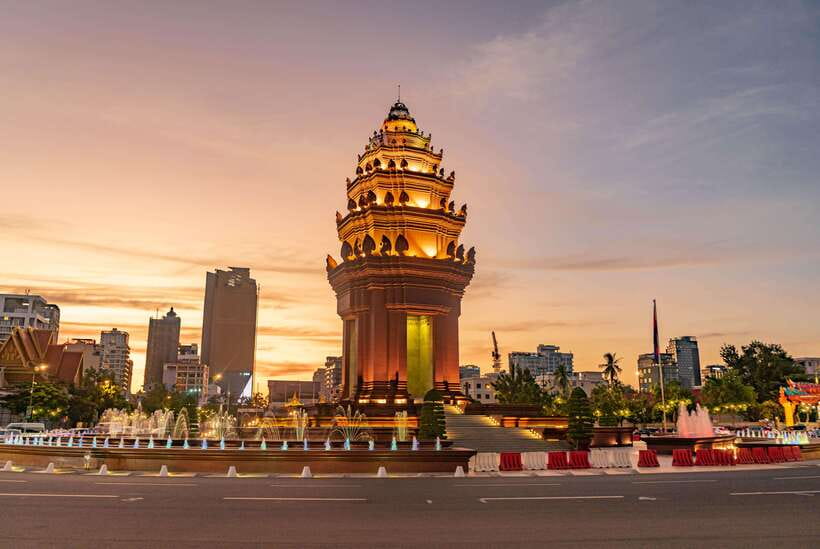
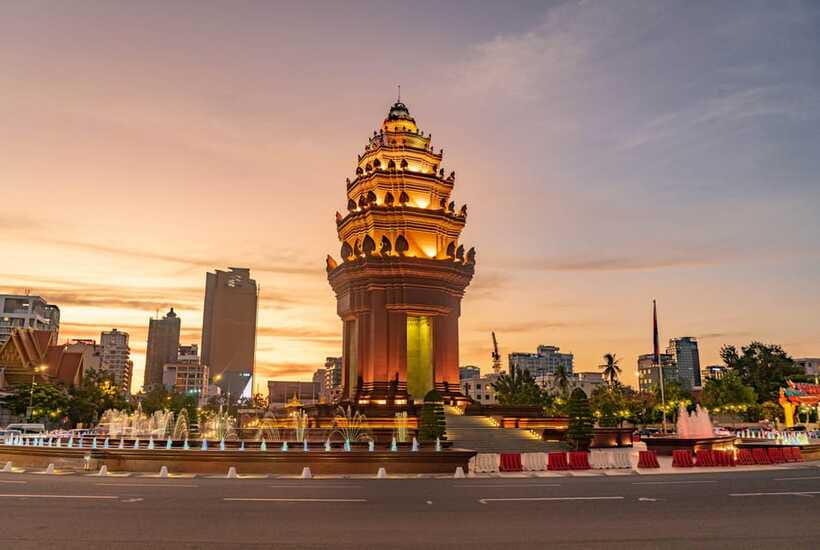
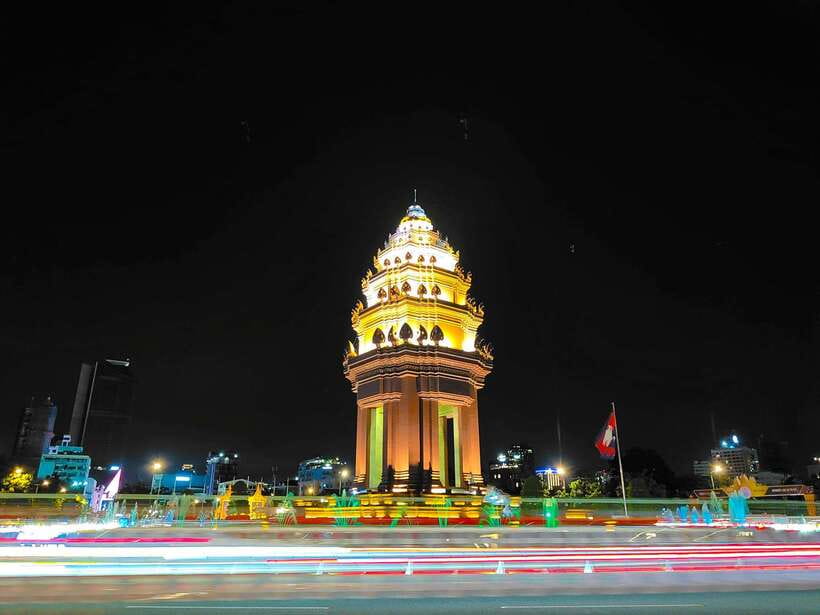
Next up is the Independence Monument, built in 1958 to memorialize Cambodia’s independence from France in 1953. Plan for it as a short stop—it’s set up as a photo moment rather than a deep visit.
If you’re expecting a long pause with lots to read or explore, this is where the tour can feel a bit lean. I’d treat it as a waypoint: grab your photo, appreciate the location at the intersection of Norodom Boulevard and Sihanouk Boulevard, then get back to moving.
This is also where pacing decisions show themselves. If you’re the type who wants time to wander and watch street life, you may wish this were folded into a longer city loop. If you’re short on time, it keeps the day from running late.
Central Market at Phsar Thmey: snacks, fruit, and real city noise
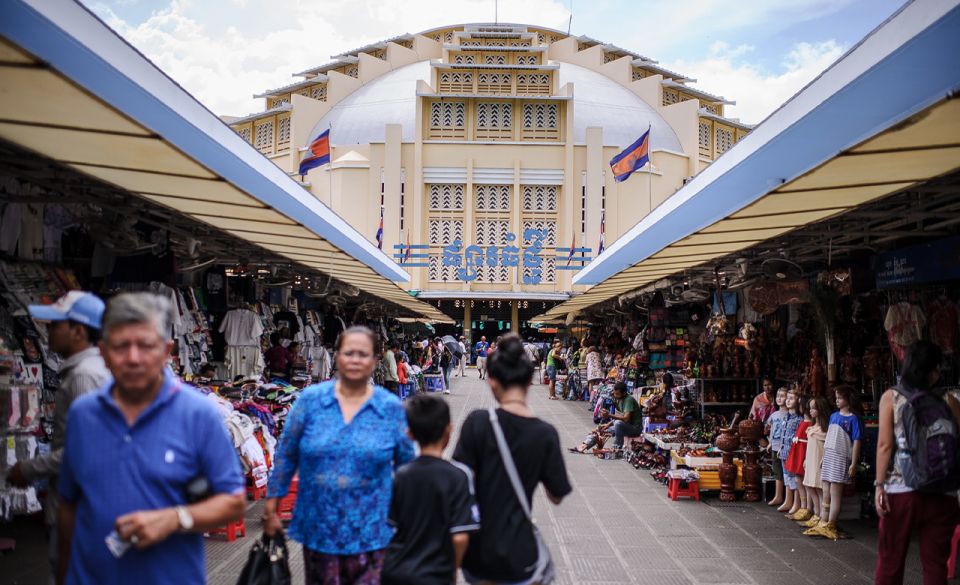
Then you head to Central Market, also known as Phsar Thmey, which is one of the city’s major landmarks. This is one of the best spots for first-time visitors because it’s not a quiet museum experience. It’s daily life: shopping, bargaining, and snack-and-fruit buying in the open air.
You get a guided hour here, and the tour includes a local snack plus bottled water. That’s a useful value add because market food can get pricey if you’re buying everything from scratch, and you’ll likely feel grateful for water in the heat.
I like markets on tours that otherwise feel temple-heavy. Central Market gives your eyes a break and gives you a chance to practice being a respectful, curious customer—sampling, looking, and picking up small things without turning it into a full shopping spree.
If you have a sweet tooth or you just want something easy to eat between sites, this stop is timed well.
Wat Phnom: why a self-guided temple hour works
After the market, you go to Wat Phnom, a 14th-century Buddhist temple. It sits on a hill and is about 27 meters tall, and it’s described as the highest religious structure in the area. You’ll have about one hour and it’s self-guided, which is a big deal.
Self-guided means you can linger where your eye goes. Some people want to watch prayer activity longer. Others want to take photos from angles that feel good. And some just want to walk the complex calmly without feeling rushed by a schedule.
This stop also has a social side: it’s a place where locals and foreigners can be praying for good luck. That gives Wat Phnom more meaning than a “pretty temple” checklist. It’s a chance to see how belief shows up in daily practice.
Because it’s a self-guided visit, the tour doesn’t do the talking for you. If you like guided storytelling, you might want to ask the guide a quick question before you start exploring.
The city-to-island rhythm: tuk-tuk, timing, and a midday reset
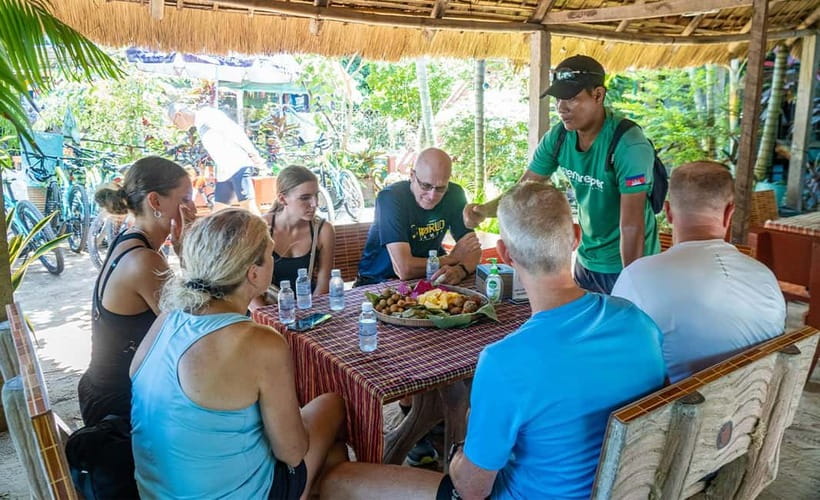
The tour has two main formats, and the day shape changes depending on which one you book.
- A half-day option runs roughly 8:00am to 12:00pm.
- A full-day setup is split: morning 8:00am to around 12:30pm, then you’re back for your own lunch, then the driver returns around 3:00pm, and you finish back in Phnom Penh around 6:30pm.
That split schedule is worth understanding because it affects your energy. Morning sites hit harder in the heat, and then you get an actual break for lunch before the ferry and island portion.
Also, the tour notes that the guide and driver can vary based on availability. I’ve found that this is common with short-city-to-island day trips, and it can explain why your experience may feel more guided in one half and more “go explore” in another.
One detail I appreciate: the tour includes hotel pickup and drop-off. In Phnom Penh, that can be the difference between a smooth day and a stressful one.
You can also read our reviews of more tours and experiences in Phnom Penh


From Koh Oknha Tei to Silk Island by ferry
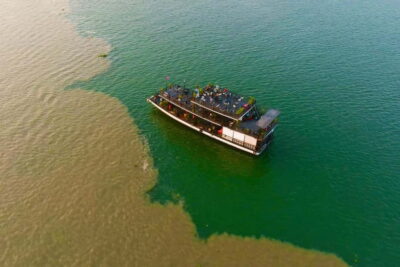
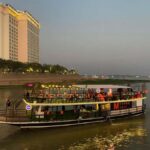
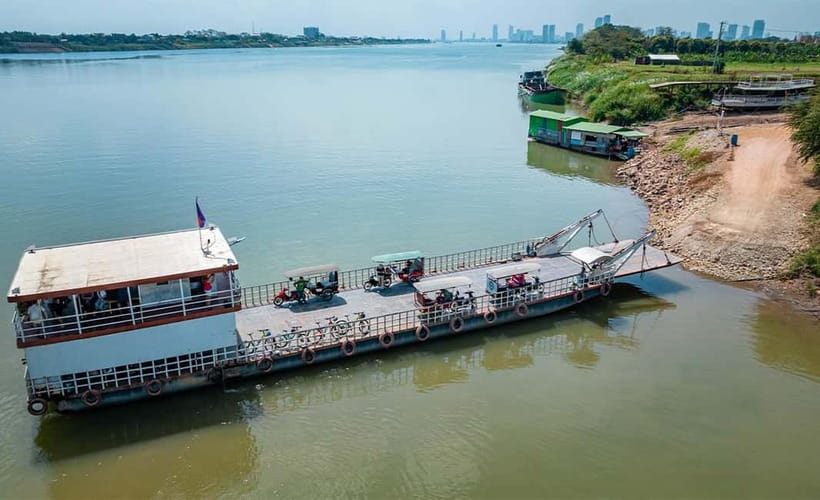
When your afternoon pickup happens around 3:00pm, you’ll board a ferry crossing to the island. The plan also includes a photo stop at Koh Oknha Tei, so you’re not just shuttled—you’re given a few moments to orient yourself.
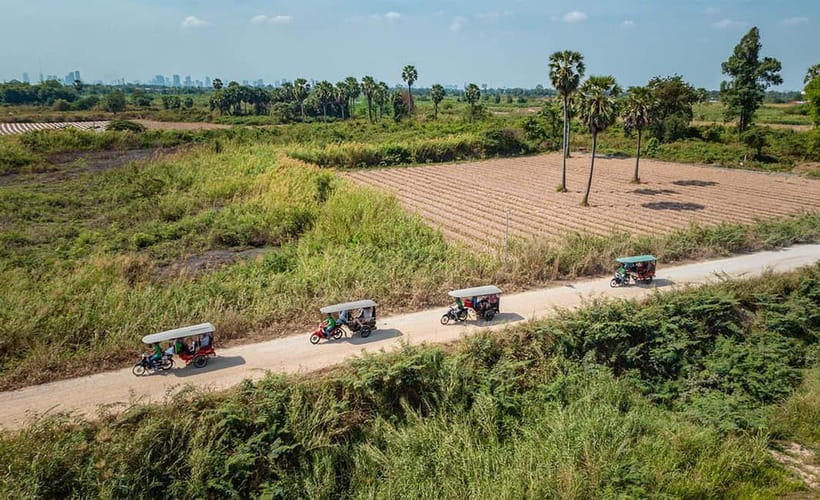
Once on the island route, you’ll travel through countryside farming villages, with stops connected to village life: a local market and a Buddhist temple are included in the general route description. This is where the trip starts to feel different from the Phnom Penh city stops.
I like the way this balances city energy and rural pace. Even if the countryside portion is not long, it gives you a taste of Cambodia beyond monuments. And if you’re traveling with limited time, it’s one of the simplest ways to get that change of scenery without doing it all independently.
Silk weaving craft: what you learn (and what you watch)
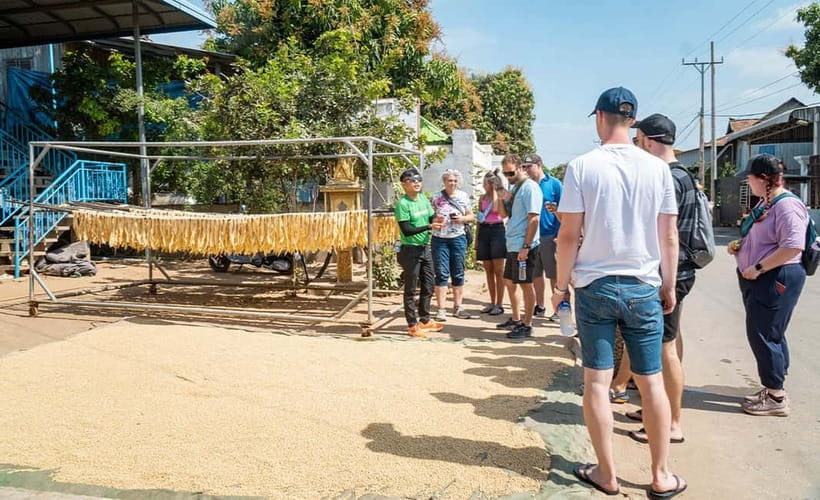
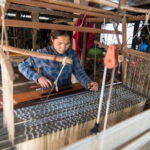
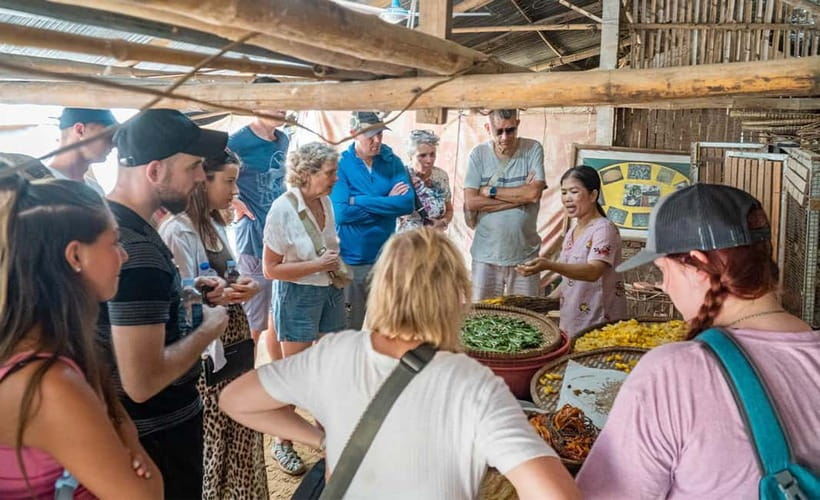
The core craft segment is the visit to Silk weaving and silk production processing. This is described as a tradition passed down from parent to child, which matters because you’re not seeing silk as an abstract souvenir. You’re seeing a working craft with family knowledge behind it.
You’ll get a more authentic feel by watching and learning from the people doing the work, rather than just walking through a showroom. The tour explicitly frames this as an insight into Cambodian silk weaving history and production, and it’s the kind of stop that sticks because it connects the object to the process.
Also included is a visit to a family-run business specializing in dried tofu skin. That might sound random until you realize it’s part of the same story: island life and regional food production. In a day full of temples and city sights, it’s a refreshing reality check that people here have livelihoods far beyond tourism.
If you want your souvenir decisions to come from understanding, this is where it happens. You’re far more likely to appreciate what you buy when you’ve seen how it’s made.
Price, value, and the tickets you need to plan for
This tour is priced at $45 per person for a day that includes tuk-tuk transportation, an English-speaking guide (depending on segment), a ferry crossing, and silk island visit fees. It also includes hotel pickup/drop-off, plus a local snack and bottled water.
But two entry fees are not included:
- Royal Palace: $10
- Wat Phnom: $1
So your “all-in” day costs a bit more once you’re there, but it’s still likely to land in a reasonable range if you compare it to paying for transport plus ferry plus guide time on your own.
The value question mostly comes down to pacing. If you’re the type who wants lots of time per stop, you may feel the day is stretched thin. That’s especially true because some elements are self-guided and others are photo stop length. One person also noted that the independence stop felt short and the overall day length made it hard to justify cost.
On the other hand, if you’re trying to tick off big sights without doing separate bookings, the structure makes sense. You get the logistics handled—tuk-tuk and ferry—while you spend time where it counts: Silver Pagoda and Silk Island craft.
Who should book this Phnom Penh and Silk Island tour?
This tour makes the most sense if you:
- want a tight schedule with major Phnom Penh highlights plus a craft-focused island visit
- like a mix of self-guided temple time and guided city walking
- care about process—silk weaving, how production works, and how local businesses operate
- don’t mind that some stops are short photo-and-go moments
It may frustrate you if:
- you want a guide to narrate every single stop in depth
- you’re very time-sensitive and want longer temple stays or more city driving time
- you dislike heat and would rather slow down than hop from site to site
A nice detail: tuk-tuk rides can feel reassuring if the driver is calm and attentive. The tour’s design depends on that kind of smooth handling, especially in busy traffic.
Should you book it?
If your main goal is a smart “best of Phnom Penh + Silk Island” day, I’d book it. The combination of Silver Pagoda plus a Silk Island craft visit (including dried tofu skin at a family-run spot) is what makes this more interesting than a simple city circuit.
Just go in knowing the pacing reality. Build your expectations around the idea that you’ll get some guided time, some self-guided time, and a mid-afternoon shift from city stops to island life via ferry. If you want nonstop storytelling, you might wish for a longer, fully guided format.
FAQ
How much does the Phnom Penh City & Silk Island full day tour cost?
It costs $45 per person.
How long is the tour?
The duration is listed as 4 hours.
Are hotel pickup and drop-off included?
Yes, hotel pickup and drop-off are included.
Does the tour include an English-speaking guide?
Yes, an English speaking tour guide is included.
What are the extra fees for Royal Palace and Wat Phnom?
Royal Palace entry is $10, and Wat Phnom entry is $1. These are not included in the $45 price.
Is lunch included?
No, lunch is not included.
Do I get a snack and water?
Yes. The tour includes a local snack and bottled water.
What’s included for the Silk Island part?
The tour includes ferry crossing, Silk Island visit fees, and guided visit time focused on silk weaving and related local craft/business stops.
When is the full-day option?
The full-day option runs in two parts: roughly 8:00am–12:00pm, then 3:00pm–7:00pm, with you returning to the hotel around 12:30pm for your own lunch.
What’s the half-day option schedule?
The half-day option runs from about 8:00am to 12:00pm.