REVIEW · PHNOM PENH
Prasith and Reap Temples Private Day Trip from Phnom Penh
Book on Viator →Operated by Green Cultural Travel · Bookable on Viator
Phnom Penh has temple surprises. This private 8-hour trip blends hilltop views, a Buddhist centre with a reclining Buddha, and Phnom Reap’s modern take on Angkor Wat. I like that the pace stays calm with a private guide, and I especially like how you get away from the big tour crowds people expect in Cambodia.
One thing to plan for: Phnom Prasith sits up on the twin hills, and the day includes walking and climbing (it lists moderate physical fitness), so comfy shoes matter.
In This Review
- Key things to know before you go
- Phnom Penh’s Temples Feel Different Than the Usual Angkor Plan
- Getting There from Phnom Penh: Tuk Tuk or Car, Plus a Quick Snack
- Phnom Prasith Temple on the Twin Hills: Views and Monks You Actually See
- Lunch in a Shady Khmer Setting After the Hilltop
- Putmondul Buddhist Centre: Nuns, Offerings, and a Reclining Buddha
- Phnom Reap Temple, Often Called the New Angkor Wat
- The Private Guide Difference (and Why English Matters Here)
- Price and Value: Is $117.44 Fair for an 8-Hour Private Day?
- Who This Day Trip Suits Best (and Who Should Rethink It)
- Should You Book This Phnom Penh Temple Day Trip?
- FAQ
- What sites do you visit on the tour?
- How long is the day trip?
- Is hotel pickup included?
- What kind of transportation do you use?
- What’s included in the price?
- Are donations included?
Key things to know before you go
- Private transport and guide: you choose tuk tuk or car, and the day moves at your speed
- Phnom Prasith on twin hills: big countryside views plus monks going about daily life
- Putmondul’s reclining Buddha: monks and nuns are part of the scene, not just statues
- Phnom Reap finished in 1998: often called the new Angkor Wat, with Angkor-style towers and sculptures
- Meals included: lunch at a traditional Khmer spot with shady views, plus coffee/tea and bottled water
Phnom Penh’s Temples Feel Different Than the Usual Angkor Plan
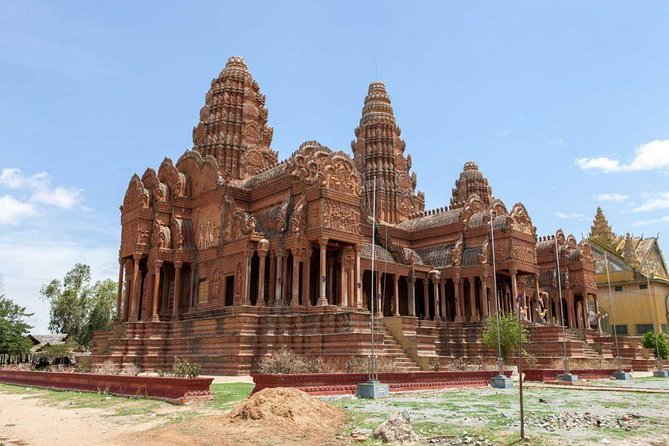
If you’re coming to Cambodia for Angkor, Phnom Penh can feel like a side quest. Yet that’s exactly why this day trip works: you’re spending time in a temple world that doesn’t orbit around the same huge tourist circuits.
You’ll see old and new in the same day. Phnom Prasith is the older, hilltop feel—temple architecture, monks in everyday routines, and wide open views. Then Phnom Reap brings the newer “Angkor Wat style” experience, finished in 1998, with sculptures of kings and Buddha imagery.
The result is a day that feels more local than checklist-y. And since it’s private, you’re not stuck watching other groups funnel in and out at the same time.
You can also read our reviews of more private tours in Phnom Penh

Getting There from Phnom Penh: Tuk Tuk or Car, Plus a Quick Snack
After hotel pickup, you head out for about 90 minutes toward Phnom Prasith Temple. You can go by tuk tuk or car, depending on what you want most: tuk tuk tends to feel fun and scenic; a car is smoother if you’re tired or want fewer bumps.
On the way, there’s a local snack for morning tea. This is a small detail, but it matters on a full day. It keeps you from getting to the first temple hungry and cranky, which is a real risk on rural roads.
This driving segment also sets expectations for the day. You’re not hopping between sites in the same neighborhood. You’re doing a true countryside outing, which makes the later hill and temple moments feel like they earned their place.
Phnom Prasith Temple on the Twin Hills: Views and Monks You Actually See
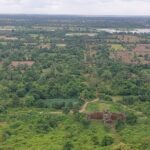
Phnom Prasith sits high on top of the eastern summit of twin hills. The hilltop location is the point. When you get there, you’re not just looking at a temple—you’re looking out over Cambodia’s countryside.
You’ll also be able to watch a community of monks going about their daily lives. That’s one of the quiet pleasures of this trip. Temples here aren’t set up only for visitors. You’re seeing worship and routines that continue whether or not you’re in a tour group.
Practical note: because it’s up on a hill, plan for some uphill walking and stairs. The tour flags moderate fitness, so treat that as the real world version of comfortable shoes and a steady pace.
After your time up top, you’ll drive back down to the base of the hill. That downhill moment is when the day shifts from “spectacle view” to “calm cultural rhythm.”
Lunch in a Shady Khmer Setting After the Hilltop
Once you’re back down, you stop for lunch at a traditional Khmer restaurant in a shady location. The big advantage here is pacing. You’re not rushing into a generic meal between sites. You get a proper break after the climb and views.
The restaurant setting also includes surrounding rural landscape views. Even if you’re not a person who stares out windows on purpose (I get it), it’s a nice change from eating indoors after a temple circuit.
This lunch is also where you reset mentally for the rest of the day. The second half gets more religious and interactive, with people offering prayers and blessings. A calm meal beforehand helps you stay present.
Putmondul Buddhist Centre: Nuns, Offerings, and a Reclining Buddha
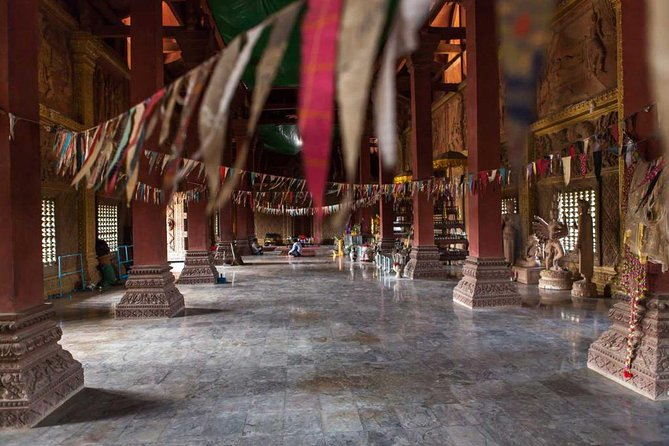
Next comes Putmondul, a Buddhist centre where you’ll see monks and nuns as well as many locals making offerings for good luck. This part of the day is very human-scale. It’s not just architecture and photos. You’re watching people participate.
One highlight is the reclining Buddha. Another is the presence of fine paintings depicting the history of this religion. The centre gives you a sense of how Buddhist storytelling and visual art support faith practices—often through symbols that you might miss if you only glance at the main statue.
If you prefer experiences where your guide can explain what you’re seeing without turning it into a lecture, this stop is a strong fit. The atmosphere feels like you’re stepping into an active spiritual place rather than a museum stop.
And since locals are doing offerings here, dress and behavior matter. Keep your tone respectful, and follow whatever your guide suggests for temple spaces.
You can also read our reviews of more tours and experiences in Phnom Penh

Phnom Reap Temple, Often Called the New Angkor Wat
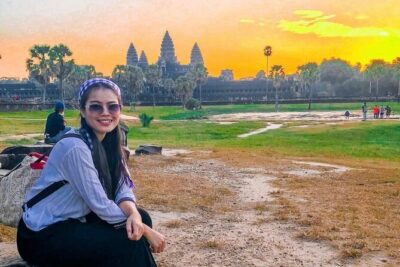
The final temple stop is Phnom Reap Temple, also known as Prasat Vihear Suor. This one has a different vibe than Phnom Prasith. It’s a relatively new structure—finished in 1998—and it’s modelled on the architectural style of Angkor Wat.
That’s why it’s often referred to as the new Angkor Wat. You’ll see the familiar Angkor-style geometry and the feel of temple towers, but with the knowledge that you’re looking at a modern interpretation rather than an ancient ruin.
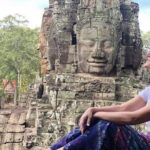
Inside and around the temple, you’ll encounter many sculptures of ancient kings and Buddha. This is the day’s “story in stone” moment. It connects the Khmer royal image and Buddhist symbolism in one place, and it helps explain why Angkor motifs keep echoing through Cambodia’s temple culture long after the original era.
You’ll also notice locals who made the trip specifically to seek a blessing from monks. That’s the payoff of this itinerary’s quieter approach. You’re not only seeing temples—you’re seeing why people come.
The Private Guide Difference (and Why English Matters Here)
A private guide is not just about translation. It changes how you experience temples—how fast you move, what you notice, and whether the day feels like a collection of stops or a story.
In this trip, guides can make the day feel personal. One guide name you might encounter is Li, who is noted for being great, know-how without pushing, and for strong English. Another name is Seung, often described as on time and very knowledgeable in English. If either of them is your guide, you’re likely to get clear explanations with a friendly tone instead of a scripted sales pitch.
You’ll also appreciate the lack of waiting. Since it’s private, you don’t spend the day parked while other groups catch up. You can linger when something grabs your attention—like an offering scene at Putmondul or a particular sculpture at Phnom Reap—then move on when you’re ready.
Price and Value: Is $117.44 Fair for an 8-Hour Private Day?
The price is $117.44 per person, and it’s tied to what you actually get: hotel pickup, private transport (tuk tuk or car) with a driver, a private guide, lunch, bottled water, and coffee and/or tea.
Here’s how I think about value on a day trip like this:
- You’re paying for a full day of dedicated logistics. Rural temples mean more time on the road, and that costs money.
- You’re also paying for a guide who can connect what you see at Phnom Prasith and Phnom Reap to Buddhist life and Khmer temple ideas.
- Meals being included matters. When lunch is covered, you’re not hunting for food between sites or paying premium prices during travel hours.
The one thing not included is donations. That’s normal for temple visits. It also means you control your giving rather than feeling boxed in by an add-on.
Overall, for an 8-hour private outing with transportation, guide time, and meals included, this is priced like a proper day trip—not a cheap shuttle. If you want a quiet, unhurried experience with real context, it’s a fair deal.
Who This Day Trip Suits Best (and Who Should Rethink It)
This tour makes a lot of sense if you want:
- a temple day outside Siem Reap crowds
- a flexible pace with private guide attention
- hilltop views plus a modern Angkor-style temple finale
- included lunch and drinks so you don’t manage every detail
It may be less ideal if you’re the type who wants only ancient ruins with zero modern references. Phnom Reap is newer by Cambodian temple standards, finished in 1998, and it’s intentionally modelled on Angkor Wat.
It’s also not built for extreme mobility limits because Phnom Prasith is on hills and the trip lists moderate physical fitness. If you can handle some walking and uneven temple terrain, you’ll be fine. If not, you might want a more flat, city-based plan.
Should You Book This Phnom Penh Temple Day Trip?
I’d book it if you’re in Phnom Penh and you want temples with breathing room. The combination of Phnom Prasith, Putmondul, and Phnom Reap gives you a satisfying arc: countryside views, active religious practice, then a modern Angkor-style temple built for today’s pilgrims.
You should also book if you like the idea of meeting Cambodia where locals actually pray and make offerings, not where crowds herd you like a conveyor belt. The private setup helps a lot.
If you’re only chasing the most famous Angkor ruins, this won’t replace Siem Reap. But it can absolutely complement it—or stand on its own—if you want a calmer, more personal Cambodia temple day.
FAQ
What sites do you visit on the tour?
You visit Phnom Prasith Temple, the Putmondul Buddhist centre (with a reclining Buddha and paintings), and Phnom Reap Temple (Prasat Vihear Suor), which is modelled on Angkor Wat.
How long is the day trip?
It runs for about 8 hours.
Is hotel pickup included?
Yes. Hotel pickup is included.
What kind of transportation do you use?
You can choose tuk tuk or car for the trip, with private transport and a driver.
What’s included in the price?
The tour includes bottled water, lunch, coffee and/or tea, a private guide, private transport with a driver, and hotel pickup.
Are donations included?
No. Donations are not included.
If you tell me your travel month and whether you prefer tuk tuk or car, I can help you pick the best version of this day trip for your comfort and timing.