REVIEW · PHNOM PENH
Phnom Penh Must Visit City Full Day Classic Tour
Book on GetYourGuide →Operated by MyProGuide Cambodia · Bookable on GetYourGuide
Phnom Penh rewards people who move with a plan. This classic full-day route bundles royal sights, temple views, and Khmer art into one smooth 8-hour loop, with a local English-speaking guide to connect the dots. I especially like the mix of palace architecture and the National Museum, because you get beauty plus context.
My other favorite part is the cultural stop at Champey Academy of Arts, where traditional performance is part of the experience, not an afterthought. One thing to consider: there are several paid entrance fees on top of the $52 price, so you’ll want cash ready before you go.
In This Review
- Key things I’d pay attention to
- Royal Palace, Silver Pagoda, and the calm power of Khmer royalty
- Wat Phnom: the viewpoint climb and the Phnom Penh origin story
- National Museum: turning art you see into meaning you keep
- Champey Academy of Arts: Cambodian culture with a human scale
- Botumvotey Pagoda and the silver ordination hall moment
- Timing, transport, and the real cost of the $52 price
- What to bring (and how to dress) so the day feels easy
- Who this tour suits best in Phnom Penh
- Should you book this Phnom Penh classic full day?
Key things I’d pay attention to
- Royal Palace + Silver Pagoda in one run, so you don’t waste your only daylight getting there twice.
- Silver ordination hall at Botumvotey Pagoda, a distinctive detail that makes photos more interesting.
- Wat Phnom climb with a story about how Phnom Penh began, not just a viewpoint.
- National Museum stop focused on ancient Khmer art and artifacts, perfect for understanding what you’re seeing.
- Champey Academy of Arts includes traditional dance performances and a strong culture-and-community feel.
Royal Palace, Silver Pagoda, and the calm power of Khmer royalty
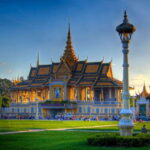
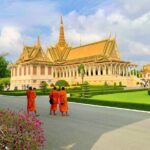
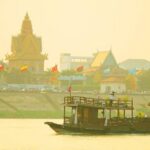
If you only have one day, this is where you start: the Royal Palace complex. You’ll visit the main Royal Palace area with time for photos and a guided walk, then continue to the nearby Silver Pagoda. The palace matters because it’s Cambodia’s official royal residence, so it feels different from temples built mainly as public worship spaces. It’s more formal, more ceremonial, and designed to show order and authority.
What I like about doing this early is light and timing. The Royal Palace has a lot of visual texture—details in buildings and the gardens—so morning hours help you move without rushing and still get clear pictures. You’ll get guided explanations as you walk, which is handy because palaces can look like pure scenery if nobody gives you the story.
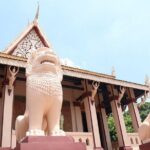
At Silver Pagoda, the big draw is the unique silver ordination hall. Even if you’re not a hardcore temple person, that single feature makes the stop memorable. Expect a shorter photo-and-walk moment here compared with the palace itself, but it’s worth it because it’s specific, not generic sightseeing.
Practical note: you’ll be on your feet. Wear comfortable shoes and keep water handy, because the whole day stacks multiple walking segments.
You can also read our reviews of more city tours in Phnom Penh

Wat Phnom: the viewpoint climb and the Phnom Penh origin story
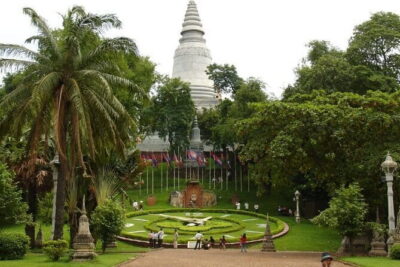
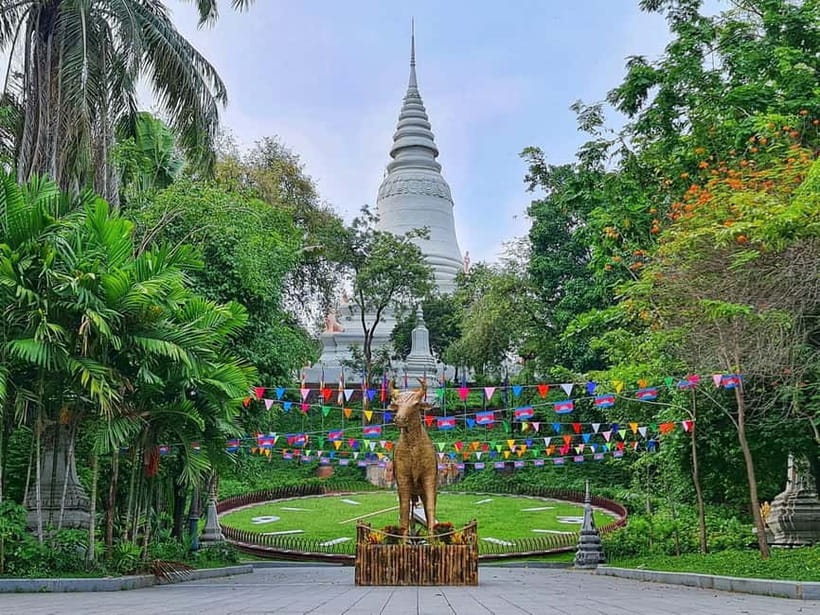
Next comes Wat Phnom, the city’s oldest pagoda. You’ll have about an hour for the visit, which is just enough time to climb, look around, and still take in the setting without feeling like you’re doing a gym session.
The view is one reason people love it. But the better reason is what your guide explains while you’re there— the founding legend behind Phnom Penh. That legend turns the pagoda from a landmark into a mental map. Suddenly, the city’s name and identity feel less random.
If you’re traveling with someone who gets impatient with religious sites, this is the one that helps. The steps create a natural “effort-to-reward” rhythm: you work upward, then you get the payoff of views and story. And because it’s one of Phnom Penh’s earliest spiritual centers, it anchors the day.
You’ll also want to be mindful of the typical temple-camera etiquette: move slowly, don’t block people praying, and respect the flow of worshipers around you.
National Museum: turning art you see into meaning you keep
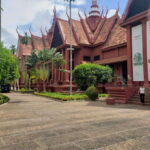
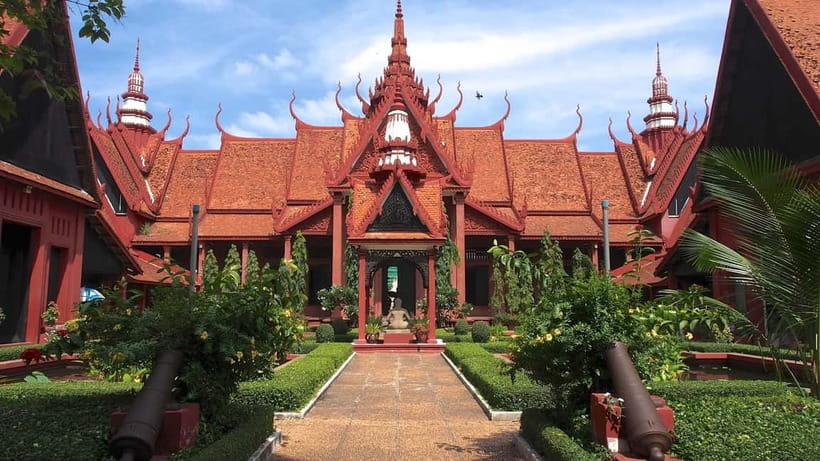
After the temples, you shift into something that makes the whole day click: the National Museum of Cambodia. You’ll have about 1.5 hours here, which is enough time to see a strong cross-section of what the museum holds without turning it into a sprint.
The museum is built around ancient Khmer art and artifacts. I like this stop because it stops the “checklist tourism” loop. When you’ve already seen royal buildings and religious sites, the museum gives you the why: the symbols, materials, craftsmanship, and the artistic language behind what’s carved or placed in temples and palaces.
If you’ve ever visited a museum and felt like the facts bounced off because you didn’t know what to look for, a guide changes that. You’ll get help identifying what’s important and how pieces connect to Cambodian cultural life. Even if you’re short on time, this museum visit helps you leave with something you can remember later, like a feeling for style and symbolism rather than just a stack of photos.
Tip for your future self: in the museum, pick a few items that catch your eye and spend a little extra time with them. Don’t try to absorb everything. The guide’s explanations will help you choose what deserves your attention.
Champey Academy of Arts: Cambodian culture with a human scale
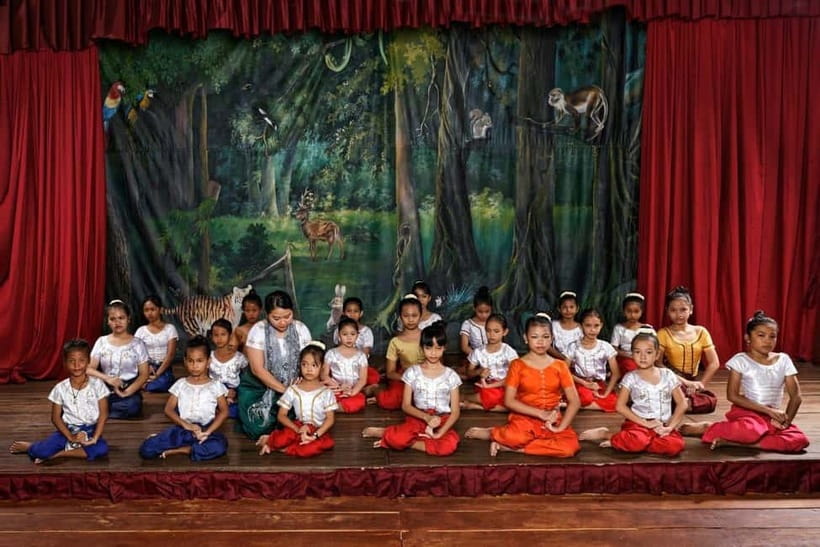
Then comes one of the most memorable parts of the day: Champey Academy of Arts. You’ll spend about an hour here, and it’s not just a photo opportunity. This stop focuses on Cambodian culture through traditional dance performances.
I like that the performance element makes this more than museum-and-temple time. It’s where culture becomes something you can watch and feel in real time. Also, the experience has a community feel. You’re not just observing a show; you’re seeing the work that keeps tradition alive.
This is a great fit if you’ve got kids in your group or if you simply prefer experiences with energy. There’s often a sense of joy and motion that you don’t get from purely architectural sightseeing. If your day has felt mostly quiet and stone-heavy so far, this is a good counterbalance.
If you’re sensitive to crowds, come ready to share the space. Cultural performances can draw attention, so keep your pace steady and follow your guide’s cues for where to stand and when to move.
Botumvotey Pagoda and the silver ordination hall moment
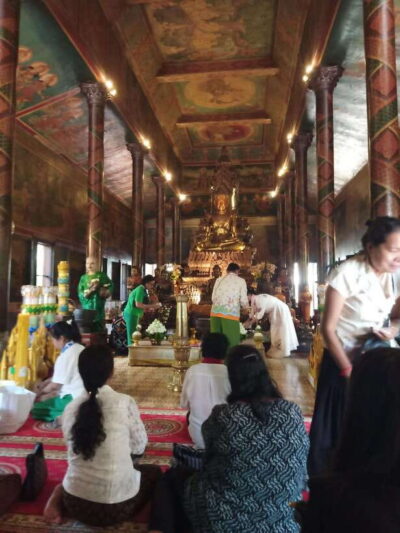
Later in the day, you’ll visit Botumvotey Pagoda, also described in connection with an order-of-monks silver ordination hall. That’s the unique detail that makes this stop more than another temple stop.
You’ll get about an hour for the visit, so you can slow down. After the busier sites, this feels more serene. That matters because Phnom Penh can hit you with a lot at once—palace grandeur, museum focus, and multiple sacred spaces in a single day. A quieter pagoda stop gives your brain a reset.
I recommend treating Botumvotey as your breathing space. Walk, look at the hall detail your guide points out, and take a minute to just watch how people move through the space. It’s the kind of moment that makes the whole tour feel less like transportation from A to B.
Again, keep respectful behavior in mind. Dress and tone the same way you would anywhere you see worship, and remember: you’re visiting a living religious site, not a stage.
You can also read our reviews of more tours and experiences in Phnom Penh

Timing, transport, and the real cost of the $52 price
This is priced at $52 per person for an 8-hour day, which sounds straightforward until you add admissions. Here’s the clear picture:
Included:
- Hotel transportation (pickup optional)
- Water and towel
- Tour guide
Not included:
- Lunch
- Personal expenses
- Admission fees: Royal Palace $10, National Museum $10, Champey Academy of Arts $6, Wat Phnom $1
So in practice, you should plan for $52 plus entrance fees plus lunch. The good news: the route is structured so you’re paying once for a guided day through multiple key sites. If you tried to replicate this on your own, you’d likely spend time coordinating transport, figuring out timing, and hiring a guide to cover the meaning behind what you see. In that sense, the $52 does the job of buying you efficiency and explanation.
The tour time includes a lunch break at a local restaurant (about 1.5 hours), but lunch itself isn’t included. That’s normal for guided tours: you get time to eat, use the restroom, and recharge without the guide trying to predict what you’ll actually like.
Transport-wise, pickup is at the hotel lobby for hotels in the downtown area. If your hotel is outside downtown, there can be an extra up-to-USD 20 per group charge paid directly to the driver. If the group is tiny (only two participants), the tour uses a tuk-tuk, which can be a fun, locally styled way to get around—just don’t expect the same comfort as a larger vehicle.
If you’re trying to maximize value, treat the admissions as part of the budget from the start. Bring cash so you aren’t scrambling at each gate.
What to bring (and how to dress) so the day feels easy
You’ll walk quite a bit across temples and palace grounds. Plan for comfort first:
Bring:
- Comfortable shoes
- Hat
- Camera
- Sunscreen
- Water (you’ll get water during the tour, but bring extras if you run hot)
- Cash (for admission fees)
Dress:
- Casual clothes and comfortable shoes are the call.
- Keep shoulders and knees reasonably covered for temple areas, since you’ll be moving between Buddhist sites and formal palace grounds.
Small thing, big impact: wear shoes you can climb in. Wat Phnom has steps, and you’ll also have multiple short walks and photo stops throughout the day. If you go with flimsy footwear, the tour will feel longer than it should.
Also, keep your cash organized. Admissions are listed for several sites, and having money ready speeds things up when you’re on a schedule.
Who this tour suits best in Phnom Penh
This works well if you:
- Want a one-day foundation in Phnom Penh (temples + palace + museum + performance)
- Appreciate guided explanations more than wandering alone
- Are okay with a packed schedule where each stop has a defined time window
- Like variety: architecture, art, legends, and culture performances in one day
It’s less ideal if you:
- Need wheelchair access. This tour isn’t suitable for wheelchair users.
- Prefer slow travel and long breaks. This is designed to cover the key sights efficiently.
Group style is flexible. You can choose a private group, and if there are only two participants you’ll ride in a tuk-tuk, which can feel personal and local.
Should you book this Phnom Penh classic full day?
If you’re here for a short trip, I’d book it. The value is in the combo: palace grandeur plus Khmer art context at the National Museum, wrapped around temples with real stories and visual payoffs. The inclusion of a guide means you’re not just photographing stone—you’re understanding what the sites represent.
I’d only hesitate if your budget is tight and you don’t want to handle multiple entrance fees, or if you hate stepping around temples and palaces for hours on foot. But if you’re willing to bring cash, wear comfortable shoes, and keep a good pace, this day gives you a high-density introduction to Phnom Penh that’s hard to beat in one go.