REVIEW · PHNOM PENH
Chiso temple, Neang khmao, and Taprum temple historical site Tour
Book on Viator →Operated by The Killing Field and S21 Genocide Tour · Bookable on Viator
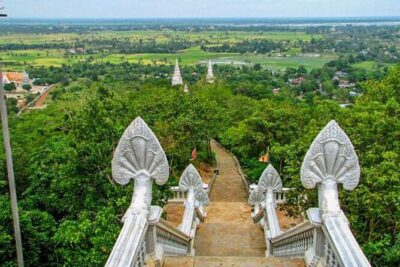
That straight-line view from Phnom Chisor hits hard.
This tour strings together several temple stops, then adds a real local break at Tonle Bati. I especially love Phnom Chisor for its sculpted galleries and the picture-worthy view over rice fields and countryside, and I love how Prasat Neang Khmau mixes ancient Angkor-era brick with an active pagoda you can actually feel in daily use.
The guide, including the excellent Soapheak I learned from, doesn’t just point at ruins. You’ll get practical context about the pagoda lifestyle and how the surrounding structures work together, which makes the whole site feel less like a checklist and more like a living place. One thing to consider: this is a full day with temple walking, so it’s better if you’re comfortable moving at a steady pace in the heat.
In This Review
- Key things that make this tour worth your time
- Price and logistics: $190 for up to 5 is the real value
- Starting in Phnom Penh: a straightforward morning pickup
- Phnom Chisor: sculpted 11th-century galleries and real viewpoint rewards
- What to watch for while you’re walking
- A practical drawback
- Reading the straight-line temple plan toward the east
- Prasat Neang Khmau: active pagoda energy meets Angkor-era brick
- Why it feels different from many temple ruins
- What to expect time-wise
- Tonle Bati: a short local pause away from temple crowds
- Ta Prohm Temple and Yeay Pov: finishing with smaller sites that still matter
- How the day flows (and why the order works)
- What’s included vs. what you must plan for
- Who this tour suits best
- Should you book the Chiso/Neang Khmau/Ta Prohm/Yeay Pov with Tonle Bati day?
- FAQ
- How long is the tour?
- What is the price and group size?
- Are admission tickets included?
- Does the tour include pickup in Phnom Penh?
- Is this a private tour?
- Can I cancel if plans change?
Key things that make this tour worth your time
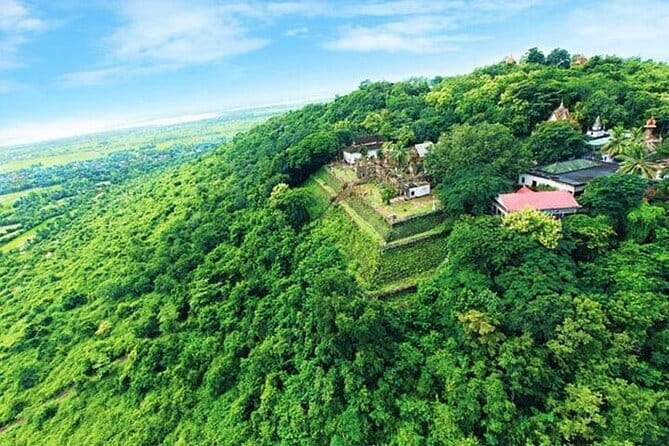
- Phnom Chisor’s sculpted 11th-century galleries you can walk through and even enter areas of worship
- Rice-field and countryside photo spot at the back of the temple, with views outward over the plain
- Prasat Neang Khmau’s “two-brick-tower” reality: deteriorating prasats, yet still tied to an active pagoda
- Shiva roots at Neang Khmau: dedicated to Shiva in the Angkorian era under King Jayavarman IV
- Ta Prohm Temple in a smaller, distinct form: later Angkor period with unique art (not the same as the famous Angkor one)
- Tonle Bati as a local reset: a small lake about 30 km south of Phnom Penh, known as a weekend destination and fishing spot
Price and logistics: $190 for up to 5 is the real value
This tour costs $190 per group, set up for a private experience for up to five people. That pricing structure matters because you’re not paying “per person” for a long ride across Phnom Penh’s outskirts. If you’re a couple, it can still feel good value versus buying multiple separate taxis or paying for individual guides at each stop.
You also get smart basics that keep the day smooth: an English-speaking guide, air-conditioned transportation, cool water, and all fees and taxes covered. What’s not included is food and beverages, plus any tipping to the guide and driver and personal expenses. Plan on bringing your appetite budget for a sit-down meal or a snack break, since the tour keeps you moving.
You can also read our reviews of more historical tours in Phnom Penh

Starting in Phnom Penh: a straightforward morning pickup
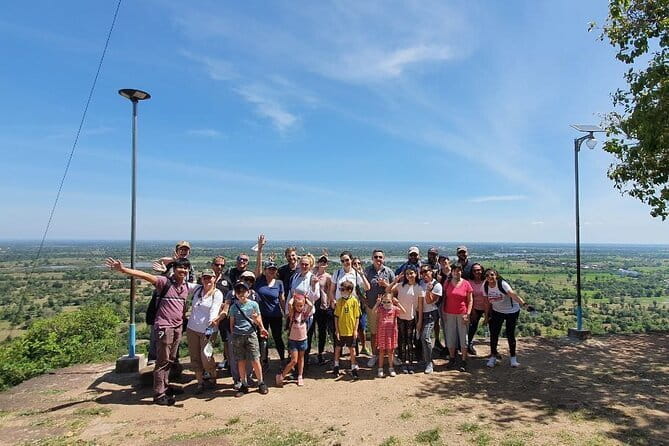
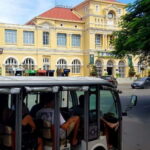
The day begins at 8:00 am with pickup at River Crown Restaurant, 357 St. 178, Prehsisovath Quay, Phnom Penh 12206. The activity ends back at the same meeting point, which saves you from figuring out where to go next after the last temple stop.
It’s a private tour, so you won’t be squeezed into a larger group tempo. That flexibility helps if you want extra minutes at a viewpoint or if you’re the kind of traveler who reads stone carvings more slowly than the rest of the world.
Phnom Chisor: sculpted 11th-century galleries and real viewpoint rewards
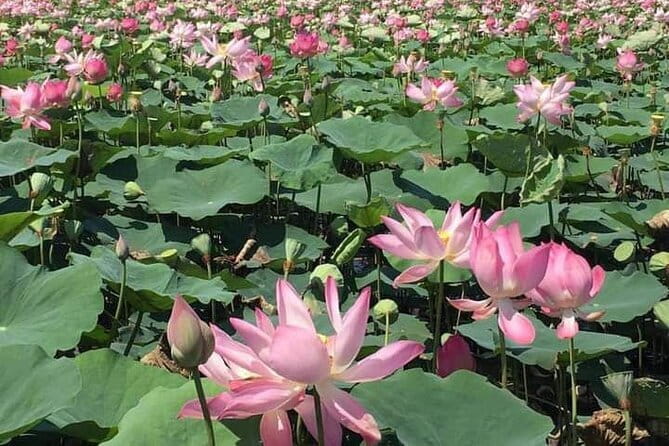
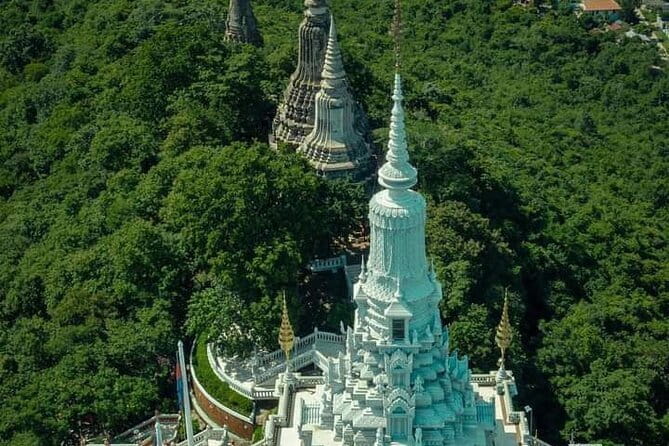
Phnom Chisor is the kind of temple that makes you forget to rush. Built in the 11th century, it’s covered with sculptures you can still see clearly as you move through the galleries, and you can walk through multiple sections of the complex. The best part is that it isn’t only “look from outside” archaeology—you can even enter areas connected to worship.
I love how the temple rewards effort. When you reach the back of the complex, you get a prime spot for views and pictures: a broad look over rice fields and countryside stretching out beyond the immediate stone walls. You’ll feel like you’re seeing why this place mattered, not just what it looked like.
What to watch for while you’re walking
This is a temple where the layout and the views are part of the show. From the back, the outlook to the east lines up with key features, including an avenue forming a straight line that connects three main elements: two outer temples of cruciform ground plan and a moat. Your guide can help you orient yourself quickly, so you’re not just admiring scenery—you’re understanding the geometry.
A practical drawback
Because the focus is walking through galleries and climbing to viewpoints, you’ll want to wear comfortable shoes and be ready for sun. If your legs tire quickly, you may still enjoy the sites, but you’ll want to pace yourself rather than trying to “power through” the whole complex.
You can also read our reviews of more museum experiences in Phnom Penh




Reading the straight-line temple plan toward the east
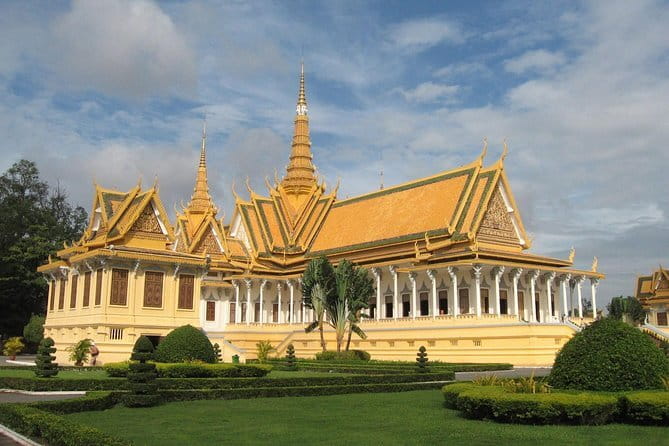
One of the most interesting things about Phnom Chisor is that it isn’t random. From the back area, the view down to the east helps you make sense of the temple’s wider setting: an avenue that runs straight to connect major features outside the core temple area.
This matters because it turns the landscape around the temple into part of the storytelling. Instead of thinking of the site as a single building, you start seeing it as an organized system: temple center, outer temple forms, and water-related elements all connected visually and spatially.
If you like “map in your head” travel—places where the arrangement is part of the experience—you’ll enjoy how this tour sets you up for that.
Prasat Neang Khmau: active pagoda energy meets Angkor-era brick
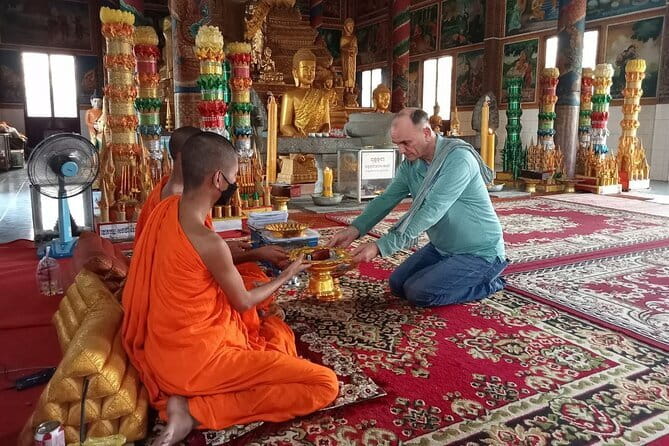
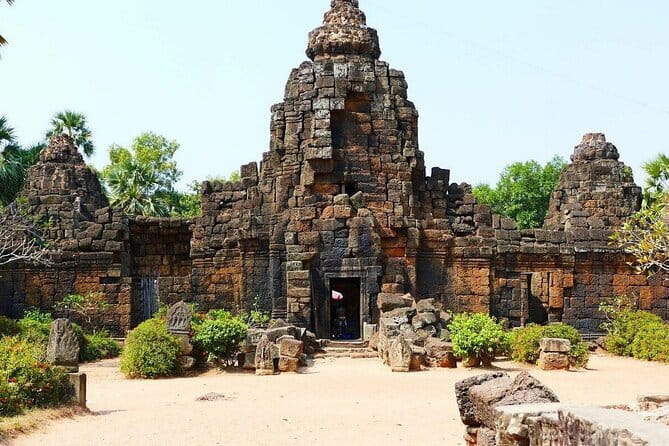
After Phnom Chisor, you head to Prasat Neang Khmau, an active pagoda site with Angkorian-era remnants. This is where the tour becomes especially memorable, because the setting isn’t frozen in time. You’ll stand next to worship happening in real life while also studying deteriorating brick towers.
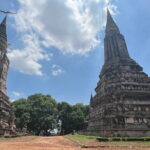
Here’s what makes the site specific: Prasat Neang Khmau consists of two deteriorating brick prasats (towers) built in the 10th century A.D. under King Jayavarman IV. The site likely had at least one more prasat, and possibly as many as three additional ones. It was originally dedicated to the Hindu god Shiva.
Why it feels different from many temple ruins
A lot of ruins are quiet. This one has daily rhythm because it’s an active pagoda area. My favorite part was learning the “how it works” angle—how the surrounding structures relate to the pagoda setting and what that brick-and-stone layout likely meant to worshippers back then.
This is also where Soapheak’s style shines. Instead of treating the site like a static photo spot, he helped connect the setting to the pagoda lifestyle and the characteristics of the structures around it. That kind of explanation is the difference between seeing bricks and understanding how people interact with the place.
What to expect time-wise
Plan around about one hour at this stop. It’s long enough to absorb the main prasats and the pagoda setting without turning the visit into a marathon.
Tonle Bati: a short local pause away from temple crowds
Between the temples, the tour includes a break at Tonle Bati, a small lake about 30 km south of Phnom Penh. It’s known as a popular weekend destination for local people, and it’s also a popular fishing spot.
This stop is valuable because it resets your brain. After stone, carvings, and focused walking, Tonle Bati gives you a softer scene where you can look at daily life, water, and the slower rhythm of a weekend outing. You’re not forced into a formal museum-type moment, and the setting feels more like a Cambodian social landscape.
The tour keeps it practical, with about one hour here, so you’re not stuck waiting around in one place for too long.
Ta Prohm Temple and Yeay Pov: finishing with smaller sites that still matter
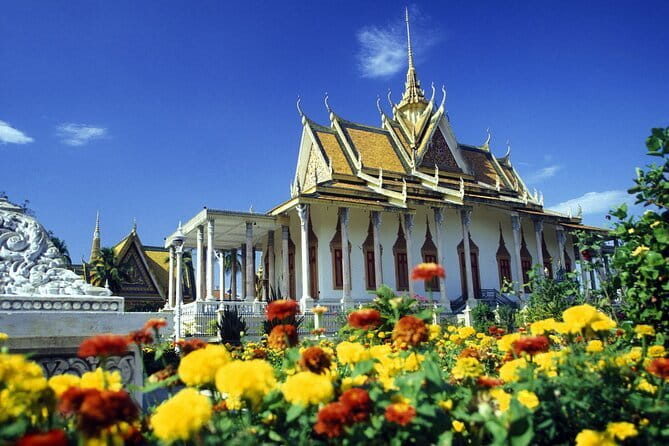
The day doesn’t end with only one Angkor connection. You’ll also visit Ta Prohm Temple, built during the reign of King Jayavarman VII in the late 12th or early 13th century. The big detail I’d want you to remember is that this Ta Prohm is smaller than the famous one at Angkor, but it includes lots of unique art.
That matters if you’ve already seen the headline version of Ta Prohm. You won’t get the exact same experience, so the visit still earns its place on the itinerary by being a different artistic and spatial interpretation.
Then you finish at Yeay Pov Temple. The information you’re given here is simpler than at the other stops, but as a last stop it works well: you transition from the more explained, named Angkor contexts into a final sacred visit that lets you end the day on your own observations and your guide’s closing notes.
How the day flows (and why the order works)
Within roughly 8 hours, you’ll cover multiple distinct settings:
- A cultural and scenic high point at Phnom Chisor (about two hours)
- An active sacred place with ancient brick at Prasat Neang Khmau (about one hour)
- A local-water reset at Tonle Bati (about one hour)
- Additional temple time for Ta Prohm Temple and Yeay Pov Temple
I like this structure because it avoids the “all stone, all day” problem. Even with temple walking, you get a water-and-people pause, and the two different styles of temple—Phnom Chisor’s sculpted complexity versus Neang Khmau’s active pagoda atmosphere—keep the day from feeling repetitive.
What’s included vs. what you must plan for
Included:
- English-speaking tour guide
- Transportation by air-conditioned, clean vehicle
- Save and friendly driver
- Cool water
- All fees and taxes
Not included:
- Food and beverages
- Travel insurance
- Tipping for guide and driver
- Other personal expenses
For comfort, I’d plan around the no-food part by having breakfast before pickup and bringing a small snack just in case. Since you do multiple temple stops, you’ll likely want something on you between stops, especially if you’re sensitive to heat.
Who this tour suits best
This is a good fit if you:
- Want a private day tour with an English guide in Phnom Penh’s region
- Care about understanding temple layout and meaning, not only photos
- Like a mix of sculpture + viewpoint and active worship + ancient brick
- Prefer a day plan that includes a local break rather than only heritage sites
If you want a fully relaxed day with lots of sitting and minimal walking, you might find the temple focus a bit active. But if you’re ready for steady movement and you enjoy guided context, this works nicely.
Should you book the Chiso/Neang Khmau/Ta Prohm/Yeay Pov with Tonle Bati day?
I’d book it if you want three things in one: sculpted Khmer temple experience, Angkor-era context with a living pagoda setting, and a local-water pause that keeps the day balanced. The $190 group price feels fair because it’s private, long enough to matter, and it includes transport plus guide plus fees.
Skip it only if you hate walking in heat or if you’re specifically chasing only the single most famous Angkor monuments. This tour’s strength is that it’s spread across different sites with different “feel,” and the guide’s explanations—especially around pagoda lifestyle—make the less-mainstream places worth your attention.
FAQ
How long is the tour?
The tour is about 8 hours (approx.).
What is the price and group size?
It costs $190 per group, for up to 5 people.
Are admission tickets included?
The itinerary lists admission ticket Free for the listed stops.
Does the tour include pickup in Phnom Penh?
Yes. Pickup is offered, starting at 8:00 am from River Crown Restaurant.
Is this a private tour?
Yes. It’s private, and only your group participates.
Can I cancel if plans change?
You can cancel for a full refund up to 24 hours before the experience’s start time.